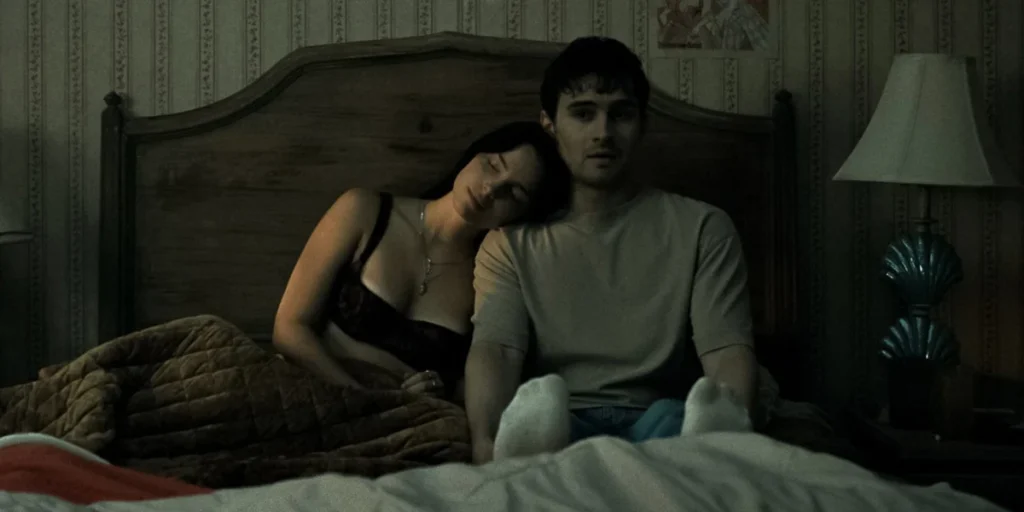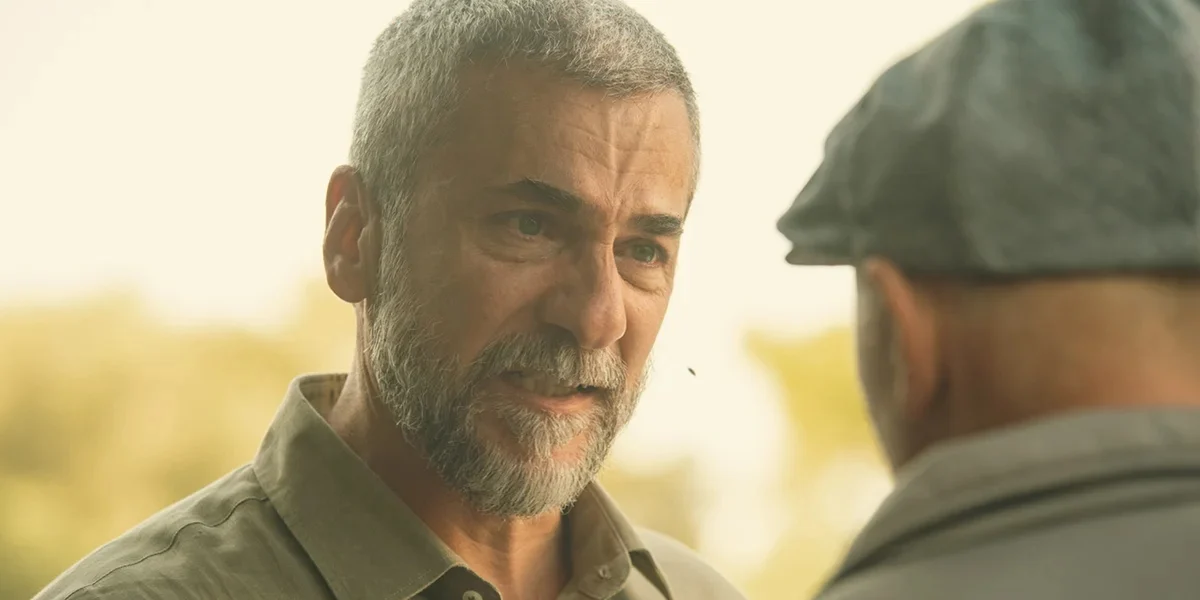
The cinematic adaptation of David Bezmozgis’s acclaimed 2014 novel, The Betrayers, delivers a penetrating exploration of human frailty, historical reckoning, and political corrosion. Running at a tightly paced 90 minutes, the film is anchored by a formidable central performance by Michael Aronov alongside a stellar ensemble cast featuring Kaelen Ohm, Simon McBurney, Tina Benko, and Roxanna Hope Radja. Written and directed by Bezmozgis, the narrative centers on Baruch, a former Soviet dissident and Israeli politician who flees to a Crimean resort after a political sex scandal, only to encounter the very man who betrayed him decades prior to the Soviet authorities. Against a backdrop of scenic yet melancholic coastal landscapes, the film unfurls a complex web of moral accountability, raising timeless philosophical inquiries regarding identity, justice, and the erosion of personal integrity over time.
Narrative Premise and Character Dynamics
The core of The Betrayers operates on the ancient philosophical premise of Theseus’s ship, a paradox popularized by Plutarch that questions whether an object remains fundamentally the same after every single one of its components has been replaced over time. Bezmozgis applies this metaphorical framework to the human psyche, examining how successive layers of trauma, moral compromise, and psychological scarring can fundamentally alter an individual until their original moral center is entirely supplanted. Baruch, portrayed with sharp charisma and simmering volatility by Michael Aronov—known to television audiences for his work on The Americans—exemplifies this transformation. Once a resolute dissident enduring Soviet imprisonment, Baruch ultimately immigrates to Israel, where he ascends to a position of significant political influence.
However, his downfall is swift and multifaceted. When an affair with his staffer Leora, played by Kaelen Ohm, is weaponized by political rivals to blackmail his party into supporting a fragile governing coalition, Baruch refuses to capitulate to the demands. Instead, he opts for a sweeping, catastrophic exit. He abandons his country, his political party, his wife, and his son, retreating to Yalta in the Crimean Peninsula—a geographic anchor from his tumultuous past that he had spent decades trying to leave behind.
In Yalta, Baruch experiences a fateful and volatile reunion with his former friend and colleague, brought to life with nuance by Simon McBurney. McBurney’s character remains tethered to his own historical cowardice, having previously capitulated to Soviet police pressure to betray Baruch to the authorities. This chance encounter ignites a dormant toxicity, forcing both men to confront the unhealed wounds of their shared history. Rather than offering simplistic resolutions of forgiveness or righteous condemnation, Bezmozgis constructs a claustrophobic arena of shared culpability, demonstrating how both men have been fundamentally reshaped and degraded by the historical forces they once sought to master.
Production and Ensemble Execution
Behind the camera, David Bezmozgis balances intimate psychological drama with broader historical resonance. The production design captures the stark contrast between the austere, bureaucratic echoes of the Soviet era and the transient luxury of Crimean tourist destinations. The ensemble cast supports this atmospheric dichotomy effectively. Tina Benko and Roxanna Hope Radja flesh out the peripheral layers of Baruch’s disrupted life, grounding the narrative in a palpable sense of domestic and professional loss.
Aronov’s performance stands out for its duality. He effortlessly projects the magnetic charm required of a high-ranking political operator, while simultaneously conveying the repressed, incandescent rage of a man whose identity has been forged in the crucible of totalitarian oppression. McBurney matches this intensity, portraying a man hollowed out by guilt and self-justification. The chemistry between the two leads anchors the film’s second half, transforming what could have been a standard dramatic encounter into a tense, intellectually rigorous duel of worldviews.
Historical and Geopolitical Context
Set against the geopolitical backdrop of the pre-escalation era between Ukraine, Russia, and the broader Middle East, The Betrayers functions as both a historical period piece and an urgent prophecy. The film examines the lingering psychological fallout of the Soviet Union’s dissolution and the structural fragility of post-Soviet states, while simultaneously mirroring the political polarization and ethical decay seen in contemporary democracies.
Historically, the narrative draws heavily on the legacy of Jewish refuseniks and dissidents who survived the Gulag system, only to navigate the labyrinthine and often compromised political landscapes of modern Israel. The inclusion of Crimea as a narrative focal point carries profound geopolitical weight. Long before the region became the epicenter of international conflict following the 2014 Russian annexation, Crimea served as a historical crossroads of empires, exiles, and ideological shifts. By placing his characters in Yalta, Bezmozgis utilizes the location as a physical manifestation of historical purgatory—a place where ghosts of the twentieth century continue to haunt the realities of the twenty-first.
Political analysts note that the film’s deliberate avoidance of polemics elevates its commentary on state power and individual compliance. Rather than reducing the characters to simple archetypes of hero and villain, the screenplay illustrates how systemic oppression co-opts ordinary individuals, forcing ethical compromises that ripple across generations. This thematic resonance extends to the broader political entities depicted in the film, suggesting that nations, much like individuals, are susceptible to the Theseusian erosion of core principles.
Broader Implications and Thematic Resonance
The critical reception of The Betrayers highlights its rare ability to marry micro-level interpersonal conflict with macro-level geopolitical critique. Film critics have praised the adaptation for successfully translating Bezmozgis’s prose to the screen without diluting its philosophical complexity. The claustrophobic tension of the Yalta sequences underscores the inescapable nature of one’s past, reinforcing the idea that geographic flight does not equal psychological liberation.
Furthermore, the film’s exploration of shared trauma serves as a stark warning regarding contemporary political polarization. By demonstrating how two ideological adversaries are inextricably bound by the very tragedies that tore them apart, Bezmozgis offers a sobering perspective on modern conflict resolution. The realization that mutual suffering often breeds identical behavioral flaws challenges optimistic narratives of reconciliation, suggesting instead that deep-seated historical grievances require more than superficial diplomacy to heal.
As audiences and critics continue to evaluate the film’s contributions to contemporary cinema, The Betrayers stands out as a sophisticated, unflinching examination of conscience. By refusing to offer tidy resolutions, the film honors the messy, unresolved nature of historical trauma, securing its place as a significant achievement in political drama and character-driven storytelling.