The landscape of modern documentary filmmaking is set to confront one of the most enduring and heavily debated mysteries of the twentieth century with the release of the official teaser for Capturing Bigfoot. Distributed by XYZ Films and directed by acclaimed documentarian Marq Evans, the film promises to transcend the typical realm of conspiracy theories and cryptozoological speculation. Instead, it positions itself as an intimate, deeply human exploration of family legacy, fractured relationships, and the sociological weight of belief.
Drawing upon newly discovered archival material—specifically a reel of 16mm film unearthed from a secure safe more than five decades after the historic event—the documentary reexamines the foundational moment of modern Bigfoot lore. The project, which first generated significant critical buzz during its premiere at the 2026 SXSW Film Festival, is scheduled for a synchronized theatrical and digital release on October 20, 2026. This date is strategically chosen to coincide with the 59th anniversary of the original Patterson-Gimlin film and National Bigfoot Day.
The Genesis of a Myth: The Patterson-Gimlin Legacy
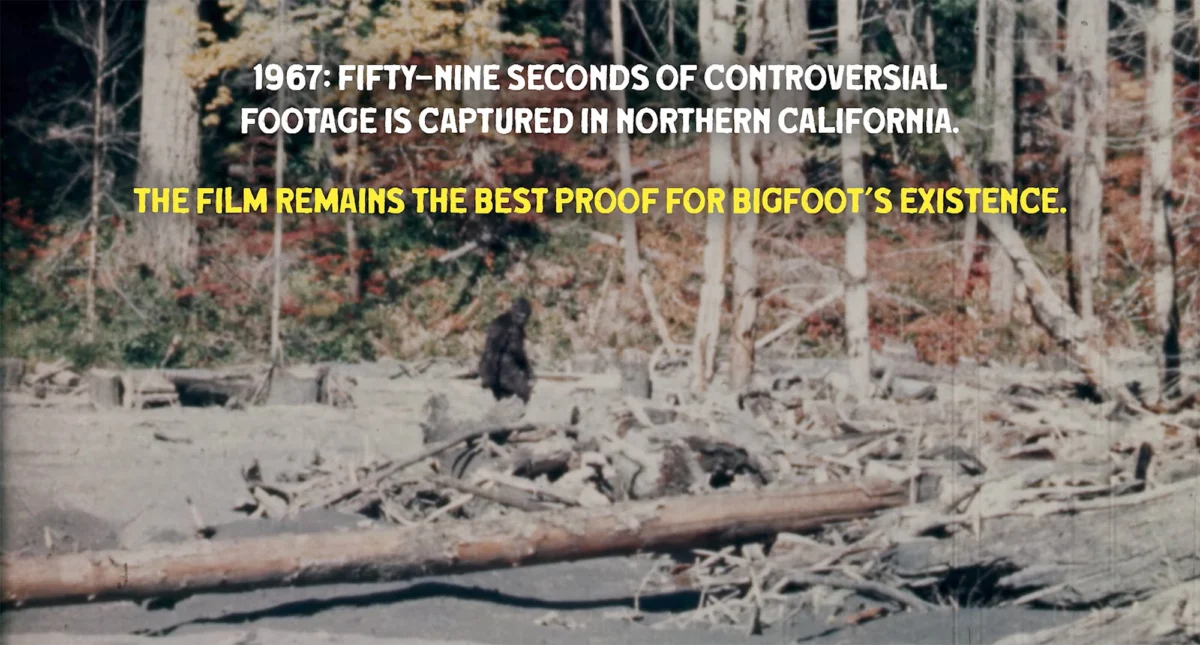
To understand the profound cultural footprint that Capturing Bigfoot aims to explore, one must return to the autumn of 1967 in the remote wilderness of Northern California. On October 20 of that year, documentary filmmaker and explorer Roger Patterson, accompanied by his longtime friend Robert Gimlin, set out into the Bluff Creek area. Their objective was to document evidence of the elusive hominid creature known colloquially as Sasquatch or Bigfoot.
What transpired during that expedition altered the trajectory of American folklore forever. Patterson captured approximately 59 seconds of continuous motion picture footage depicting an upright, bipedal, ape-like creature casually walking away from the camera and disappearing into the dense timberline. The subject, later affectionately and colloquially dubbed "Patty," exhibited fluid biological movements, muscle articulation under dark fur, and anatomical proportions that fueled decades of fierce debate among zoologists, skeptics, and enthusiasts alike.
The resulting footage became the most scrutinized piece of visual evidence in cryptozoology. While skeptics have routinely dismissed the film as an elaborate hoax—pointing to potential costume designs or cinematic trickery of the era—proponents maintain that the biomechanical complexity of the subject exceeds the technological and financial capabilities available to amateur filmmakers in 1967.

Moreover, the commercial impact of the original footage cannot be overstated. Roger Patterson capitalized on the discovery by touring the United States, screening the reel in community halls, lecture theaters, and cinemas. In an era predating the internet and viral digital distribution, the Patterson-Gimlin film achieved a grassroots saturation that grossed upwards of $5 million at the U.S. box office when adjusted for inflation. Yet, the personal toll on those involved was immense, characterized by strained friendships, public skepticism, and a lifelong burden of proof.
Unlocking the Past: A New Discovery in a Safe
Director Marq Evans’ Capturing Bigfoot shifts the narrative away from the endless scientific loops of authentication and forgery, pivoting instead toward the human element. The catalyst for this new cinematic investigation is the miraculous discovery of a 16mm film reel preserved inside a private safe. This archival find serves as the narrative anchor for the documentary, breathing new life into a nearly six-decade-old story.
For the first time, the untold narrative behind the world’s most famous cryptozoological artifact is articulated by those who lived it. The film features firsthand accounts from Roger Patterson’s own son, alongside surviving contemporaries, family members, and associates who witnessed the aftermath of the October 1967 expedition. By granting voice to the individuals who silently carried the psychological and social weight of the footage, Evans constructs a narrative that explores the boundaries of human conviction.
In an official statement regarding the project, director Marq Evans reflected on the emotional gravity of the production. "That footage is one of the most recognizable images in the world, but the people behind it have privately carried its weight for almost sixty years," Evans stated. "This film is their story; about family, loyalty, and the truths they’ve held onto or finally let go of. I’m grateful they trusted me to help them finally tell it."
Chronology and Production Strategy
The path of Capturing Bigfoot from conception to its impending public release has been handled with deliberate precision by its production and distribution teams. Following its initial, highly anticipated world premiere at the 2026 SXSW Film Festival, the documentary became one of the most sought-after non-fiction titles on the festival circuit. Industry insiders reported numerous acquisition offers throughout the spring and summer of 2026.

However, producers Tamir Ardon, Marq Evans, and Nick Spicer made the calculated decision to withhold the film from wide festival circulation and private preview screenings. This strategy was intentionally deployed to preserve the integrity and impact of the newly discovered 16mm footage. By restricting early leaks, the filmmakers ensured that audiences across North America would experience the archival revelations simultaneously.
The distribution model mirrors the grassroots methodology pioneered by Roger Patterson nearly six decades ago. Rather than relying solely on a traditional platform release, XYZ Films has scheduled a hybrid rollout. On October 20, 2026, the film will debut concurrently in select theaters across the United States and become available for digital streaming on Prime Video. This simultaneous theatrical and home-viewing event is designed to foster communal engagement, inviting viewers to gather and debate the evidence collectively—a modern echo of Patterson’s historic cross-country screenings.
Director Marq Evans: A Proven Track Record in Unconventional Biographies
Marq Evans brings a distinct stylistic sensibility to Capturing Bigfoot, having built a formidable reputation as an American independent filmmaker adept at exploring niche subcultures, artistic obsessions, and eccentric historical figures.
Evans’ previous directorial credits highlight his capacity for unearthing compelling human stories within unconventional frameworks. His acclaimed documentary The Glamour & the Squalor examined the life and career of influential modern rock radio pioneer Marco Collins. He subsequently directed Cow by Bear, an idiosyncratic narrative exploring the culinary mythos surrounding a mysterious culinary figure; Claydream, which chronicled the rise and fall of claymation pioneer Will Vinton; and The Diamond King, a documentary investigating the complex world of gemstone replication and economic delusion.
With Capturing Bigfoot, Evans applies his signature empathetic interviewing style and meticulous archival research to a subject often marred by sensationalism. By anchoring the narrative in the domestic and interpersonal realities of the Patterson family, Evans elevates the material from a superficial monster-hunting expedition to a profound meditation on how myths shape familial identity.
Broader Implications and Cultural Resonance

The release of Capturing Bigfoot arrives at a fascinating cultural juncture. In an era defined by deepfakes, algorithmic skepticism, and an increasingly digital landscape, society’s relationship with "proof" has grown profoundly complex. Contemporary cultural analysts have noted a resurgence in public fascination with conspiracy theories, cryptids, and unexplained phenomena as a psychological reaction to an increasingly hyper-regulated and transparent modern world.
By revisiting the Patterson-Gimlin film through a retrospective, human-centric lens, Evans’ documentary helps contextualize our ongoing obsession with the unknown. The film does not attempt to definitively resolve the biological reality of Sasquatch; instead, it investigates why humanity desperately needs monsters to exist in the margins of the map. It questions what drives individuals to stake their reputations, finances, and relationships on the pursuit of a phantom.
Furthermore, the documentary serves as a poignant historical preservation project. As the direct participants and witnesses of the 1967 event advance in age, Capturing Bigfoot acts as a crucial oral history repository. It secures the personal testimonies of the Patterson family before that generation passes into myth themselves.
Looking Forward to the October Release
As the October 20, 2026 premiere approaches, anticipation within both the documentary community and cryptozoological circles continues to mount. The combination of XYZ Films’ marketing reach, Marq Evans’ critical pedigree, and the allure of never-before-seen 16mm footage positions Capturing Bigfoot as one of the definitive non-fiction cinematic events of the autumn season.
Audiences preparing for the 59th-anniversary event will not simply be treated to another rehashing of forest footprints and blurry photographs. Instead, they will be invited into a living room conversation with the ghosts of 1967—an exploration of what happens when ordinary people capture something extraordinary, and the lifelong cost of asking the world to believe them.