The arrival of Andrey Zvyagintsev’s latest cinematic offering, Minotaur, at the 2026 Telluride Film Festival and the upcoming Toronto International Film Festival signals more than just the return of a master auteur; it represents a fundamental shift in the landscape of contemporary political cinema. For Zvyagintsev, whose previous masterpieces Leviathan (2014) and Loveless (2017) garnered critical acclaim and Oscar nominations, the path to the current awards season has been paved with unprecedented personal and professional adversity. Having survived a near-fatal battle with long COVID that rendered him bedridden for a year, and having relocated to France following his vocal opposition to the war in Ukraine, Zvyagintsev returns to the screen with a work that bridges the intimate domesticity of a mid-century classic with the searing, uncomfortable realities of modern geopolitical fracture.
A Legacy of Acclaim and Political Friction
Andrey Zvyagintsev has long been a fixture of the international film festival circuit. His career is defined by a rigorous, uncompromising examination of the human condition within the strictures of Russian bureaucracy and societal decay. Leviathan, a modern-day Job story set in a desolate coastal town, was not only a critical triumph but also a lightning rod for controversy. Upon its release, Russian officials and state-aligned activists famously labeled the film as "evil" and "anti-Russian," a testament to the director’s refusal to sanitize his lens.
This tension between the artistic vision of the director and the political expectations of his homeland persisted through the release of Loveless. That film, which explored the cold, clinical disintegration of a marriage, served as a poignant metaphor for a society that had lost its empathy. Both films were selected as Russia’s official entries for the Academy Awards, securing nominations that solidified Zvyagintsev’s stature in the West. With Minotaur, however, the geopolitical map has shifted. Production took place in Latvia, and the film is being considered for the French nomination for the International Feature Oscar, a transition that highlights the director’s status as a displaced artist finding new institutional homes.
Adapting the Unfaithful: From Chabrol to the Present
Minotaur is an adaptation of Claude Chabrol’s 1969 psychological drama The Unfaithful Wife, a narrative that has long fascinated filmmakers, including Adrian Lyne, whose 2002 version, Unfaithful, brought the concept to a mainstream Hollywood audience. Zvyagintsev, choosing to avoid the influence of Lyne’s interpretation, opted for a direct engagement with Chabrol’s original source material.
The story follows Gleb, a high-powered CEO portrayed by Dmitriy Mazurov, and his wife, Galina, played by Iris Lebedeva. While the core plot remains rooted in the discovery of infidelity, Zvyagintsev expands the narrative to include the pressures of the corporate world—a realm he felt Chabrol neglected. In this iteration, the domestic betrayal of the marriage is inextricably linked to the betrayal of conscience in the workplace. As colleagues defect and the war effort looms over the company’s operations, Gleb’s internal life collapses alongside the external stability of his nation.
The Intersection of Domestic and Political Trauma
Zvyagintsev’s work has always functioned on two tracks: the intimate and the systemic. In Minotaur, the "minotaur" is not merely the infidelity, but the labyrinth of political compromise that contemporary citizens are forced to navigate. By moving the production to Latvia, Zvyagintsev was able to craft a portrait of Russia at the dawn of the Ukraine war that would have been impossible to film within the country’s borders.
The director’s focus on the character of Galina adds a layer of depth often absent in earlier adaptations. While the camera remains largely aligned with Gleb’s perspective, Zvyagintsev provides Galina with the agency to articulate her dissatisfaction. In the film’s narrative, she is not merely an object of desire or a catalyst for her husband’s rage, but a person seeking the tenderness and compassion missing from a society governed by cold, transactional power. The line delivered in the trailer—"I’m tired of being your shadow"—serves as a mission statement for her character’s arc.

Critical Reception and the Festival Circuit
The film’s reception at Telluride suggests that Zvyagintsev’s mastery of pace and tone remains undiminished. Perhaps most surprising to the director himself has been the audience’s reaction to the film’s dark, subtle humor. During a 15-minute, wordless centerpiece sequence, audiences in Telluride reportedly found themselves laughing—a reaction the director had not explicitly sought but which highlights the strength of his mise-en-scène.
This ability to elicit laughter in the midst of a harrowing drama is a hallmark of a director in full control of his craft. Critics have noted that while the film is unmistakably a product of its time, its themes—the erosion of trust, the cost of silence, and the isolation of the individual—are universal.
The Institutional Challenge: France and the Oscar Race
The procedural aspect of this year’s awards race is unprecedented for the director. Zvyagintsev acknowledges the delicacy of the situation: "I do understand: How will it feel for France to give their place to a Russian director?"
The French selection committee, currently deliberating on which film to put forward, faces a complex choice. Selecting a film directed by a Russian exile who has yet to gain full citizenship, yet who has become a voice for the displaced, represents a bold statement on the nature of international cinema. For Zvyagintsev, this recognition would be a profound validation of his career’s trajectory, marking his transition from a state-supported filmmaker to a globally recognized artist whose work transcends the borders of his origin.
Production Chronology and Future Impact
The production of Minotaur follows a nearly ten-year hiatus. The following timeline outlines the key markers of this period:
- 2017: Release of Loveless, which earns an Academy Award nomination.
- 2018–2021: Development of new projects, interrupted by the global COVID-19 pandemic.
- 2022: Zvyagintsev suffers a severe, year-long battle with long COVID, putting all creative work on hold. Following his recovery, he becomes a vocal critic of the war in Ukraine and relocates to France.
- 2023–2025: Production of Minotaur takes place in Latvia, utilizing a multi-national crew to simulate the atmosphere of his homeland.
- 2026: Minotaur premieres at the Cannes Film Festival to critical acclaim, followed by high-profile screenings at Telluride and the Toronto International Film Festival.
The impact of this film extends beyond the awards race. It sets a precedent for how filmmakers living in exile can continue to address the crises of their home nations while integrating into the artistic traditions of their host countries. By choosing to adapt a classic, Zvyagintsev has effectively utilized a familiar narrative structure to anchor a deeply unfamiliar and painful reality.
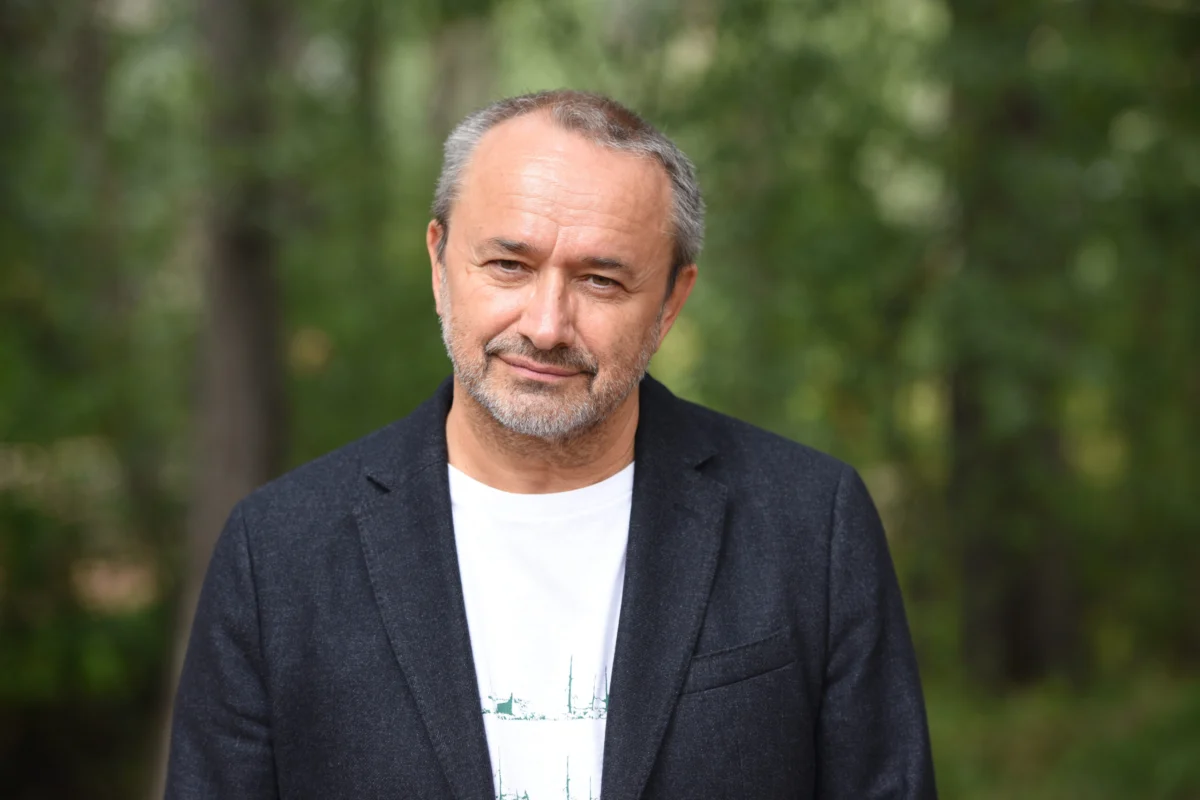
As Minotaur prepares for its theatrical release on November 20, the broader film industry will be watching to see how voters and audiences respond to a director who has essentially started his career anew. Zvyagintsev’s presence in Beverly Hills, calm and collected, serves as a testament to his resilience. Having stared down the threat of physical oblivion and the loss of his professional home, he has emerged with a film that captures the anxiety of an era with characteristic, chilling precision. Whether or not Minotaur secures the French Oscar nomination, the film has already succeeded in its primary task: ensuring that the voice of a critical, unflinching artist continues to be heard on the global stage.