The Toronto International Film Festival often serves as a prestigious launchpad for autumn cinema, bringing together international auteurs, high-profile premieres, and eager audiences looking toward the upcoming awards season. However, the recent screening of Zack Snyder’s long-gestating passion project, The Last Photograph, generated headlines for entirely different reasons. Running at an exhaustive 135 minutes, the feature-length drama represents a notable departure from the high-concept, CGI-heavy superhero epics and space operas that have defined Snyder’s recent career. Instead, the director attempted a grounded, scaled-back thriller set against the rugged backdrop of South America. Despite abandoning his trademark visual flourishes, the film premiered to overwhelmingly negative reviews from critics in attendance, immediately sparking industry-wide discussions regarding the filmmaker’s artistic trajectory, distribution prospects, and the viability of his self-styled cinematic ventures.
Plot Overview and Production Background
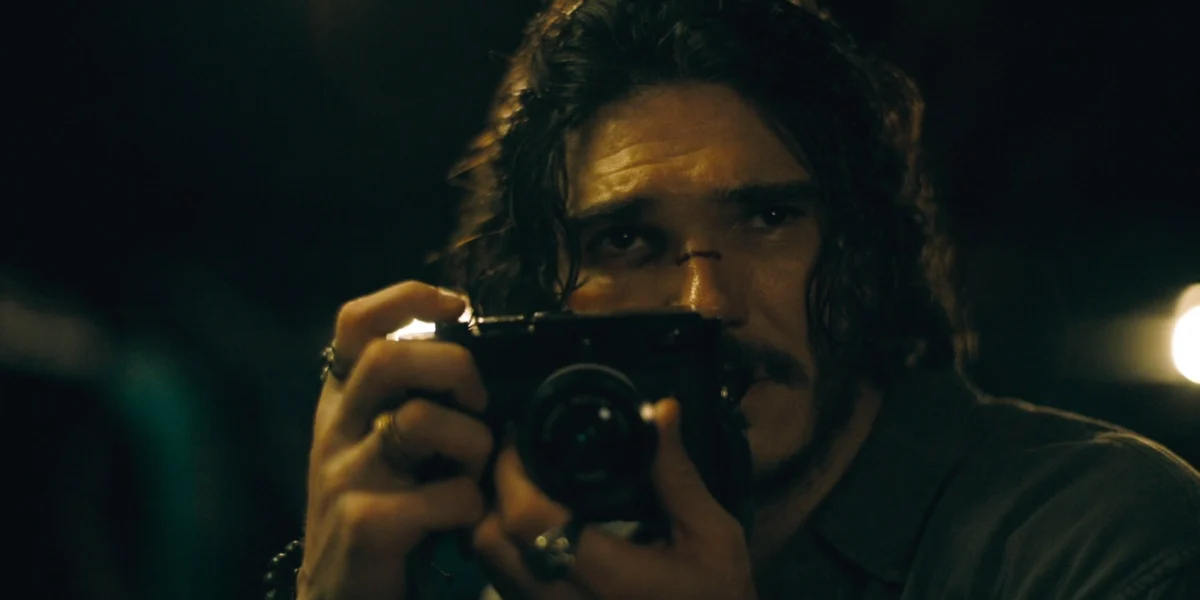
The narrative of The Last Photograph centers on Ethan Black, portrayed by Stuart Martin, a retired Drug Enforcement Administration operative whose life is shattered by the brutal murders of his diplomat brother, sister-in-law, and nephew, alongside the mysterious disappearance of his niece. Driven by grief and a demand for retribution, Black embarks on a perilous journey into the unforgiving mountains of Colombia. To navigate the hostile terrain, he enlists Joe Wallace, played by Fra Fee, a washed-up war photographer struggling with substance abuse. Wallace inadvertently captured the faces of the perpetrators through his camera lens during the initial massacre, making him a crucial witness and Black’s sole guide into dangerous cartel and guerrilla territory.
The supporting cast features Costanza Andrade, Marlon Moreno, Quique Mendoza, Gustavo Angarita, Ed Hughes, Pedro Calvo-Anca, Mia Calvo, Jackie Kay, and José Restrepo. Written by Kurt Johnstad and directed by Snyder—who also assumed cinematography duties—the production was designed to be a deeply personal project for the director, having lingered in development for several years before securing financing and moving into principal photography.
Chronology of Snyder’s Recent Career Shift
To understand the industry context surrounding the premiere of The Last Photograph, it is necessary to examine Zack Snyder’s filmography over the past two decades.
Early 2000s to 2010s: Snyder established a distinct visual footprint in Hollywood through high-octane stylistic adaptations and comic book properties, notably 300 (2006) and Watchmen (2009). His entry into the DC Extended Universe with Man of Steel (2013) and Batman v Superman: Dawn of Justice (2016) cultivated a fiercely dedicated fanbase, which ultimately campaigned for the 2021 release of Zack Snyder’s Justice League on streaming platforms.
2021 to 2023: Seeking creative autonomy, Snyder partnered with major streaming services to launch original intellectual properties. His zombie-heist hybrid Army of the Dead (2021) debuted to mixed reviews but strong viewership metrics, paving the way for his ambitious, two-part space opera franchise, Rebel Moon (2023–2024).
2024 to Present: Following the critical and commercial underperformance of the Rebel Moon series, which failed to capture a mainstream audience or establish a lasting cultural footprint, Snyder pivoted away from expansive science fiction. He shifted his focus to the completion and theatrical release rollout of The Last Photograph, framing it as a return to character-driven storytelling.
Critical Reception and Analysis of the Screenplay
Industry analysts and festival reviewers have pointed to significant structural and narrative flaws in The Last Photograph, raising questions about the collaboration between Snyder and screenwriter Kurt Johnstad. Critics noted that the screenplay relies heavily on expository dialogue, forcing characters to articulate their internal emotional states directly rather than revealing them through action or subtle performance.
The film’s opening sequence—depicting a violent raid witnessed by a photojournalist—draws thematic and stylistic parallels to the opening of Army of the Dead. However, reviewers observed that the subsequent narrative slows considerably, spending a prolonged first hour on exposition and melancholic flashbacks designed to establish Ethan Black’s motivation for revenge. The reliance on familiar cinematic tropes, such as the traumatized protagonist driven by the loss of family members, has been cited as derivative, drawing unfavorable comparisons to contemporary action dramas.
Cinematography and Directorial Choices
One of the most notable technical aspects of The Last Photograph is Snyder’s decision to serve as his own cinematographer, moving away from traditional collaborative partnerships with veteran directors of photography. While reviewers acknowledged that the production captured some striking vistas of the Colombian mountains, the overall visual execution drew sharp criticism.
Critics argued that the film frequently resembles a direct-to-video action release rather than a major festival contender. Particular scrutiny was directed at the digital visual effects, with reviewers pointing out unconvincing muzzle flashes and blood spatter enhancements that detracted from the film’s intended grit and realism. Furthermore, while Snyder notably exercised restraint regarding his signature slow-motion sequences—a staple of his action filmography—the resulting pacing was frequently described as laborious and sluggish over the 135-minute runtime.
Performances and Character Development
The central performances by Stuart Martin and Fra Fee have likewise faced critical censure. Martin’s portrayal of Ethan Black was characterized as stiff and one-dimensional, relying primarily on physical presence and vocal grunts rather than nuanced emotional depth. Reviewers noted that the chemistry between Black and Wallace feels unearned, given the abrupt nature of their alliance and the thin character arcs provided in Johnstad’s script.
Fra Fee’s depiction of the drug-addicted photojournalist was similarly scrutinized for failing to offer a compelling commentary on voyeurism or the ethics of war photography. Instead, critics argued that the characters serve as generic archetypes within a predictable revenge narrative, failing to engage the audience on an emotional or intellectual level.
Broader Industry Implications and Distribution Outlook
The muted, often hostile reception of The Last Photograph at the Toronto International Film Festival carries broader implications for Zack Snyder’s career and his standing within the contemporary studio system. For years, Snyder’s commercial viability was sustained by a dedicated global fan base and lucrative streaming partnerships that guaranteed funding regardless of critical consensus. However, the successive underperformances of the Rebel Moon franchise and now this latest feature suggest a growing disconnect between the filmmaker’s creative output and the expectations of both mainstream audiences and critics.
As of the festival’s conclusion, The Last Photograph has reportedly faced challenges in securing wide theatrical distribution deals, with major studios and specialty distributors exercising caution. Industry observers suggest that the film’s negative critical momentum, combined with its polarizing artistic choices and lack of demonstrable commercial appeal outside of dedicated Snyder loyalists, makes a traditional theatrical rollout increasingly difficult.
Ultimately, the premiere of The Last Photograph highlights a critical juncture for the director. Whether this project prompts a reevaluation of his collaborative choices, script selection, and stylistic approach moving forward remains to be seen. For now, the film stands as a cautionary example of how even established filmmakers can struggle when attempting to transition away from their established cinematic strengths into more grounded, intimate storytelling territory.