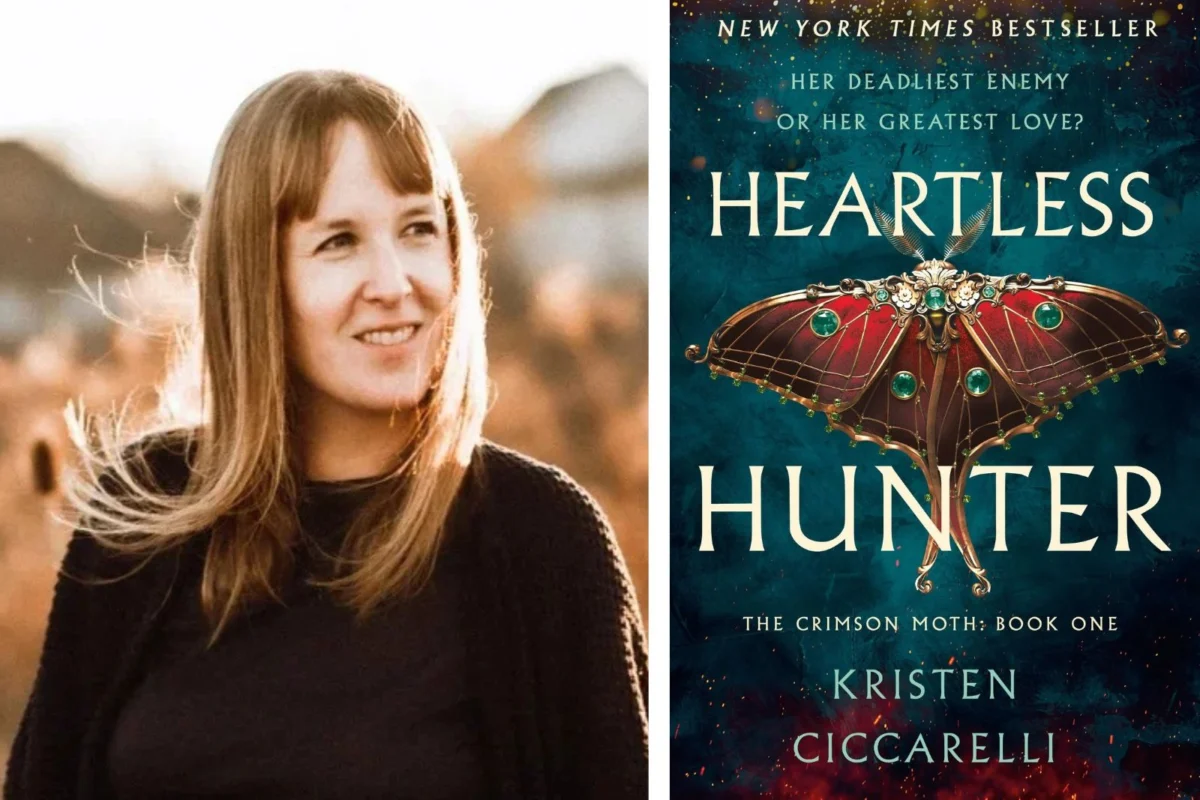
The landscape of television adaptation is undergoing a profound transformation, driven largely by the insatiable global appetite for fantasy romance, commonly referred to in the literary and entertainment sectors as "romantasy." Industry insiders and streaming executives have increasingly turned their attention to bestselling book charts to identify the next major intellectual property capable of capturing a dedicated, multi-demographic audience. The latest literary phenomenon poised to make the leap from the printed page to the broadcast monitor is Kristen Ciccarelli’s acclaimed Crimson Moth universe, a darkly atmospheric fantasy series that has steadily amassed a fervent following since the publication of its inaugural volume.
Development milestones confirm that the underlying dramatic rights for the Crimson Moth series have officially been secured. This development positions the property for potential packaging and presentation to major traditional studios and subscription-based streaming platforms. Although the initiative remains in its formative stages, the creative team assembled to shepherd the project boasts substantial television production experience, signaling a serious and calculated approach to adapting Ciccarelli’s intricate world for the screen.
Creative Leadership and Production Lineup
The acquisition of the Crimson Moth rights is spearheaded by an established trio of writer-producers who bring significant sci-fi, fantasy, and speculative fiction credentials to the endeavor. Georgia Lee, recognized for her work as a writer and director on critically lauded science fiction and fantasy dramas such as The Expanse, The 100, and Carnival Row, is attached to the project. Joining Lee is Joe Henderson, widely known for his tenure as co-showrunner on the supernatural procedural series Lucifer, alongside producer Chad Kennedy.
The task of translating Ciccarelli’s prose into a viable television format has been entrusted to screenwriter Kim Shumway. Best known for her writing contributions to The 100, Shumway has already completed the adaptation’s pilot script. According to industry reports, this initial script is currently being circulated among studio executives and production financiers to gauge interest and secure developmental funding or formal series greenlights.
While the creative team possesses a proven track record in building expansive, serialized genre television, the project has yet to affiliate with a specific network or streaming service. Consequently, casting announcements, production timelines, and projected release windows remain unannounced.
Narrative Framework of the Crimson Moth Universe
At the center of this burgeoning adaptation is the narrative established in the series’ opening novel, Heartless Hunter, followed by its direct sequel, Rebel Witch. Set against the backdrop of a violent societal upheaval, the story explores a high-stakes world where the sociopolitical hierarchy has been radically upended. Witches, who once commanded supreme authority as powerful rulers, have been systematically stripped of their dominion and reduced to persecuted outcasts following a devastating revolution. With their magical abilities steadily waning, survivors are forced into hiding to escape brutal purges orchestrated by the new regime.
The protagonist, Rune, navigates this perilous reality by maintaining a dual existence. By day, she performs the role of a superficial, vapid young socialite, projecting an image of harmless decadence that shields her from suspicion. By night, however, she transforms into the Crimson Moth—a vigilante witch dedicated to rescuing her kind from execution and smuggling them out of the republic via merchant ships.
Complications arise when a rescue operation goes awry, compelling Rune to approach Gideon Sharpe, a prominent, uncompromising witch hunter deeply loyal to the revolution. Seeking to deflect suspicion and gather vital intelligence, Rune attempts to court Gideon, inadvertently developing genuine romantic feelings for him. Conversely, Gideon harbors a profound disdain for the elite class and the superficiality Rune represents. However, upon discovering that the elusive Crimson Moth has been utilizing Rune’s shipping assets for smuggling operations, Gideon initiates a counter-ploy, feigning a courtly romance of his own to infiltrate her social circles. As the two antagonists grow closer, Gideon begins to recognize a fierce intelligence and tender depth beneath Rune’s facade, ultimately viewing her as his ideal intellectual and emotional match. The central dramatic tension hinges on a lethal paradox: whether the woman he is falling for is, in fact, the exact villain he has sworn to hunt down.
Expansion of the Literary Franchise
The announcement of the television adaptation coincides with a significant expansion of the source material itself. Originally marketed by publishers as a self-contained duology, the Crimson Moth series has experienced a commercial surge that prompted Wednesday Books, an imprint of Macmillan, to acquire the rights for a third and fourth installment.
This literary continuation demonstrates sustained consumer demand and healthy sales figures, metrics that typically carry substantial weight for television executives evaluating the longevity and multi-season viability of a prospective book-to-screen adaptation. In the current media ecosystem, streaming networks increasingly favor properties with pre-existing, multi-book arcs, as established literary continuations mitigate the risk of narrative exhaustion and provide a built-in roadmap for serialized television storytelling.
Background Context and the Romantasy Boom
The movement to adapt Kristen Ciccarelli’s work is part of a broader, industry-wide gold rush targeting contemporary fantasy romance literature. Over the past five years, the intersection of romantic fiction and speculative world-building has emerged as one of the most commercially resilient segments of the publishing industry. Propelled significantly by online reading communities on platforms such as TikTok—widely designated as BookTok—authors in the romantasy genre have achieved unprecedented sales volumes and cross-demographic cultural penetration.
Television and film studios have responded aggressively to this trend. Historically, high-budget fantasy adaptations frequently prioritized traditional high fantasy, political intrigue, or epic world-building while marginalizing romantic subplots. However, contemporary audience metrics demonstrate that serialized narratives combining complex magical systems, high-stakes political conflict, and intensely focused central romantic relationships generate exceptional viewer retention and social media engagement.
Properties that successfully merge these elements often cultivate fiercely loyal fanbases capable of driving organic marketing campaigns across digital platforms. This dynamic has made authors and publishers of romantasy series highly sought-after partners for production companies seeking to replicate the cross-platform success seen with other recent literary adaptations.
Industry Implications and Market Outlook
The early-stage development of the Crimson Moth television project underscores several key trends shaping modern speculative fiction television. First, it highlights the increasing professionalization of romance-adjacent fantasy adaptations, with networks enlisting seasoned veterans of dystopian and science fiction television—such as alumni of The 100 and The Expanse—to ensure that the underlying world-building is executed with high production values.
Second, the simultaneous expansion of the book series and the packaging of the TV project reflect a coordinated multi-platform strategy. Publishers and literary agents are increasingly timing media announcements to coincide with major publishing milestones, maximizing public visibility and creating synergistic marketing loops between book sales and screen development news.
As Kim Shumway’s pilot script circulates among prospective buyers, industry analysts will closely monitor which studio or streaming service ultimately acquires the property. The ultimate success of the Crimson Moth adaptation will depend not only on translating the complex cat-and-mouse dynamic between Rune and Gideon onto the screen, but also on capturing the distinct atmospheric tone that resonated with readers of the original novels. For now, fans of Kristen Ciccarelli’s universe must wait for official casting and production updates as the project navigates the competitive landscape of television development.