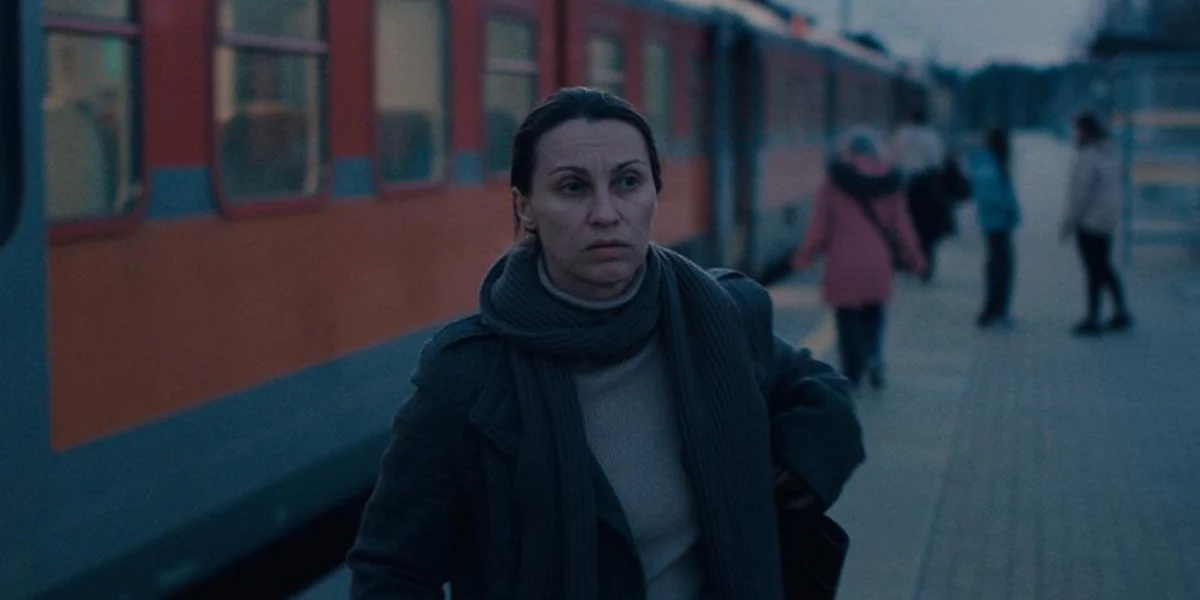
The intersection of crime, grief, and self-reinvention forms the thematic bedrock of Grzegorz Dębowski’s cinematic feature What Belongs to Others, a 105-minute dramatic exploration of urban alienation and moral ambiguity. Centered on the margins of contemporary Polish society, the film follows a low-level burglar who stumbles upon a tragedy and subsequently embarks on an unorthodox psychological journey. Featuring an ensemble cast led by Monika Sabina Kwiatkowska alongside Robert Mania, Ewa Pająk, Martyna Rozwadowska, Aleksandra Kolan, Jadwiga Grygierczyk, and Marcin Kiszluk, the production has drawn critical attention for its unflinching look at housing precarity, emotional desperation, and the fragile nature of personal identity. Written and directed by Dębowski, the film avoids conventional narrative tropes, choosing instead to examine the gray areas of human behavior where desperation and empathy intersect.
Main Facts and Narrative Premise
At its core, What Belongs to Others traces the transformation of Kasia, portrayed by Monika Sabina Kwiatkowska, a woman eking out a marginalized existence in Warsaw. Kasia survives by participating in domestic burglaries orchestrated alongside her domineering partner, skimming valuables from apartments to secure immediate financial stability. However, the narrative pivots during a routine break-in when Kasia discovers the lifeless body of a tenant who has died by suicide.
When her accomplice is swiftly apprehended by law enforcement shortly after the discovery, Kasia finds herself entirely isolated, navigating an unforgiving urban landscape with limited resources and no clear direction. Rather than fleeing the scene permanently, she returns to the deceased man’s residence. What begins as an opportunistic calculation—posing as the dead man’s romantic partner to gain access to insurance policies, remaining possessions, and financial security—gradually evolves into a complex psychological engagement.
As Kasia inhabits the deceased man’s physical space, she uncovers the remnants of his memories, relationships, and personal secrets. The material rewards of the deception steadily lose their significance, replaced by an obsessive need to understand the life of a stranger who can no longer articulate his own story. Through this deceptive framework, Dębowski establishes a central paradox: Kasia’s entire life has been defined by taking things that belong to others, yet the profound intimacy she ultimately craves is something that cannot be stolen by conventional means.
Chronology and Narrative Progression
The progression of What Belongs to Others unfolds in distinct phases, mapping Kasia’s internal and external shift from criminal exploitation to psychological immersion.
- The Discovery: Kasia and her partner target an unassuming Warsaw apartment. Upon entry, they encounter the tragic scene of a tenant’s suicide. Shortly thereafter, her partner is arrested, abruptly severing Kasia’s primary support system and forcing her into a state of acute vulnerability.
- The Deception: Recognizing an opportunity for financial relief, Kasia returns to the apartment. She adopts the persona of the deceased man’s girlfriend, interacting with his acquaintances, neighbors, and fractured family members to secure access to his assets and insurance payouts.
- The Immersion: As weeks pass, the boundary between the lie and reality begins to blur. Kasia moves deeper into the dead man’s history, examining personal objects, reading correspondence, and meeting the people he left behind. She transforms into an investigative figure of a different sort, seeking not to solve a crime, but to decode a life.
- The Catalyst for Reconciliation: Kasia’s fraudulent presence inadvertently forces the deceased man’s estranged family members to confront their shared grief. The lie acts as a strange catalyst, bringing together relatives who had drifted apart and allowing them to address unresolved trauma collectively.
- The Transformation: Confronted with the possibility of a different existence, Kasia re-evaluates her own trajectory. The deception, initially born of greed and survival, ultimately provides her with a borrowed identity, a sense of belonging, and the conceptual framework to envision a future distinct from her past.
Supporting Data and Production Context
Clocking in at 105 minutes, What Belongs to Others is situated within a broader European cinematic tradition that examines social realism, economic precarity, and interpersonal alienation. Director Grzegorz Dębowski utilizes a gritty, unpolished aesthetic to mirror the harsh realities facing marginalized individuals in contemporary urban centers.
Cinematographer Stanisław Horodecki employs a restrained visual approach, keeping the camera tightly bound to Kwiatkowska’s movements. The framing frequently mimics surveillance, reflecting Kasia’s precarious status on the fringes of society. Warsaw is depicted without romanticism, emphasizing brutalist architecture, cramped living conditions, and the pervasive anxiety of housing insecurity—a pressing socioeconomic issue across major European metropolitan areas.
The film’s pacing and tonal consistency rely heavily on Kwiatkowska’s portrayal of Kasia. Industry analysts note that contemporary dramas focusing on morally ambiguous protagonists often struggle to maintain audience engagement without resorting to explicit redemption arcs. Dębowski’s script intentionally resists this impulse, allowing Kasia to remain abrasive, guarded, and difficult to categorize.
Critical Analysis and Thematic Implications
From a sociological and narrative perspective, What Belongs to Others touches upon several overlapping themes: economic disenfranchisement, domestic abuse, the commodification of grief, and the psychology of self-deception.
Critics have pointed out that the film’s greatest strength lies in its refusal to neatly divide its characters into traditional archetypes of victims and perpetrators. Kasia is undeniably an exploiter, yet her intrusion into the dead man’s family dynamic paradoxically facilitates healing for those she is deceiving. This central tension raises uncomfortable ethical questions about authenticity, utility, and human connection. As the narrative suggests, individuals can sometimes become so emotionally isolated that a falsehood is required to remind them of genuine human empathy.
At the same time, analytical reviews of the film have noted certain structural limitations. By attempting to encompass a wide array of heavy social issues—including housing shortages, abusive domestic partnerships, class stratification, and existential despair—the screenplay occasionally spreads its thematic focus thin. Certain character developments and secondary relationships lack the emotional specificity required to make Kasia’s ultimate transformation entirely convincing on a purely visceral level, leaving some elements more resonant intellectually than emotionally.
Despite these narrative contractions, the film succeeds in subverting the conventions of the traditional thriller or mystery genre. The central dramatic question is not focused on what happened to the deceased man, but rather who he was before the tragedy occurred, and consequently, who Kasia might become by stepping into his shoes.
Broader Impact and Industry Reception
As What Belongs to Others circulates within festival circuits and theatrical markets, it contributes to an ongoing dialogue regarding the responsibilities of storytelling in contemporary European cinema. By centering stories on individuals who exist outside social norms without offering tidy moral resolutions, filmmakers like Dębowski challenge audiences to confront the less palatable aspects of urban survival.
The performances, particularly Kwiatkowska’s nuanced navigation of Kasia’s shifting motivations, have been cited as a masterclass in emotional restraint. Rather than leaning on explicit dialogue to communicate internal changes, the production relies on behavioral shifts, spatial awareness, and silent observation.
Ultimately, What Belongs to Others resonates as a stark reminder of human desperation. It illustrates that the desire to belong—to possess a history, a family, and an identity recognized by others—can drive individuals to extraordinary lengths, proving that sometimes, pretending to inhabit another person’s life is the only way a person can learn how to begin their own.