The enduring cinematic legacy of 1995’s naval thriller Crimson Tide has unexpectedly emerged as a primary creative compass for the modern expansion of the Star Trek franchise, influencing everything from upcoming feature films to current streaming television series. Writers and directors Jonathan Goldstein and John Francis Daley, currently spearheading an in-development Star Trek feature for Paramount Pictures, recently revealed that Tony Scott’s claustrophobic nuclear submarine drama serves as a core tonal blueprint for their prospective project. Alongside Antoine Fuqua’s gritty urban crime thriller Training Day, Crimson Tide provides the narrative framework for how the creative duo intends to interrogate the institutional humanity at the heart of Starfleet. This reliance on a non-franchise touchstone highlights a broader, industry-wide pivot toward high-stakes interpersonal conflict and moral ambiguity within a universe traditionally celebrated for utopian idealism.
Background Context and Franchise Evolution
To understand the weight of these creative influences, one must examine the precarious state of the Star Trek intellectual property on the big screen. Following the conclusion of the Kelvin Timeline trilogy with 2016’s Star Trek Beyond—which grossed approximately $343.5 million worldwide against a production budget of $185 million—Paramount Pictures has spent nearly a decade attempting to launch a fourth installment. A revolving door of filmmakers, including Quentin Tarantino, Noah Hawley, Matt Shakman, and S.J. Clarkson, developed various iterations of the project before stepping away due to scheduling conflicts or creative differences.
During this theatrical hiatus, the franchise found robust life on the small screen under the stewardship of executive producer Alex Kurtzman. Series such as Star Trek: Discovery, Star Trek: Picard, and Star Trek: Strange New Worlds successfully revitalized the brand for the Paramount+ streaming platform. However, these television productions have increasingly gravitated toward serialized, high-intensity storytelling that examines systemic institutional failures and ethical dilemmas among Starfleet leadership—a narrative trend often colloquially referred to by fandom as the "badmiral" trope. By citing Crimson Tide, Goldstein and Daley are deliberately leaning into this thematic precedent, signaling to studio executives and audiences alike that their upcoming film will prioritize gritty, character-driven tension over traditional cosmic exploration.
The Plot and Thematic Resonance of Crimson Tide
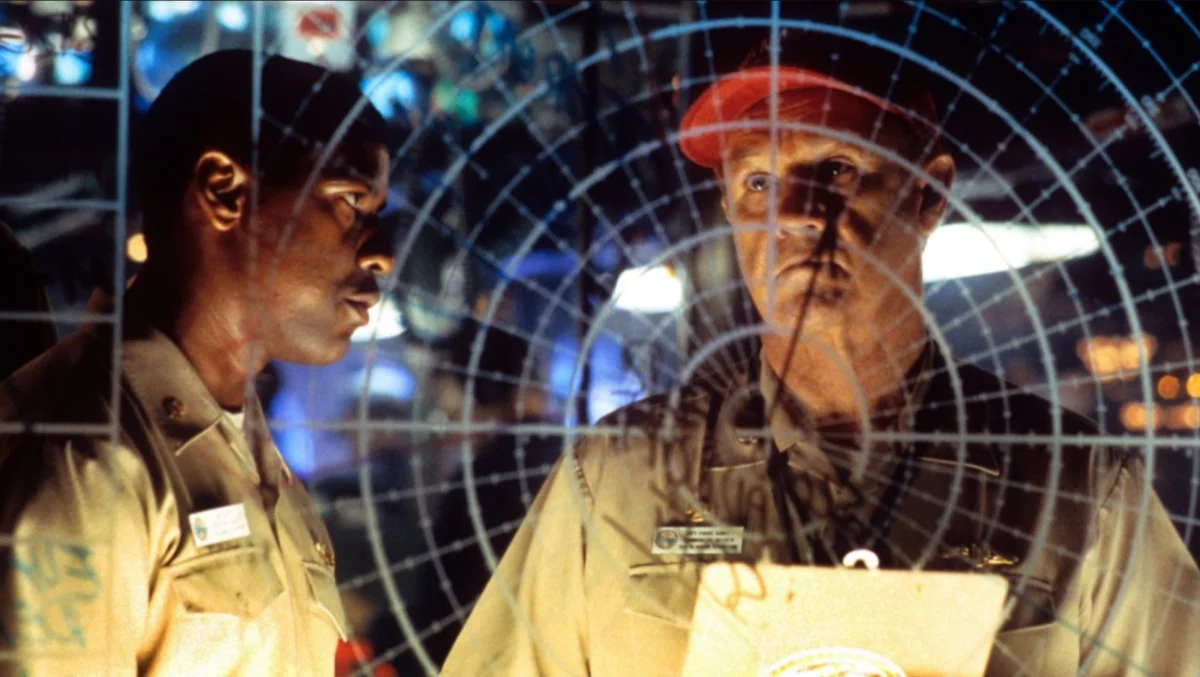
Released by Hollywood Pictures on May 12, 1995, Crimson Tide grossed $157.3 million globally and earned critical acclaim for its relentless pacing and powerhouse performances. The narrative centers upon the USS Alabama, a United States Navy nuclear ballistic missile submarine commanded by Captain Frank Ramsey, a decorated veteran played by Gene Hackman, and Executive Officer Lieutenant Commander Ron Hunter, portrayed by Denzel Washington. The plot ignites when a nationalist coup in Russia threatens global stability, resulting in an ambiguous emergency launch order received via an incomplete communications relay.
Captain Ramsey, eager to preemptively strike before the enemy can retaliate, orders the launch of the submarine’s nuclear payload. Hunter, however, notes that a secondary radio transmission was interrupted before it could be verified. He refuses to authenticate the launch code without confirmation, triggering a harrowing constitutional and tactical crisis within the confines of the control room. The resulting mutiny and subsequent battle of wills is not driven by mustache-twirling villainy, but rather by two fiercely dedicated officers operating under conflicting interpretations of protocol, duty, and existential survival.
This dynamic mirrors the core philosophical debates embedded within the finest narratives of the Star Trek canon. In episodes such as the classic The Original Series installment Balance of Terror—which functioned essentially as an underwater submarine duel between Captain James T. Kirk and a Romulan commander—tactical chess matches have always defined the franchise’s most gripping hours. By elevating Crimson Tide from a thematic cousin to an explicit production benchmark, modern Star Trek creators are explicitly acknowledging that the most compelling science fiction often borrows its dramatic mechanics from historical naval warfare.
Chronology of Modern References and Television Parallels
The resurgence of Crimson Tide within the Star Trek ecosystem is not an isolated incident confined to Goldstein and Daley’s upcoming feature film. Over the past several years, the 1995 thriller has repeatedly surfaced across various arms of the franchise’s expanding media empire. Most recently, the second season of Star Trek: Strange New Worlds featured episodes heavily praised for their psychological submarine-style pacing, particularly narratives that isolated characters in high-pressure environments where command decisions carried catastrophic weight.
Similarly, the third and final season of Star Trek: Picard drew extensive inspiration from Crimson Tide during the construction of the ideological and physical conflict between Admiral Jean-Luc Picard and Captain Liam Shaw, as well as the overarching conspiracy involving compromised Starfleet personnel. Production designers and writers from the Picard creative team explicitly cited the submarine’s interior architecture, claustrophobic lighting schemes, and rigid chain-of-command friction as direct visual and narrative inspirations for the USS Titan-A sequences.
Furthermore, the connection possesses historical irony given that Quentin Tarantino—who famously pitched an R-rated Star Trek concept to Paramount in 2017—contributed an uncredited script polish to Crimson Tide two decades prior. During Tarantino’s uncredited rewrite, he injected pop culture dialogue into the script, including explicit references to the Silver Surfer and Star Trek itself. Characters within the submarine use Star Trek analogies as a motivational and communicative shorthand, bridging the gap between contemporary military culture and science fiction mythology. Yet, while Tarantino’s discarded Star Trek pitch leaned heavily into 1930s-style gangster tropes reminiscent of the Original Series episode A Piece of the Action, subsequent filmmakers have found far more utility in the moral gray areas of Tony Scott’s naval masterpiece.
Official Responses and Creative Direction
Paramount Pictures has maintained a measured public stance regarding the development timeline of Goldstein and Daley’s film, declining to provide specific release date projections while script development continues. However, industry insiders note that the studio is actively seeking a distinct cinematic identity that can differentiate Star Trek from other major space-faring intellectual properties like Star Wars and the Marvel Cinematic Universe.
By positioning their film as a real-time thriller taking cues from Training Day and Crimson Tide, Goldstein and Daley are offering a clear thesis statement to the studio. In their recent interview with entertainment media, Goldstein emphasized their desire to explore the human institution of Starfleet without compromising its foundational tenets. "It takes place almost in real time, and it just is a whole other look at what a Star Trek movie could be without betraying the fundamentals of what it should be," Goldstein stated.
This approach attempts to reconcile a longstanding creative dichotomy within the fandom: the tension between utopian world-building and grounded, suspenseful conflict. Critics of modern franchise output have frequently debated whether Star Trek should remain an optimistic philosophical exploration of diplomacy and science or adapt to modern cinematic palettes that favor serialized grit and psychological realism. By anchoring their narrative in the traditions of naval drama, the filmmakers are betting that audiences will embrace a story where the primary antagonist is not an alien empire, but the terrifying weight of a difficult decision made under pressure.
Broader Impact and Industry Implications
The pivot toward the narrative architecture of Crimson Tide carries significant implications for the future development of mid-to-high-budget science fiction cinema. As traditional box office returns for interconnected cinematic universes show signs of fatigue, studios are increasingly looking to genre-hybrid approaches—marrying high-concept science fiction premises with the tight, self-contained pacing of grounded thrillers.
For Star Trek, adopting a real-time, submarine-style narrative structure offers a cost-effective and creatively fertile method to bypass the escalating production budgets and visual effects bloat that have frequently plagued modern tentpole filmmaking. Confining characters to high-stakes, pressurized environments shifts the financial and narrative burden away from sprawling planetary landscapes and toward actor-driven performances, sharp dialogue, and intricate tactical problem-solving.
Moreover, this creative direction speaks directly to the generational shift occurring behind the camera. Filmmakers and writers who grew up consuming 1990s action and thriller classics are now occupying positions of creative leadership within major franchise management. Their nostalgic touchstones are no longer strictly limited to the foundational texts of 1960s television or 1970s New Hollywood cinema; instead, they encompass the muscular, high-tension studio filmmaking of the late 20th century.
As Paramount Pictures continues to navigate the strategic direction of its premier sci-fi asset, the shadow of the USS Alabama looms larger than ever over Starfleet headquarters. Whether Goldstein and Daley’s forthcoming film successfully materializes on the big screen, the embrace of Crimson Tide demonstrates a growing industry consensus: even in a utopian future where poverty, disease, and war have been eradicated on Earth, the human capacity for ideological conflict, leadership crises, and moral ambiguity remains universal.