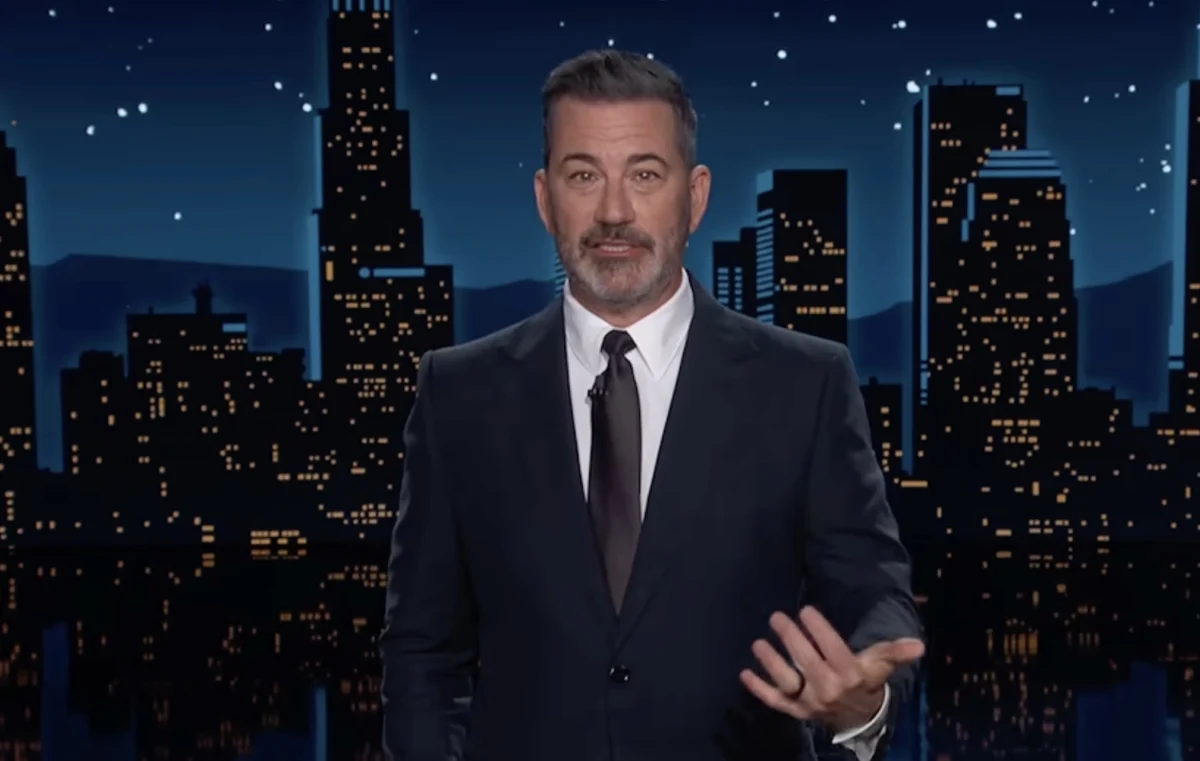
Late-night television host Jimmy Kimmel sparked a fresh round of political discourse on Tuesday, September 15, following his recent monologue on ABC’s Jimmy Kimmel Live! In a segment that garnered significant viral attention, Kimmel targeted Donald Trump’s behavior during a solemn September 11 memorial ceremony, characterizing the president’s appearance as lacking the appropriate level of engagement for such a historic occasion. The host introduced the moniker Teddy Doze-evelt, a play on the name of the 26th U.S. President Theodore Roosevelt, to mock Trump’s apparent lack of alertness during the proceedings.
The incident at the memorial has reignited public debates regarding the physical and mental stamina of high-ranking political figures. While the White House issued an official denial, suggesting that the president was merely engaging in a period of quiet, solemn reflection, the perception of his demeanor has provided fodder for political commentators and late-night satirists alike. This development is part of a broader, ongoing narrative in American media concerning the public performance of aging political leaders.
A Chronology of Public Appearances and Scrutiny
The observation of public figures during state ceremonies is a staple of modern media analysis. In the case of the September 11 ceremony, video footage circulated rapidly across social media platforms, showing the president with his eyes closed for an extended duration. This is not the first time Trump’s physical presence at official events has come under intense scrutiny.
Throughout his political career, Donald Trump has been a frequent subject of speculation regarding his energy levels, often while simultaneously projecting an image of peak vitality. The contrast between his public persona—often characterized by rallies and high-energy rhetoric—and the quiet, sometimes somnolent nature of his participation in formal state functions has created a complex public image. Critics have pointed to a recurring pattern of appearances where the president appears disengaged or resting during significant events. This list includes, but is not limited to, the 2017 presidential inauguration, various cabinet meetings, international summits, and public memorial services for prominent political figures such as Senator John McCain and Reverend Billy Graham.
These instances have been compiled by political observers to build a narrative of inconsistency. For supporters, these moments are often dismissed as the result of a grueling schedule, intense travel, or the inevitable fatigue that accompanies the immense pressures of the presidency. For detractors, however, such moments are presented as evidence of a decline in stamina or a lack of focus.
The Dynamics of Political Nicknaming
The use of nicknames in American politics is a long-standing tradition, though its function has evolved significantly in the digital age. When Jimmy Kimmel labeled the president Teddy Doze-evelt, he was engaging in a rhetorical strategy that has been a hallmark of the Trump administration itself. Donald Trump gained notoriety during the 2016 and 2020 election cycles for his propensity to assign disparaging nicknames to his political opponents, most notably referring to Joe Biden as Sleepy Joe.
Kimmel’s reversal of this tactic—using the president’s own brand of schoolyard-style political humor against him—serves to highlight the irony of the situation. Political scientists have noted that when a candidate or public figure is criticized using their own established methods, the effect is often amplified in the public consciousness. By adopting the nickname, Kimmel creates a linguistic shorthand that allows the audience to instantly recognize the critique, thereby reinforcing the perception that the president is vulnerable to the same criticisms he once leveled against others.
Official White House Communications and Public Perception
In response to the viral video from the September 11 memorial, the White House communications team attempted to mitigate the fallout. Their official statement characterized the president’s posture as "solemnly listening," a defense frequently used by press secretaries when high-profile figures appear to be dozing during long ceremonies.
This defense, however, highlights a persistent challenge in executive communications: the difficulty of managing the optics of a 24-hour news cycle. In the age of high-definition, multi-angle video coverage, the "solemn listening" explanation is often weighed against the raw footage provided by news outlets. While the White House remains committed to its narrative of presidential vigor, the disconnect between that message and the images consumed by the public often creates a "reality gap." This gap is where satirists like Kimmel thrive, as they translate the dissonance between official messaging and observed reality into entertainment.
The Broader Context: Public Health and Leadership
The focus on the physical state of political leaders is not confined to the presidency. During the same monologue, Kimmel turned his attention to Senator Mitch McConnell, who recently returned to the Senate floor following a 92-day absence due to health issues, including a fall. The juxtaposition of the president’s perceived fatigue and the Senator’s health struggles speaks to a wider, uncomfortable conversation in the United States regarding the age of its leadership class.
The median age of the United States Senate and the executive branch has been trending upward for decades. As medical advancements extend both life expectancy and the professional longevity of public servants, the American electorate is increasingly forced to confront the realities of aging in positions of extreme responsibility. While voters generally prioritize policy alignment and partisan loyalty, the visual evidence of physical frailty—or the perception thereof—frequently acts as a catalyst for deeper anxieties about the stability of the government.
Artificial Intelligence and the Future of Political Discourse
The final segment of Kimmel’s monologue touched upon the president’s relationship with artificial intelligence (AI). As global experts warn of the potential dangers posed by unchecked AI development, the president has maintained a relatively dismissive stance, claiming that the technology is under control. Kimmel suggested that the president’s interest in AI is driven primarily by its utility for creating flattering, manipulated imagery.
This critique underscores a significant shift in political campaigning. AI-generated imagery and deepfake technology are rapidly becoming central to how politicians present themselves to the public. By using AI to depict himself in heroic or idealized forms, the president is participating in a new era of "digital myth-making." Kimmel’s point is that while the world worries about the existential risks of AI, political actors are utilizing it for personal branding and the construction of an aspirational, albeit artificial, public image.
Implications for the Political Landscape
The intersection of late-night satire, presidential messaging, and the scrutiny of aging leaders creates a multifaceted political environment. For the administration, the challenge lies in maintaining a narrative of strength while navigating the scrutiny of a skeptical media and a public that is increasingly reliant on short-form, often context-free, video clips.
As the political cycle continues, the ability of these figures to control their own narrative will likely diminish. The incident at the September 11 memorial serves as a microcosm of this tension. Whether the nickname Teddy Doze-evelt will endure as a lasting political jab or fade into the background of a crowded news cycle remains to be seen. However, the event confirms that in the modern era, every public gesture, every momentary lapse in concentration, and every instance of perceived fatigue is subject to immediate, widespread, and often unforgiving analysis.
Ultimately, the reaction to these events reflects a polarized nation where the interpretation of a single video clip can differ wildly depending on one’s political affiliation. For those critical of the current administration, the footage is confirmation of a lack of focus; for those supportive, it is a non-issue, a brief moment of humanity in a relentless schedule. As Kimmel and other cultural commentators continue to weave these moments into the national conversation, the line between serious political discourse and mass-market entertainment becomes increasingly blurred.