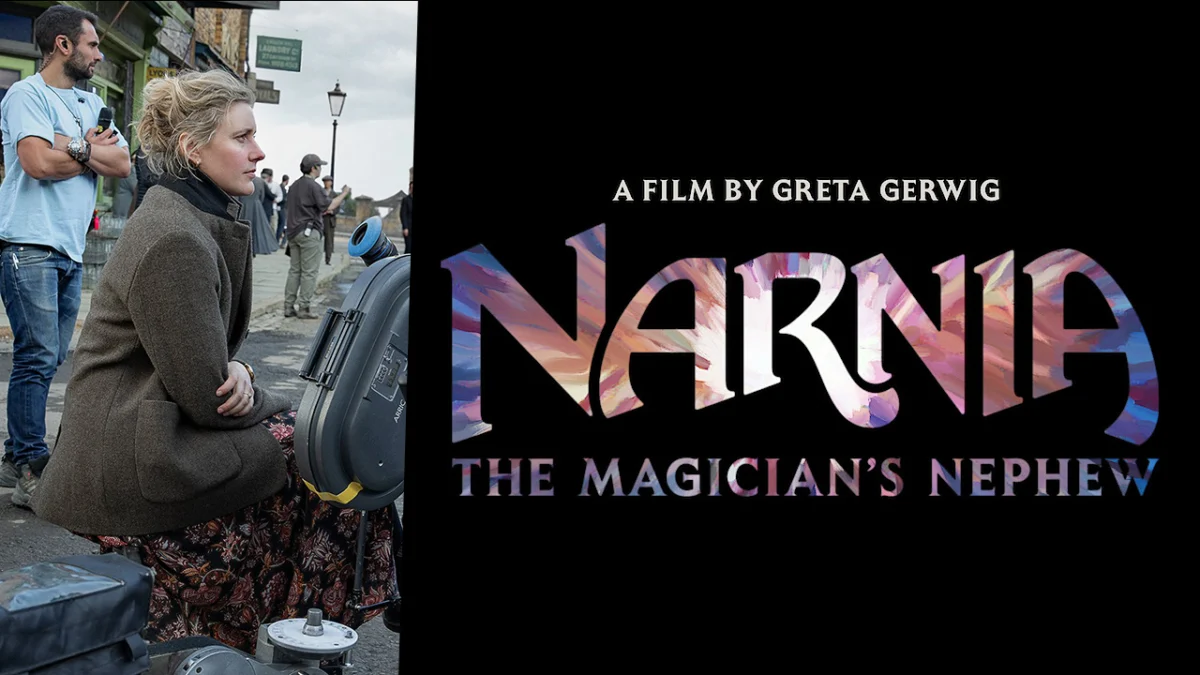
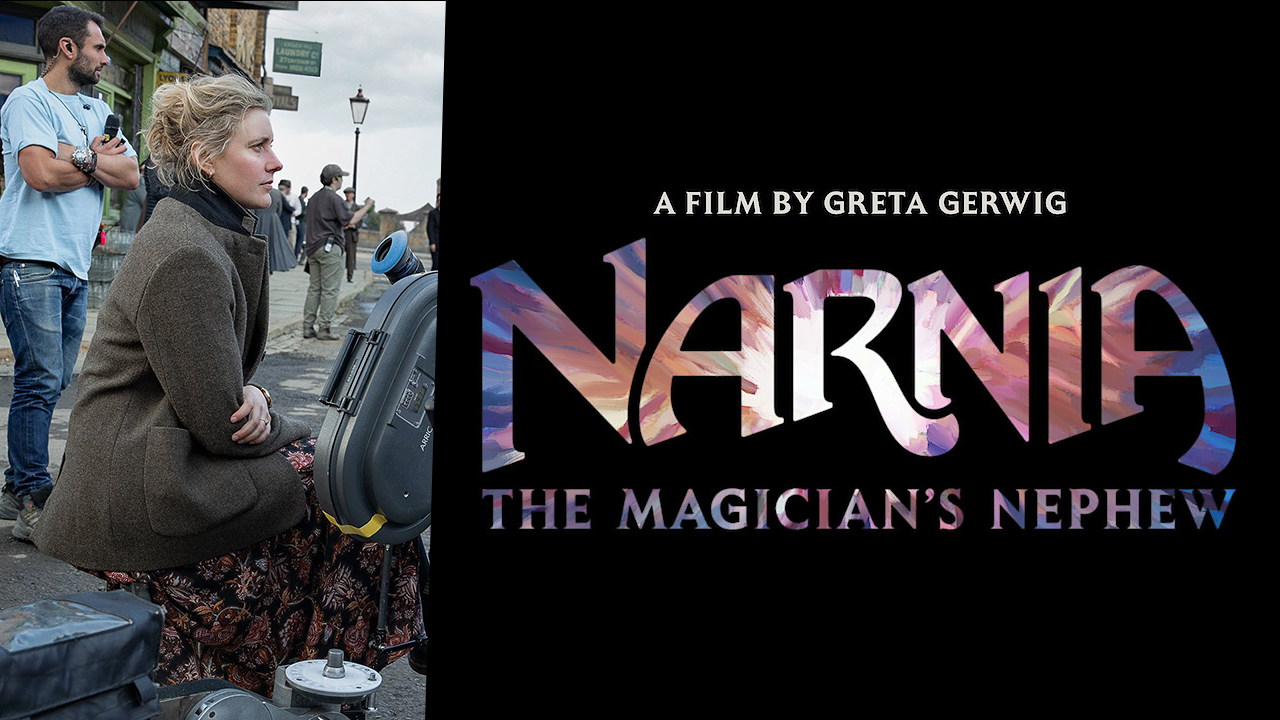
After years of heightened anticipation, development speculation, and meticulous production secrecy, Netflix has officially opened the door to its ambitious fantasy universe. The streaming giant released its first official promotional assets for Greta Gerwig’s upcoming adaptation of The Chronicles of Narnia, confirming the official title as Narnia: The Magician’s Nephew. Alongside the reveal of a newly minted animated logo, Netflix shared a behind-the-scenes photograph of writer-director Gerwig on set, offering the public its first concrete glimpse into the visual aesthetic of the multi-million-dollar production.
The newly released behind-the-scenes image captures Gerwig bundled in a heavy tweed coat, intently monitoring a scene next to an ARRI professional film camera. The background of the photograph reveals a meticulously crafted, practical London street set populated by vintage automobiles and extras dressed in period-accurate, turn-of-the-century attire. This practical approach aligns with months of on-location sightings throughout London during the production phases of 2025, signaling Gerwig’s preference for tangible environments over entirely green-screened backlots.
Production Timeline and Release Delay
The journey of bringing C.S. Lewis’s legendary literary universe to the screen has been a prolonged corporate and creative undertaking for Netflix. Following the acquisition of the rights to the entire Narnia catalog in 2018—marking the first time a single company held the rights to all seven books—the project underwent several years of script development under various creative teams before Gerwig officially signed on to write and direct.
Principal photography commenced in London following extensive pre-production. However, due to the sheer logistical scale of the visual effects, world-building, and post-production pipeline required for a high-budget fantasy epic, Netflix adjusted its distribution schedule. The film’s release date was officially pushed back, and it is now slated to debut globally in theaters and on the streaming platform on February 10, 2027. This extended post-production runway is designed to accommodate the complex visual effects integration necessary to bring the magical elements of Lewis’s origin story to life.
A Star-Studded Ensemble Cast
Gerwig’s adaptation boasts an expansive, high-profile ensemble cast. While official character details remain closely guarded by Netflix executives, industry confirmations and exhaustive casting reports have revealed a stellar lineup. The cast features acclaimed actors including Daniel Craig, Carey Mulligan, Emma Mackey, David McKenna, and Beatrice Campbell, with additional casting announcements anticipated as the release date approaches. The involvement of such high-caliber talent underscores Netflix’s financial and strategic commitment to positioning the Narnia franchise as a premier prestige-fantasy property, rivalling major theatrical studio franchises.
Early Test Screenings and Audience Reactions
While the marketing campaign is only beginning to ramp up, the film has already entered the confidential phase of audience testing. Reports from recent private test screenings held in cities such as Nashville, New York, and New Jersey have begun to circulate within industry and fan communities, offering early clues about the film’s tone and reception.
According to audience invitation materials reported by NarniaWeb, attendees were surveyed regarding their familiarity with a diverse selection of benchmark fantasy and musical properties, including The NeverEnding Story, Labyrinth, Wicked, Barbie, Wonka, and Spider-Man: Into the Spider-Verse. This eclectic mix of reference points substantiates earlier industry rumors that Gerwig’s vision incorporates strong stylistic influences, practical creature effects, and potentially musical or theatrical elements reminiscent of classic 1980s and 90s fantasy cinema.
However, the early audience response has reportedly been mixed. Industry insiders and attendees have noted that while the picture is praised for its strict fidelity to C.S. Lewis’s source material, some viewers have offered critical feedback regarding the pacing of unfinished cuts. Observers familiar with Hollywood tentpole production emphasize that early test screenings traditionally utilize rough, temporary visual effects and unfinalized sound design. The primary objective of conducting these screenings years in advance is to identify structural narrative issues and pacing vulnerabilities, allowing the director and editing team ample time to implement creative revisions.
Strategic Implications for Netflix and the Fantasy Genre
The release of the first promotional material and the ongoing test screenings represent a critical juncture for Netflix’s long-term intellectual property strategy. Historically, the streaming service has struggled to successfully launch and sustain multi-film blockbuster franchises on the scale of traditional Hollywood studios like Disney or Warner Bros. Securing the Narnia franchise was viewed as a foundational step toward establishing a perpetual, globally recognized tentpole property.
By entrusting the franchise to Greta Gerwig—fresh off the historic critical and commercial success of Barbie—Netflix signaled a shift toward auteur-driven, high-prestige blockbuster filmmaking. The decision to grant the project a theatrical release window ahead of its streaming debut further reflects a strategic evolution in Netflix’s distribution philosophy for major event films, acknowledging the box-office potential and prestige associated with theatrical exhibition for fantasy epics.
As the February 2027 release date approaches, industry analysts will closely monitor subsequent trailer drops and marketing rollouts to gauge mainstream consumer interest. Whether Gerwig’s distinct directorial voice and adherence to Lewis’s mythological framework can successfully captivate a modern global audience remains one of the most closely watched narratives in the contemporary entertainment landscape.