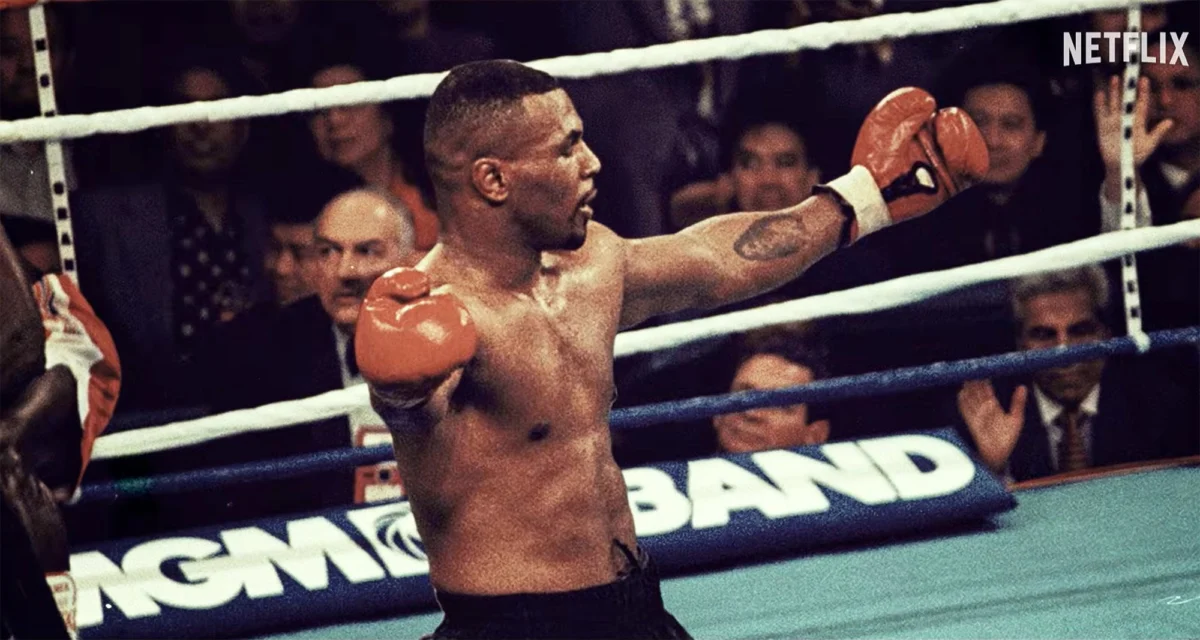
The global streaming giant Netflix has officially released the primary trailer and promotional poster for Tyson, a forthcoming four-part documentary series directed by acclaimed filmmaker Floyd Russ. Scheduled for a worldwide release on October 13, 2026, the project offers an uncompromising and deeply intimate examination of the life, career, and enduring cultural impact of former undisputed heavyweight champion Mike Tyson. The series arrives alongside a separate Netflix release featuring a filmed version of the athlete’s one-man stage performance at the Seminole Hard Rock Hotel & Casino in Hollywood, Florida, further expanding the platform’s multi-format focus on the sports icon.
Tracing the trajectory of one of the most polarizing and recognizable figures in modern athletic history, the documentary utilizes a combination of archival footage, rare access to inner-circle associates, and direct testimony from the subject himself. Russ, known for his previous documentary credits including American Manhunt: The Boston Marathon Bombing and Untold: Malice at the Palace, attempts to balance the athletic triumphs of Tyson’s early career with the profound personal struggles that defined his public and private existence.
Main Facts of the Production
The four-part docuseries is structured as a comprehensive biographical overview, capturing the duality of a man who achieved unprecedented athletic heights while navigating severe personal and legal turmoil. Produced by Jenna Millman, Jacob Miller, and Alexa Ginsburg, with an extensive executive producer roster that includes sports journalist Jim Gray and media personality Bill Simmons, the project aims to present a definitive audiovisual record of Tyson’s journey.
The promotional campaign kicked off on September 17, 2026, with the distribution of the official trailer across digital platforms. In the preview, Tyson addresses his turbulent past directly, noting the psychological burden of his public persona. "This is the dark side of me. That’s just who I became. Addicted to chaos," Tyson states in the footage, setting a sombre and reflective tone for the series.

Rather than relying solely on external commentary, the documentary centers on Tyson’s own perspective, providing a firsthand account of his motivations, regrets, and ongoing reckoning with fame. The production team secured unprecedented access to family members, lifelong friends, and former adversaries to construct a multi-dimensional narrative that avoids simplistic hagiography in favor of a rigorous character study.
Chronology of a Volatile Career
To understand the scope of Floyd Russ’s documentary, the series establishes a chronological framework that divides Tyson’s life into distinct, high-contrast eras.
The initial phase focuses on his turbulent upbringing in Brownsville, Brooklyn, during the 1970s. Characterized by poverty, local crime, and juvenile detention, this period introduced Tyson to the sport of boxing through the guidance of mentor and trainer Cus D’Amato. D’Amato provided both technical training and psychological structure, shaping the young athlete into a formidable force within the amateur ranks.
The second phase highlights his historic ascent through the professional heavyweight division. In November 1986, at the age of 20 years and four months, Tyson defeated Trevor Berbick to capture the World Boxing Council (WBC) heavyweight title, subsequently becoming the youngest heavyweight champion in history—a record that remains unbroken. Over the next several years, he unified the division by capturing the World Boxing Association (WBA) and International Boxing Federation (IBF) belts, establishing a reputation as one of the most dominant and feared punchers the sport had ever seen.
The third phase addresses the rapid unraveling of his professional and personal life during the early 1990s. This era includes his high-profile upset loss to James "Buster" Douglas in Tokyo in 1990, followed by his 1992 conviction for rape, which resulted in a three-year prison sentence. The documentary examines the psychological impact of incarceration on an athlete who had previously been shielded by fame and athletic invulnerability.

The final and ongoing phase covers his tumultuous return to the ring, notable controversies—including the infamous 1997 disqualification bout against Evander Holyfield where Tyson bit his opponent’s ear—and his subsequent retirement. The narrative extends into his post-boxing reinvention as an actor, podcaster, and entrepreneur, illustrating a man attempting to reconcile his aggressive athletic identity with a more contemplative later life.
Supporting Data and Production Metrics
The release of Tyson reflects a broader industry trend within streaming services toward multi-part sports documentary programming that targets historical nostalgia and psychological realism. Floyd Russ, whose previous directorial work includes the narrative feature Ayar and the sports documentary short Stewart 27, brings a background in true-crime and investigative storytelling to the project.
The production’s executive team features industry veterans with deep ties to both sports journalism and entertainment production. Jim Gray, a veteran broadcaster who covered much of Tyson’s active career, brings firsthand archival perspective to the production. Similarly, Bill Simmons, known for his sports-centric media ventures, has frequently championed long-form biographical storytelling that explores the intersection of sports, culture, and human fallibility.
The structural breakdown into four distinct episodes allows the filmmakers to dedicate sufficient runtime to complex historical events without rushing through the legal, financial, and emotional fallout that characterized Tyson’s peak years. The visual style relies heavily on previously unreleased archival material, contrasting the vibrant, high-energy television broadcasts of 1980s championship bouts with subdued, modern interview segments.
Official Responses and Industry Context

While neither Mike Tyson nor director Floyd Russ has released exhaustive written statements regarding the documentary’s thematic goals, promotional materials emphasize the production’s commitment to unvarnished truth. Netflix has positioned the series as a flagship non-fiction release for the autumn 2026 calendar, targeting viewers interested in deep-dive character studies rather than traditional sports highlight reels.
Media analysts note that the project arrives at a time of sustained public interest in biographical sports documentaries, a genre that has seen significant commercial growth following successes like The Last Dance and various installments of the Untold anthology. However, unlike traditional authorized biographies that often serve primarily as promotional vehicles for living subjects, the marketing materials for Tyson explicitly lean into the darker, more controversial aspects of his history, attempting to differentiate the series from standard celebrity-backed media projects.
Broader Impact and Implications
The release of Tyson carries several implications for the documentary genre and the ongoing cultural reassessment of 20th-century sports icons. As athletes from past decades age, streaming platforms have increasingly vied for the definitive rights to their life stories, often attempting to capture a sense of historical closure before subjects pass away or lose the capacity to recount their experiences.
For Mike Tyson specifically, the project represents another step in a decades-long public relations and personal evolution. From a universally feared sports villain in the late 1990s, Tyson has gradually transitioned into a figure of pop-culture fascination, beloved for his eccentricities, candor, and willingness to acknowledge past mistakes. By confronting these elements directly within a structured four-part format, the documentary risks neither total condemnation nor uncritical praise, instead opting for a nuanced exploration of how systemic pressure, immense wealth, and early trauma can distort an individual’s life trajectory.
As global audiences prepare for the October 13 premiere, the reception of Tyson will likely serve as a benchmark for how modern streaming platforms handle complex legacy biographies—balancing the demands of entertainment with the ethical responsibilities of historical documentation.