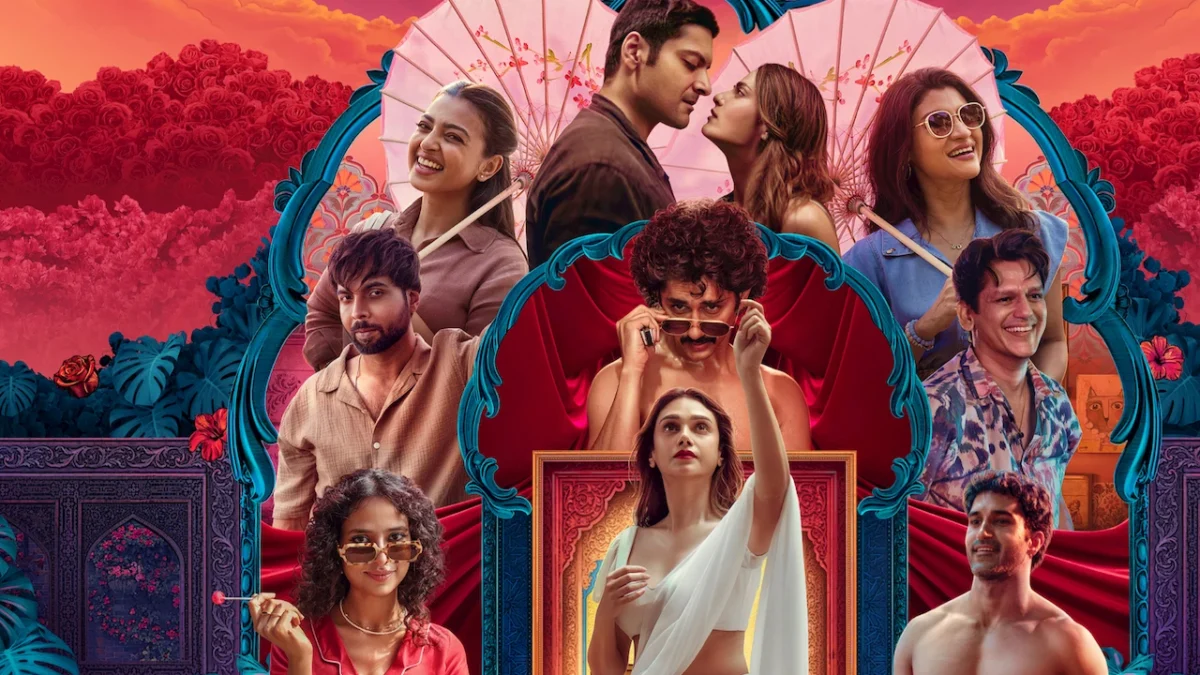
The critically acclaimed and Emmy-nominated Indian anthology franchise is expanding once again, bringing a fresh perspective to contemporary romance, desire, and modern relationships. Netflix has officially debuted the third installment of its celebrated Hindi-language feature, continuing a cinematic tradition that first captured international attention in 2018. Produced by Ashi Dua of Flying Unicorn Entertainment and Ronnie Screwvala of RSVP, the 2026 release maintains the signature format that has made the anthology a cornerstone of India’s prestige streaming catalog: four distinct short films, helmed by four different visionary directors, unified by the complex theme of human intimacy and yearning.
With an expansive total runtime of two hours and forty-four minutes, the latest chapter follows the structural blueprint of its predecessors, offering concise, highly focused narratives designed to fit the schedules of top-tier talent while delivering deep emotional resonance. Alongside its domestic release, Netflix has ensured broad accessibility by equipping the TV-MA-rated feature with localized audio dubs in multiple languages—including English, French, Spanish, Portuguese, Indonesian, Polish, Tamil, Telugu, and Thai—complemented by subtitles in thirty-four languages worldwide.
The Evolution of a Prestige Franchise: A Chronological Overview
The journey of the anthology began in June 2018, when Netflix premiered the original Lust Stories. Conceived as a spiritual successor to the 2013 anthology Bombay Talkies, the inaugural film featured segments directed by Anurag Kashyap, Zoya Akhtar, Dibakar Banerjee, and Karan Johar. The project became an immediate critical darling, breaking conventional boundaries regarding how Indian cinema depicted female sexuality and autonomy. Its cultural impact was cemented later that year when it earned prestigious International Emmy nominations, including a nod for Best TV Movie or Miniseries and a Best Actress nomination for Radhika Apte for her standout performance.
Building on this foundational success, Netflix greenlit a second iteration. Released in June 2023, Lust Stories 2 featured contributions from an equally formidable roster of filmmakers: R. Balki, Konkona Sen Sharma, Amit Ravindernath Sharma, and Sujoy Ghosh. The sequel further explored the nuances of modern relationships, communication, and generational shifts in perception regarding intimacy, proving that the anthology format had sustained commercial and critical viability.
Now, the arrival of the third installment in 2026 marks a significant milestone, solidifying the brand as one of the longest-running and most successful adult-themed dramatic anthologies in the global streaming ecosystem. Industry analysts note that by maintaining a multi-year gap between releases, the production team allows the cultural discourse surrounding intimacy to evolve naturally, ensuring that each new chapter addresses contemporary societal shifts rather than relying on repetitive tropes.
Directors, Cast, and Narrative Breakdown
True to its reputation for attracting heavy-hitting creative talent, the third film features an ensemble of acclaimed directors and some of the most recognizable faces in Indian streaming media.
The first segment is directed by Vikramaditya Motwane, a filmmaker renowned for his meticulous psychological depth and versatility across Netflix Originals, having previously directed the feature films AK vs AK and CTRL, alongside creating the groundbreaking crime thriller series Sacred Games and Black Warrant. Motwane’s segment features a powerhouse cast of platform regulars, including Radhika Apte and Vijay Varma—widely recognized as two of the most frequent collaborators in Netflix India’s history. They are joined by acclaimed actress and filmmaker Konkona Sen Sharma, who previously transitioned to the director’s chair for Lust Stories 2, and versatile actor Abhishek Banerjee, further cementing the segment’s pedigree within the streaming sphere.
The second segment is helmed by Kiran Rao, whose recent directorial work on Laapataa Ladies demonstrated a sharp eye for narrative wit and social commentary. For this project, Rao chose to pair industry newcomer Sana Thampi opposite Gurfateh Pirzada, known for his compelling work in the teen drama series Class. This pairing highlights the anthology’s traditional role as a launchpad for fresh acting talent alongside established stars.
Director Shakun Batra, celebrated for his probing domestic dramas such as Kapoor & Sons and Gehraiyaan, directs the third segment. Batra’s story features Radhikka Madan and Ali Fazal. Discussing the emotional landscape of the project, Fazal noted that the narrative explores love, desire, and vulnerability with a grounded authenticity that avoids melodrama.
The final segment is directed by Vishal Bhardwaj, a master of complex character studies and atmospheric storytelling, who recently helmed the spy thriller Khufiya. Bhardwaj cast real-life married couple Aditi Rao Hydari and Siddharth in his segment, leveraging their natural chemistry to explore the intricacies of imagination and longing. Commenting on his creative approach, Bhardwaj highlighted how desire is inextricably linked to internal narratives and personal expression.
Production Insights and Official Perspectives
Behind the scenes, producers Ashi Dua and Ronnie Screwvala have emphasized the collaborative and boundary-pushing nature of the franchise. Speaking on the enduring appeal of the series, Screwvala pointed out that the overarching objective has always been to challenge traditional cinematic conventions by gathering exceptional filmmakers to articulate deeply human experiences. He noted that as societal norms regarding relationships continue to shift, the anthology adapts accordingly, reflecting the evolving definitions of modern intimacy. Furthermore, Screwvala credited Netflix as an instrumental global partner in championing stories that might otherwise struggle to find mainstream distribution on conventional theatrical networks.
Market Implications and Cultural Significance
The release of Lust Stories 3 underscores a broader strategic pivot within the global streaming market toward high-concept, director-driven anthologies. For Netflix, properties like this serve a dual purpose: they attract subscribers seeking prestige, cinematic storytelling, and they offer a low-risk, high-reward sandbox for A-list talent to experiment with mature themes outside the constraints of traditional theatrical censorship boards.
Media analysts observe that shortened anthology formats—typically featuring runtimes of around forty minutes per segment—are uniquely optimized for modern viewing habits, successfully bridging the gap between feature-length films and serialized television. By consistently pairing veteran auteurs with emerging cinematic voices, the franchise continues to enrich the broader Indian entertainment ecosystem, providing a vital bridge between commercial accessibility and artistic expression. As audiences increasingly demand nuanced, character-driven content that reflects contemporary realities, the enduring success of this anthology suggests that mature, thought-provoking storytelling will remain a cornerstone of regional streaming strategies for years to come.