Narrative Framework and Historical Setting
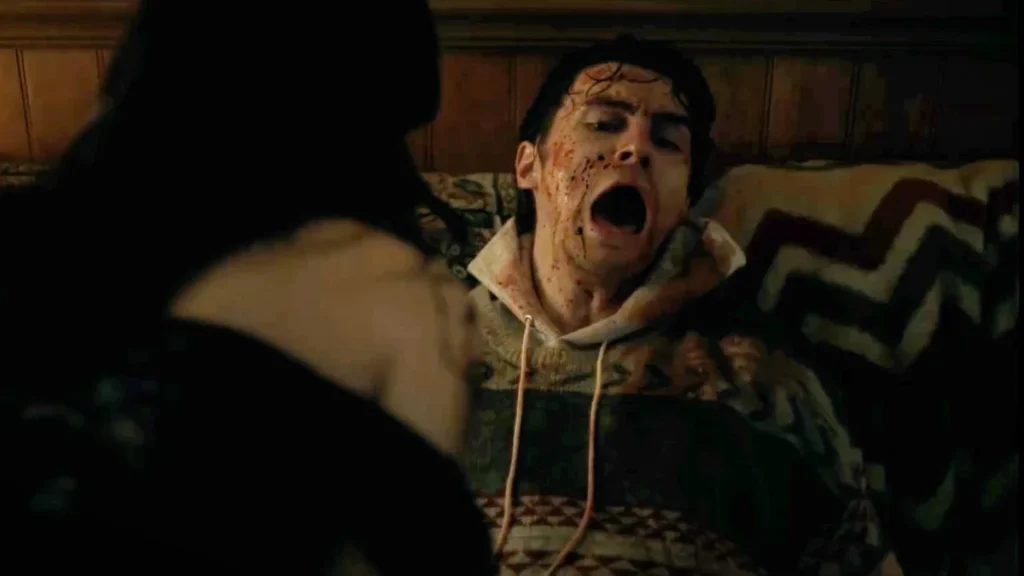
The film is set in the isolated, unforgiving geography of 19th-century rural France, a period often romanticized in literature but depicted here with a focus on the brutal intersection of religious dogma and folk medicine. The story centers on Zélie, portrayed by Zélie Rixhon, who exists under the oppressive control of her father, Jacob, played by Thierry Frémont. The community is depicted as being besieged by an unidentified contagion referred to as the “Black Veil.” This affliction is characterized by a violent physical transformation that allegedly compels the infected to consume human flesh.
Jacob operates within the community as a “Masker,” a role that blends medical authority with fanatical spiritual practice. His primary function is to neutralize those afflicted by the Black Veil through the systematic surgical sealing of their eyes and mouths, followed by their exile into the surrounding wilderness. The film frames these actions as a moral imperative rooted in religious scripture, specifically the prohibition against murder. By “neutralizing” rather than killing the afflicted, the character justifies the torture as a form of spiritual stewardship.
Chronology of Production and Aesthetic Development
The development of The Ones Who Grieve marks a significant pivot for director Quarxx, who has previously garnered attention for his idiosyncratic approach to genre filmmaking. The production timeline saw the director collaborating with co-writer Frederic Soulier to construct a script that relies heavily on sensory overload. The film’s aesthetic is defined by a commitment to practical effects and an emphasis on the grotesque, moving away from the CGI-reliant horror trends of the late 2010s.
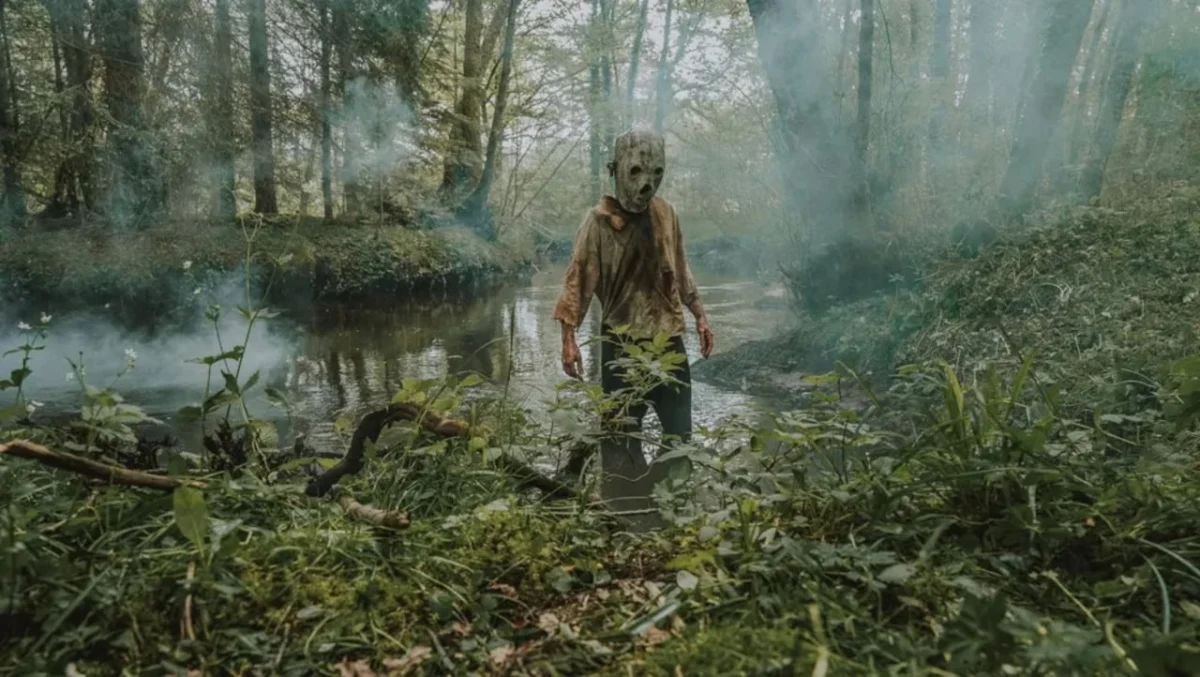
Cinematographically, the film employs an ethereal, high-contrast visual style that draws comparisons to the gothic traditions found in European folklore. This visual richness serves to juxtapose the inherent beauty of the French countryside with the graphic nature of the scenes depicted. The score, composed by Benjamin Leray, has been noted for its deliberate dissonance, which serves to heighten the psychological tension of the film’s more extreme sequences.
Analysis of Extreme Cinema and Audience Reception
The classification of The Ones Who Grieve as an “endurance test” aligns it with a long history of transgressive cinema. Critics and industry analysts note that the film contains explicit depictions of sexual violence, mutilation, cannibalism, and incest. Such content frequently places a film within the “Extreme” category, a niche of cinema that prioritizes the visceral reaction of the audience over narrative cohesion.
From a sociological perspective, the inclusion of such graphic content is often intended to mirror the inherent violence of the historical period being depicted. By portraying the “righteous” characters—those who occupy positions of modern or religious authority—as being just as capable of cruelty as the “monsters” they attempt to suppress, the film offers a cynical critique of institutional power. This thematic focus suggests that the “Black Veil” is not merely a biological plague but a metaphor for the inherent capacity for violence that resides within all societal structures.
![‘The Ones Who Grieve’ Review: Visceral, Unflinching, and Unpleasant Historical Horror [Fantastic Fest]](https://www.dreadcentral.com/wp-content/uploads/2026/09/ONES_WHO_GRIEVE_Still.jpg)
Institutional Implications and Genre Trends
The release of this film at Fantastic Fest highlights a growing trend in global cinema: the return of high-concept, low-nuance horror that challenges contemporary standards of censorship and audience comfort. In recent years, horror has shifted toward psychological thriller elements or “elevated” horror, characterized by metaphorical depth and restraint. The Ones Who Grieve functions as a direct counter-movement to this trend, favoring raw, unadulterated confrontation.
Industry observers suggest that films of this nature fulfill a specific market demand among the “Midnight Movie” demographic—an audience segment that seeks out challenging, confrontational art. However, this focus on extreme imagery presents a logistical challenge for wider distribution. Most streaming platforms and international distributors maintain strict content guidelines that often prohibit the distribution of films featuring excessive sexual violence or non-consensual mutilation. Consequently, the commercial footprint of The Ones Who Grieve is likely to be limited to niche festival circuits and independent art-house cinemas.
Critical Perspectives on the "Nihilism" Narrative
A central point of discussion among critics involves the film’s refusal to provide a cathartic resolution. While the narrative reaches a point where victims are afforded the opportunity to reciprocate the violence they endured, the result is described as emotionally hollow. This intentional lack of satisfaction is arguably the film’s most significant creative choice. By denying the audience a sense of moral victory or thematic closure, Quarxx asserts a nihilistic worldview where violence is self-perpetuating and ultimately meaningless.
This creative decision has polarized critical response. Some viewers interpret this as a bold, uncompromising artistic statement that strips away the artificial comforts of the genre. Others argue that the film’s reliance on unrelenting misery—without a structural or philosophical anchor—reduces the impact of its message. As a piece of cinematic craft, the film succeeds in its technical execution, particularly in the performances of Rixhon, Frémont, and Isabelle Anciaux, who manage to imbue their characters with depth despite the narrative constraints of the script.
Broader Societal and Historical Context
The recurring theme of misogyny within the film serves as a reflection of the patriarchal structures that governed 19th-century rural life. The dialogue, specifically lines regarding the characterization of women as “succubi,” anchors the horror in a historical reality where female agency was frequently met with violence or institutionalized control. By weaving these themes into a supernatural horror framework, the film invites a reading of historical trauma, though it avoids explicit historical commentary in favor of genre-based exploitation.
The film’s reception suggests that while there is an audience for extreme cinema, the threshold for what constitutes “impactful” versus “gratuitous” violence remains a subject of intense debate. As global film markets continue to grapple with shifting moral standards, The Ones Who Grieve remains a significant case study in the tension between artistic freedom and the limits of audience tolerance. Its legacy will likely be defined not by its specific narrative points, but by its contribution to the ongoing dialogue regarding the purpose of extreme violence in modern horror filmmaking.
Ultimately, the film stands as an unvarnished, if deeply unpleasant, artifact of modern genre experimentation. Whether it serves as a necessary confrontation with the darker impulses of history or simply a descent into nihilism remains for the viewer to decide. It is a work that demands a high degree of emotional and psychological fortitude, reflecting a commitment to a specific, uncompromising vision of the world that few contemporary directors are willing to explore with such intensity.