The 1994 film adaptation of Interview with the Vampire remains a cornerstone of gothic horror cinema, an enduring work that redefined the depiction of supernatural creatures for modern audiences. To commemorate the film’s 30th anniversary, Warner Bros. has released a newly restored 4K Ultra HD edition, now available on digital platforms and Blu-ray. This release not only provides a technical upgrade to the visual presentation of Neil Jordan’s work but also serves as a retrospective on one of the most complex productions in 1990s Hollywood history—a project that survived years of development hell to become a cultural touchstone.
The Evolution of a Literary Phenomenon
The origins of the film trace back to 1976, the year Anne Rice published her debut novel, Interview with the Vampire. The book served as the inaugural entry in The Vampire Chronicles, a series that would eventually span over a dozen volumes. The literary impact of the series was immediate; Rice moved away from the traditional, monstrous portrayal of vampires popularized by Bram Stoker’s Dracula and instead introduced beings characterized by existential melancholy, romanticism, and intense moral ambiguity.
![‘Interview With the Vampire’ Director Talks Anne Rice, Lestat, Claudia & the Legacy of All Three [Exclusive]](https://www.dreadcentral.com/wp-content/uploads/2026/09/LESTAT-LOUIS-1600x900.jpg)
For nearly two decades, the film rights to the novel passed through various hands in Hollywood. The narrative, which centers on the immortal life of Louis de Pointe du Lac and his volatile relationship with the charismatic vampire Lestat de Lioncourt, proved difficult to adapt due to its non-linear structure and deep psychological introspection. It was not until the critical and commercial success of Neil Jordan’s 1992 drama The Crying Game that the studio entrusted him with the project. Jordan’s approach to the adaptation was heavily influenced by the visual style of Francis Ford Coppola’s 1992 film Bram Stoker’s Dracula, aiming to translate Rice’s lush, atmospheric prose into a cohesive visual language.
A Chronology of Production and Casting Hurdles
The production of Interview with the Vampire was marked by significant challenges, particularly regarding the casting of its central figures. Before the project reached its final iteration, several high-profile actors were considered for the lead roles. Biographer Katherine Ramsland noted that Anne Rice originally envisioned Alain Delon for the role of Louis. Furthermore, Julian Sands was a frontrunner for the role of Lestat, but studio executives deemed him insufficient as a box-office draw.
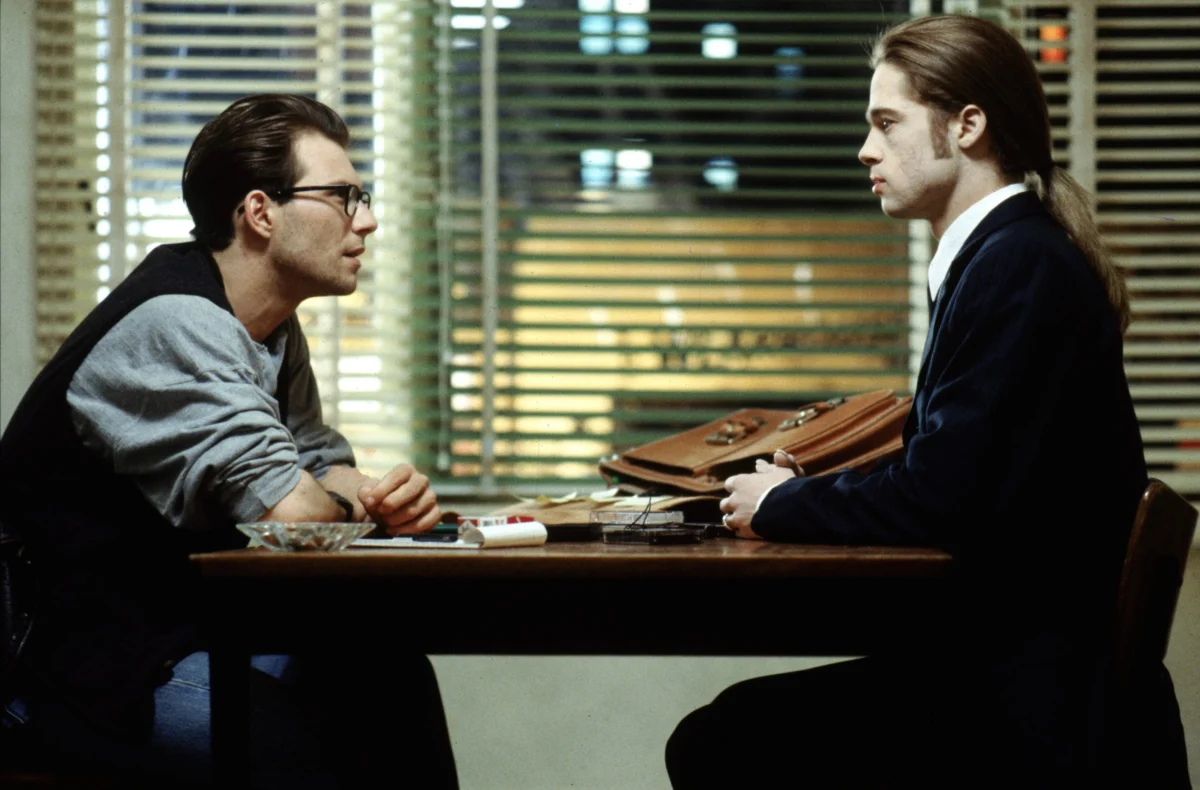
When the final casting decisions were announced—Brad Pitt as Louis, Tom Cruise as Lestat, and Christian Slater as Daniel Molloy—the response from both the author and her dedicated fanbase was initially polarized. Many critics and readers struggled to reconcile the physical appearance of the actors with the descriptions provided in the source material. However, Neil Jordan maintained his creative vision, championing the "icy beauty" of Cruise for the role of Lestat. In a tragic turn of events, the role of the interviewer, Daniel Molloy, was originally cast with River Phoenix, who passed away shortly before production began; the role was subsequently recast with Christian Slater.
![‘Interview With the Vampire’ Director Talks Anne Rice, Lestat, Claudia & the Legacy of All Three [Exclusive]](https://www.dreadcentral.com/cdn-cgi/image/width=788%2Cheight=444%2Cfit=crop%2Cquality=75%2Cgravity=auto%2Csharpen=1%2Cmetadata=none%2Cformat=auto%2Conerror=redirect/wp-content/uploads/2026/09/LESTAT-LOUIS.jpg)
The production was defined by its nocturnal schedule. To maintain the film’s gothic aesthetic, the cast and crew operated almost exclusively during the night. Brad Pitt, in retrospective interviews, has famously cited the intensity of this experience, noting that the cast spent months without seeing the sun while filming on location in New Orleans and London.
Technical Restoration and Artistic Intent
The new 4K restoration project is intended to preserve the visual fidelity of the original 35mm film stock. The restoration process involved the participation of key creative personnel, including director of photography Philippe Rousselot and production designer Dante Ferretti. The result is a sharper, more color-accurate rendering of the film’s distinctive palette, which relies on heavy shadows and warm, candlelit tones to evoke the decadence of the 18th and 19th centuries.
Included in the new home media release are updated featurettes and a collection of previously unseen deleted scenes. These additions offer a window into the director’s initial edit. Jordan revealed during the promotional phase of the restoration that he had attempted to locate his original, "bloodier" cut of the film—a version that had been screened for test audiences in 1994—but was unable to recover it from the studio vaults. Despite this, the inclusion of the recovered deleted scenes provides a more comprehensive look at the scenes that were trimmed to meet studio requirements for the original theatrical release.
![‘Interview With the Vampire’ Director Talks Anne Rice, Lestat, Claudia & the Legacy of All Three [Exclusive]](https://www.dreadcentral.com/cdn-cgi/image/width=787%2Cheight=518%2Cfit=crop%2Cquality=75%2Cgravity=auto%2Csharpen=1%2Cmetadata=none%2Cformat=auto%2Conerror=redirect/wp-content/uploads/2026/09/DANIEL-LOUIS-1.jpg)
Comparative Analysis: The AMC Adaptation
The enduring popularity of the Vampire Chronicles has led to a recent resurgence in interest, most notably through the AMC television series adaptation, which premiered in 2022. The series, which features Jacob Anderson as Louis and Sam Reid as Lestat, has taken liberties with the timeline and character arcs of the original books, most notably in the aging of the character Claudia.
In Jordan’s film, Kirsten Dunst’s portrayal of Claudia—the "eternal child" vampire—was central to the film’s exploration of power dynamics and trapped domesticity. Jordan has expressed professional curiosity regarding the AMC series’ decision to portray Claudia as a teenager. From his perspective, the tragedy of the character in his film relied entirely on her forced state of physical infancy, which served as a physical anchor that prevented the characters of Louis and Lestat from ever truly separating. The divergence between the 1994 film and the modern television series underscores the malleability of Rice’s mythology and its ability to be reinterpreted for different cultural generations.
Broader Impact on the Horror Genre
The success of Interview with the Vampire fundamentally altered the landscape of supernatural fiction. By humanizing the vampire, the film provided a blueprint for future works that explored the "doomed outsider" trope. The romanticization of the monster, while not entirely new, was elevated to a level of literary seriousness by Rice, and Jordan’s film successfully codified this aesthetic for a mainstream audience.
![‘Interview With the Vampire’ Director Talks Anne Rice, Lestat, Claudia & the Legacy of All Three [Exclusive]](https://www.dreadcentral.com/cdn-cgi/image/width=787%2Cheight=529%2Cfit=crop%2Cquality=75%2Cgravity=auto%2Csharpen=1%2Cmetadata=none%2Cformat=auto%2Conerror=redirect/wp-content/uploads/2026/09/CLAUDIA-LOUIS-1.jpg)
The financial performance of the film in 1994, which grossed over $223 million worldwide against a budget of approximately $60 million, demonstrated that audiences were eager for elevated, character-driven horror. It proved that a film could be both visually opulent and psychologically demanding. In the decades since, the movie has transitioned from a polarizing adaptation to a definitive classic of the genre.
As the film marks its 30th anniversary and the source novel celebrates its 50th, the 4K restoration serves as a formal recognition of the film’s place in cinema history. Neil Jordan’s reflection on the production remains consistent: he aimed to create a film that was not merely a series of jump scares, but an exercise in sustained dread. By focusing on the "point of view of the monster," Jordan successfully forced audiences to empathize with figures who were inherently dangerous, a narrative choice that continues to define the genre’s most compelling entries today.
The legacy of the film, supported by this new high-definition release, ensures that the story of Louis and Lestat will continue to be examined by new generations of scholars and fans alike. Through the synthesis of meticulous set design, a haunting score, and performances that defied initial expectations, the 1994 adaptation remains an essential case study in how to translate complex, world-building literature into the medium of film. As modern audiences return to the film through this new restoration, they are invited to view the gothic tragedy with the same level of critical appreciation that has kept the legend of the vampires of New Orleans alive for half a century.