Production Constraints and Technical Innovation
The creation of Patches serves as a testament to the capabilities of lean, independent production teams. Filmed over a compressed three-day schedule, the project was executed by a dedicated five-person crew. Perhaps the most significant hurdle faced by the production team was the complete lack of power infrastructure at the chosen location. To circumvent this, the crew operated entirely on battery-powered equipment, a logistical feat that necessitated meticulous planning and power management throughout the shoot.
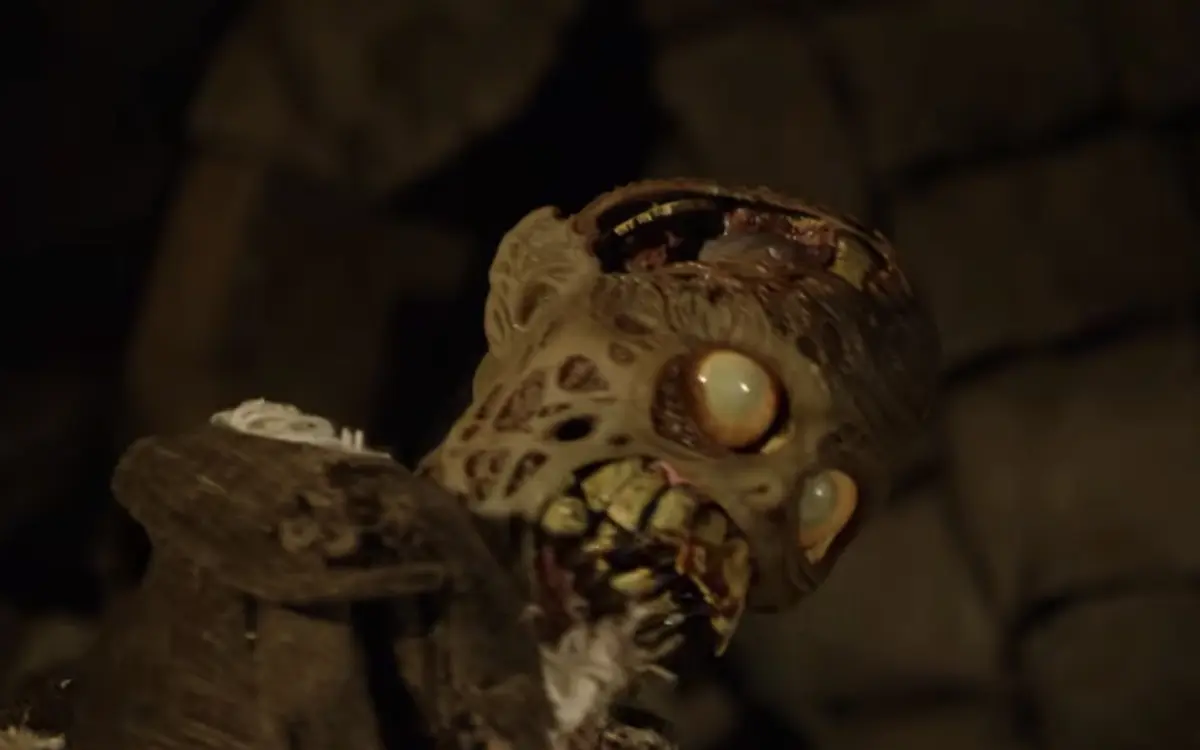
The centerpiece of the short is "Teddy," a custom-built puppet that required over 20 hours of intricate labor to construct. The commitment to tactile, physical horror is evident in every frame; the production utilized felt, fabric, and traditional practical effects to achieve its visceral aesthetic. According to director Jesse Blanchard, the film contains zero computer-generated imagery (CGI), a deliberate creative choice that aligns with Puppetcore’s established brand identity of blending puppetry with high-intensity gore. The film’s atmosphere is further elevated by an original musical score composed by Michael Richard Plowman, which underscores the unsettling nature of the puppet-driven narrative.
The Evolution of Puppetcore and the Frank and Zed Project
The partnership with Public Storage marks a pivotal moment for Puppetcore, acting as a bridge to larger-scale ambitions. The funding provided through this collaboration serves a dual purpose: supporting the immediate production of Patches while simultaneously bolstering the ongoing development of the studio’s highly anticipated feature film, Frank and Zed.
Frank and Zed represents the culmination of years of work for the Portland studio. The feature film focuses on the symbiotic relationship between two monsters struggling to survive in a hostile world. The project has gained significant traction within the independent horror community, with exclusive production stills and teasers having already generated considerable anticipation. By securing corporate sponsorship, Puppetcore is demonstrating a viable model for independent genre filmmakers to finance ambitious, high-effort projects without sacrificing creative autonomy.
A New Era for Horror Anthologies
The inclusion of Patches in Season One of Scary Good highlights a growing trend in the streaming industry: the curation of high-quality, short-form horror content. Anthology series like Scary Good provide a vital platform for independent directors to showcase their technical prowess to a wider audience. In the current media landscape, where short-form content is increasingly consumed on digital platforms, the ability to deliver a self-contained, high-impact narrative in under five minutes has become a valuable skill set.
The professionalization of the horror short as a distinct format allows creators like Blanchard to experiment with tone and technique in ways that might be restricted in feature-length productions. The success of this collaboration between a creative studio and a non-traditional sponsor suggests that brand-integrated horror could become an increasingly common avenue for funding creative endeavors in the independent sector.
Practical Effects in a Digital Landscape
The decision by Puppetcore to eschew CGI in favor of practical effects is not merely a stylistic preference; it is a tactical response to the saturation of digital effects in modern cinema. Practical effects possess a physical presence—a "weight"—that many audiences find more immersive. The process of building a character like Teddy from scratch requires a level of artistry that, while time-consuming, provides a tangible quality that digital models often struggle to replicate.

Data from the independent film sector suggests that audiences are increasingly seeking "authentic" filmmaking experiences. The 20-hour construction time for a single puppet highlights the labor-intensive nature of this approach. While digital effects offer speed and efficiency, the labor-intensive nature of practical effects creates a unique market value, particularly within the horror genre, where the physical interaction between characters and their environment is paramount.
Industry Implications and Future Prospects
The partnership between Puppetcore and Public Storage offers a blueprint for future collaborations between small creative studios and corporate entities. By aligning with a brand that provides the physical space (storage) necessary for the logistics of filmmaking, Puppetcore has successfully leveraged real-world needs to solve financial constraints. This mutually beneficial arrangement allows the studio to maintain its "puppets, gore, and practical effects" mantra while ensuring the financial sustainability of their feature-length endeavors.
The broader implications for the horror industry are significant. As the cost of high-quality digital cameras and lighting equipment continues to decrease, the barrier to entry for high-quality production is lowering. However, the requirement for human labor—the artisans, the puppeteers, and the composers—remains constant. The success of Patches serves as a reminder that technological limitations, such as the lack of power outlets, do not necessarily hinder quality; rather, they force innovation.
Chronology of Production and Release
The timeline of the project reflects a disciplined approach to independent production. Following the initial conceptualization and the sourcing of sponsorship, the production phase was condensed into a three-day intensive shoot. This was followed by a post-production period focusing on sound design and the integration of Michael Richard Plowman’s score. The subsequent distribution deal with Be Afraid TV for the Scary Good anthology series ensures that the short will reach an international audience, effectively acting as a promotional vehicle for the upcoming Frank and Zed feature.
For industry observers, the trajectory of Puppetcore serves as a case study in audience engagement. By utilizing platforms like Dread Central to premiere their work, the studio taps directly into a core demographic of genre enthusiasts. This direct-to-audience engagement strategy, combined with the professional distribution of an anthology series, provides a robust framework for sustaining a career in the competitive landscape of independent horror.
Concluding Analysis
Patches is more than just a short film; it is a statement of intent from a studio that refuses to compromise on its aesthetic values. In a cinematic environment where the lines between physical and digital are increasingly blurred, Puppetcore’s commitment to the tactile, the visceral, and the handmade stands out as a distinctive artistic choice. The support from Public Storage, while unconventional, has provided the necessary resources to keep this independent spirit alive.
As the industry looks toward the eventual release of Frank and Zed, the success of this four-minute short provides both a proof of concept and a source of momentum. It demonstrates that with the right combination of technical skill, creative vision, and strategic partnerships, independent filmmakers can continue to push the boundaries of what is possible in horror, ensuring that the legacy of practical effects remains a vital part of the genre’s future. For those interested in the craft of filmmaking, the short serves as an accessible entry point into the world of Puppetcore, offering a glimpse into the meticulous process of bringing nightmare-inducing puppets to life.