The announcement of Saw: Genesis, currently in development by the Krakow-based studio Bloober Team, marks a significant moment for the horror gaming genre. As Bloober Team prepares to expand the Jigsaw mythos, the industry is looking back at the franchise’s previous interactive endeavors, most notably the 2010 release Saw II: Flesh and Blood. Developed by Zombie Studios and published by Konami, the title remains a point of intense discussion regarding the challenges of adapting the elaborate, morality-driven traps of the film series into a functional video game format.
Historical Context and Development Timeline
The Saw film franchise, which began in 2004, became a cultural phenomenon due to its high-concept traps and complex, non-linear narratives. By the late 2000s, the property’s popularity prompted Konami to secure the rights for a series of video game adaptations. The first entry, titled simply Saw: The Video Game, was released in 2009 and served as an interquel, bridging the gap between the first and second films.
Saw II: Flesh and Blood followed in October 2010 for the PlayStation 3 and Xbox 360. The development cycle was notably short, reflecting the era’s industry trend of capitalizing on annual film releases. Zombie Studios, the developer behind the title, attempted to iterate on the mechanics of the first game by expanding the environments and introducing more complex environmental puzzles. The narrative shifted focus to Michael Tapp, the estranged son of Detective David Tapp, a character originally portrayed by Danny Glover in the 2004 film.
Narrative Structure and Gameplay Mechanics
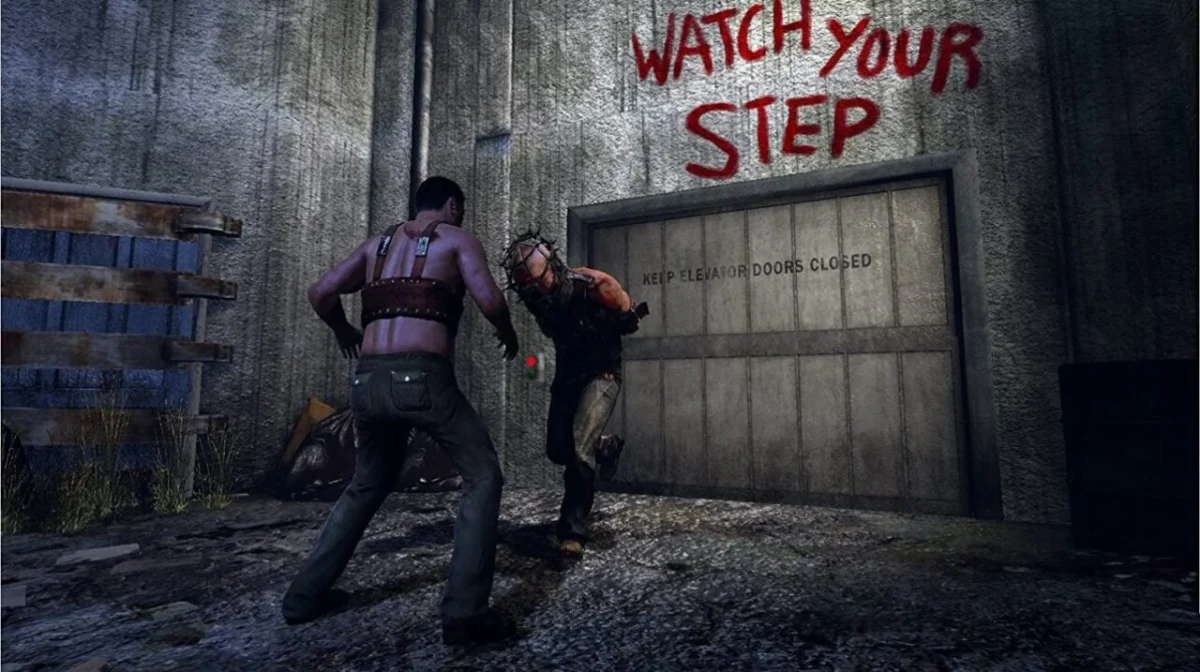
Saw II: Flesh and Blood operates as a third-person survival horror experience. Its core gameplay loop is defined by the traversal of hazardous environments—including derelict industrial zones, dilapidated hotels, and subterranean sewer systems—while avoiding traps designed by the Jigsaw killer. Unlike many survival horror titles of the era that prioritized combat, the mechanics in Flesh and Blood emphasized environmental puzzle-solving and high-stakes Quick-Time Events (QTEs).
The game is structurally notable for its unconventional prologue, which places the player in the role of Campbell, a drug addict whose actions directly influence the fate of the primary protagonist, Michael Tapp. This narrative choice introduced a branching path system that required multiple playthroughs to uncover. If the player chooses to sacrifice Campbell, Michael survives to progress through the game; conversely, failing to make this sacrifice early on leads to an alternate, albeit truncated, narrative outcome.
These mechanics were intended to mirror the "moral choice" philosophy central to the film series, where characters must weigh their own survival against the lives of others. The inclusion of these binary choices served as a precursor to the narrative-heavy horror games that would later define the genre in the 2010s, though at the time, critics often cited the execution as lacking the polish necessary for a seamless experience.
Reception and Critical Analysis
Upon its release, Saw II: Flesh and Blood faced significant scrutiny. Review aggregators documented a generally negative reception, with many critics pointing to technical inconsistencies and a repetitive gameplay loop as primary deterrents. Common critiques included the clunkiness of the combat system and the perceived lack of tension during the QTE sequences.
From a design perspective, the game was often compared unfavorably to contemporary horror titles that offered more depth in atmosphere and storytelling. While the game was praised for its commitment to the aesthetic and gore-focused sensibilities of the film franchise, it failed to achieve a critical consensus that it had successfully translated the "Saw experience" into an interactive medium. The commercial performance, while not publicly detailed with granular precision, reflected a decline in interest in licensed horror titles that prioritized franchise branding over mechanical innovation.

The Evolution of the Saw Property in Gaming
The failure of the 2009 and 2010 titles led to a prolonged hiatus for the Saw brand in the gaming industry. For over a decade, the franchise remained absent from the console space, leading many to speculate that the property was ill-suited for the medium. The fundamental issue identified by industry analysts was the difficulty of balancing the film’s slow-burn, psychological dread with the necessity for player agency and action-oriented feedback.
The shift in landscape began with the rise of modern psychological horror, exemplified by the work of developers like Bloober Team. By focusing on atmosphere, sound design, and subverting player expectations, studios have moved away from the "trap-based" arcade style of the mid-2000s toward more immersive narrative experiences.
Looking Ahead: The Genesis of a New Era
The upcoming release of Saw: Genesis represents a departure from the previous development model. Bloober Team has built a reputation for high-fidelity psychological horror through projects such as the Silent Hill 2 remake and Blair Witch. The studio’s expertise in environmental storytelling and psychological tension is expected to provide a more nuanced approach to the Saw franchise.
Industry observers note that the success of modern horror games is frequently tied to the ability to balance "diegetic" elements—where the game’s interface feels like part of the world—with the narrative stakes of the source material. If Saw: Genesis can successfully integrate the franchise’s signature trap mechanics into a cohesive psychological horror framework, it may serve as a critical turning point for the brand.
Broader Implications for Licensed Horror Media
The history of Saw in the gaming sector serves as a case study for the risks and rewards of adapting cinematic intellectual property. The 2010 era of gaming was characterized by a push for rapid content delivery, which often prioritized the brand identity over the development of robust gameplay systems. As the industry has matured, the standard for licensed adaptations has shifted; consumers and critics alike now expect a higher level of integration between the source material’s themes and the game’s mechanics.
Furthermore, the "retrospective" view of titles like Saw II: Flesh and Blood highlights the value of experimental design. While the game did not achieve commercial or critical success, it demonstrated a willingness to explore branching narratives and player-driven consequences—concepts that have since become standard in the genre.
As Bloober Team prepares to move forward with Saw: Genesis, the industry will be watching to see if they can effectively modernize the Jigsaw legacy. The project must bridge the gap between the visceral, trap-heavy nature of the films and the sophisticated, atmospheric requirements of current-generation gaming hardware. Whether this new entry will redefine the series or remain a footnote in the history of licensed media, its release will undoubtedly reignite the conversation regarding how horror franchises can effectively evolve within the interactive space.
By analyzing the failures of the past, the current development team has a clear roadmap of what to avoid, particularly regarding the need for fluid mechanics and a narrative that respects the source material’s complex, often bleak, tone. The transition from the era of Zombie Studios to the current development landscape is emblematic of the broader professionalization of the horror gaming industry.