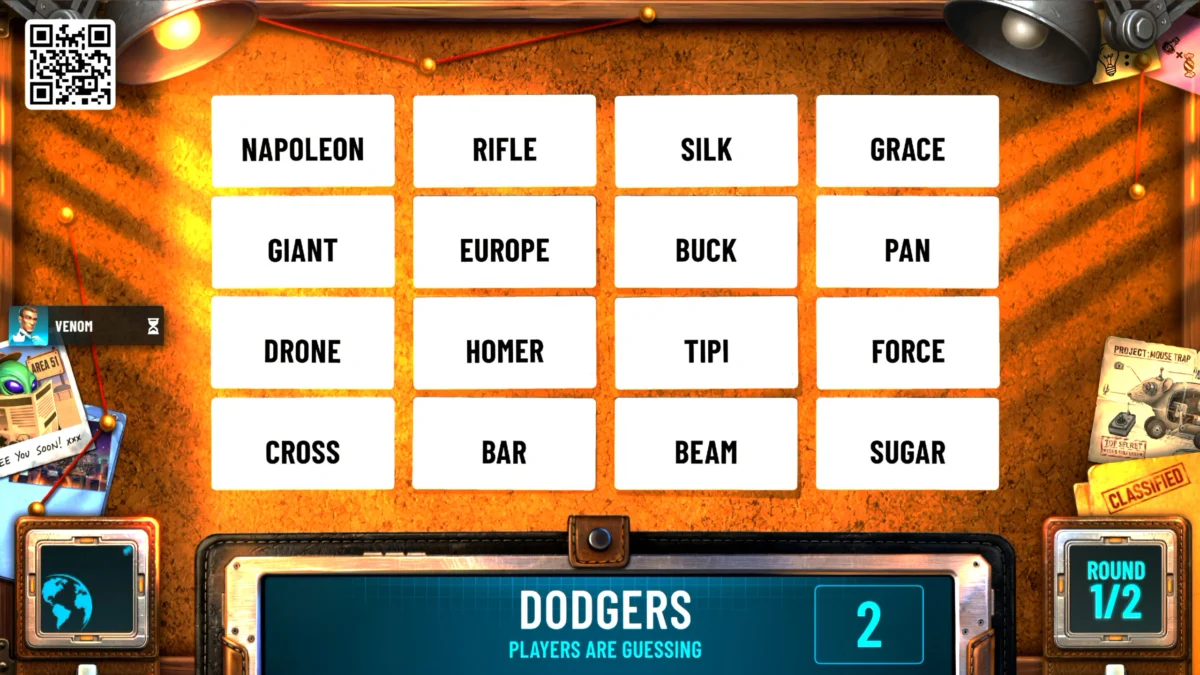
Netflix has significantly expanded its interactive entertainment catalog with the unannounced launch of Codenames Party on its growing cloud gaming platform. Developed in collaboration with Czech Games Edition, the digital adaptation brings the internationally acclaimed tabletop party game directly to living room televisions and web browsers without requiring dedicated gaming consoles. The release introduces a bespoke one-against-all party mode designed specifically for the streaming service, marking a notable milestone in Netflix’s ongoing strategy to integrate social, multiplayer experiences into its core subscription model.
Origins and Evolution of the Tabletop Phenomenon
To understand the weight of this digital adaptation, one must look back at the origins of the intellectual property. Created by renowned game designer Vlaada Chvátil and published by Czech Games Edition in 2015, the original Codenames quickly transcended the niche hobbyist board game market to become a global mainstream phenomenon. The game won the prestigious Spiel des Jahres award in 2016, widely considered the highest honor in the tabletop industry.
The core mechanics of Codenames pit two rival teams against one another, each directed by a spymaster. These spymasters possess a secret grid key that identifies 25 target words on a board as either friendly agents, civilian bystanders, opposing agents, or the ultimate assassin card. Spymasters must provide a single-word clue accompanied by a number, indicating how many words on the board relate to that clue. Teammates must then deliberate and select the correct cards while desperately avoiding the game-ending assassin.
Over the subsequent decade, the franchise expanded into numerous iterations, including Codenames: Pictures, Codenames: Duet for cooperative play, and licensed spin-offs such as Codenames: Marvel and Codenames: Disney. However, translating the organic, face-to-face communication of a living room party game into a seamless digital format has remained an ongoing pursuit for developers. The partnership with Netflix represents the most ambitious attempt yet to bring the franchise to a mass television audience.
Chronology of Netflix Cloud Gaming and the Codenames Integration
The arrival of Codenames Party is part of a calculated, multi-year rollout for Netflix’s cloud gaming initiative. Netflix officially initiated its gaming division in late 2021, initially focusing on mobile-exclusive titles distributed through the Apple App Store and Google Play Store. While these mobile offerings garnered a dedicated player base, the company recognized a distinct gap in the living room entertainment market—traditionally dominated by dedicated consoles like the PlayStation, Xbox, and Nintendo Switch.
In late 2025, Netflix shifted focus toward cloud gaming beta tests designed for smart televisions, streaming sticks, and web browsers. This pivot allowed the company to bypass the requirement for specialized hardware, transforming everyday mobile phones into functional game controllers via a straightforward QR code synchronization system.
By early 2026, the platform began testing various party and social titles. The stealth drop of Codenames Party follows this trajectory, positioning the service as a viable ecosystem for casual group entertainment. According to platform specifications, the game supports up to 10 simultaneous players, tying it with digital iterations of classic titles like Pictionary for the highest player capacity currently available on the Netflix cloud gaming network.
Features, Modes, and Gameplay Mechanics
Codenames Party on Netflix is not merely a direct port of the physical board game; it incorporates specialized digital mechanics tailored for couch co-op and remote browser play. Czech Games Edition confirmed via social media announcements that the release features three distinct gameplay modes to cater to different group dynamics.
The flagship addition is the new one-against-all Party Mode. In this configuration, all participants interact with the same 16 words displayed on the main screen. Every player simultaneously acts as both spymaster and guesser, fundamentally altering the competitive rhythm of the traditional game by removing rigid team structures in favor of an individualistic race for points.

Alongside this new mode, the platform includes the classic Team Mode, which preserves the traditional red-versus-blue spymaster dynamic of the original 2015 tabletop release. Additionally, the game features a Case Studies mode, providing pre-set word combinations and pre-determined clues. This mode eliminates the need for a designated spymaster, streamlining the experience for casual players or smaller groups who want to jump straight into the deductive puzzle-solving phase.
Strategic Implications for Netflix Games
The introduction of Codenames Party provides vital insight into Netflix’s broader commercial strategy for its gaming division. While the company initially targeted hardcore gamers through narrative-driven mobile titles and acquisitions of independent studios, engagement data indicated that casual, accessible multiplayer experiences yielded higher retention rates among mainstream subscribers.
By utilizing cloud-based infrastructure, Netflix reduces the friction of entry. Subscribers do not need to download multi-gigabyte applications or purchase expensive controllers. Instead, any household with a compatible smart television or web browser can initiate a gaming session using the smartphones already in their possession. This lowers the barrier to entry, effectively transforming Netflix from a passive viewing platform into an active social hub.
Furthermore, the timing of the release aligns with a broader seasonal content strategy. Codenames Party serves as the vanguard for a series of scheduled cloud gaming additions slated for the autumn quarter. Industry analysts note that following this lighthearted word association game, Netflix is scheduled to launch an interactive cloud adaptation of The Conjuring horror franchise just ahead of Halloween. This dual-track approach—balancing family-friendly party games with established horror intellectual properties—demonstrates an intent to diversify the platform’s gaming portfolio across multiple demographic segments.
Geographic Availability and Technical Requirements
While the rollout of Codenames Party represents a major expansion, access remains subject to regional limitations inherent to the ongoing cloud gaming beta test. According to official platform documentation and support updates, the game is currently restricted to subscribers residing in specific markets where the cloud infrastructure has been fully deployed.
The list of supported regions encompasses Australia, Austria, Belgium, Brazil, Canada, Finland, France, Germany, Ireland, Italy, Mexico, the Netherlands, New Zealand, Poland, South Africa, Spain, Sweden, Switzerland, the United Kingdom, and the United States. Subscribers outside these jurisdictions will not see the title populate within their Netflix application interfaces until subsequent regional expansions are officially announced by the company.
To access the game, eligible users must navigate to the Netflix application on a supported smart television or open a compatible web browser. Selecting the game generates a secure QR code on the primary display. Scanning this code with a smartphone camera instantly links the mobile device to the game session, converting the touchscreen into a personalized input controller for clues and card selections.
Industry Outlook and Future Prospects
The integration of established tabletop intellectual properties into streaming service ecosystems points toward a convergent future for home entertainment. As traditional television viewership continues to contend with digital streaming alternatives, platforms are increasingly incentivized to offer interactive, sticky features that encourage communal viewing and group participation.
For Czech Games Edition, the partnership extends the commercial lifespan and cultural footprint of a decade-old tabletop brand, introducing Codenames to millions of digital consumers who may never have purchased a physical board game. For Netflix, acquiring high-profile, recognizable intellectual properties validates its billion-dollar investment in the gaming sector, shifting the narrative from an experimental side project to an integral component of the subscription value proposition.
As the cloud gaming beta continues to mature throughout the latter half of the decade, the success of titles like Codenames Party will likely dictate the scale of future adaptations, setting a precedent for how physical board games and digital streaming technologies intersect in the modern living room.