The cinematic landscape is bracing for a momentous year of releases, marked by ambitious biographical features, piercing social realism, and risk-taking genre hybrids from both veteran auteurs and visionary debut directors. As festivals unspool and awards season chatter begins to crystallize, industry analysts are closely tracking several high-profile titles poised to dominate the global box office and critical discourse alike. From the hallowed stages of London theatre to the dust of Pompeii and the neon-lit streets of 1980s Manchester, filmmakers are examining the fragile intersections of history, personal trauma, and artistic ambition.
Groundbreaking Biopics and Historical Vignettes
Among the most anticipated awards contenders is Elsinore, a film that places Andrew Scott firmly in the conversation to become the first openly gay man to win the Academy Award for Best Actor. Directed with razor-sharp emotional precision, the film chronicles the real-life trials of Ian Charleson. A celebrated star of Chariots of Fire, Charleson famously stepped into the role of Hamlet at London’s National Theatre in 1989 after Daniel Day-Lewis withdrew mid-run. Operating under the devastating physical weight of a late-stage AIDS diagnosis, Charleson performed the grueling Shakespearean tragedy in full knowledge that the immense theatrical strain would accelerate his illness. For Charleson, the play’s thematic explorations of mortality, truth, and profound injustice transcended the stage, mirroring his own lived reality. Film historians note that Scott’s committed performance captures the fierce dignity of an actor weaponizing his final breath for his art.

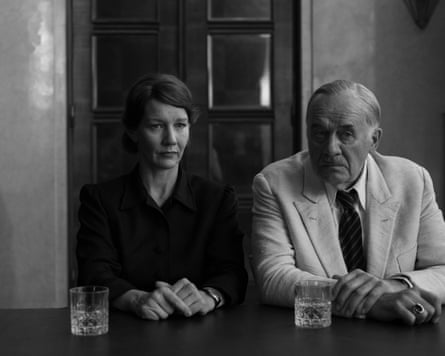
Shifting the lens from theatrical tragedy to post-war geopolitical and familial denial, Paweł Pawlikowski returns with Fatherland. Shot in striking, high-contrast black-and-white, the Polish filmmaker has crafted a historically acute vignette centered on Nobel-winning German author Thomas Mann and his daughter, Erika. Following the unconditional surrender of Nazi Germany and the collapse of the Third Reich—a tyranny Mann escaped by fleeing to the United States—the aging patriarch returns to Europe. Rather than settling peacefully, Mann embarks on a delicate diplomatic and cultural tour to accept accolades in both capitalist West Germany and communist East Germany. Hanns Zischler and Sandra Hüller deliver masterclass performances as father and daughter, navigating a narrative where the austere framing struggles to contain the boiling, unexpressed anguish of a family hiding a catastrophic domestic crisis behind public pageantry.
Stepping even further back into the annals of history, legendary French actress Isabelle Huppert assumes what many critics are already calling the defining role of her storied career in The Blood Countess. Directed with chilling atmospheric control, the film reimagines 16th-century Hungarian noblewoman Countess Elizabeth Báthory not merely as a historical footnote, but as an immortal entity. Legendary for allegedly bathing in the blood of hundreds of young girls in a macabre bid for eternal youth, Huppert’s Báthory resurfaces in present-day Vienna. Gliding through the subterranean sewers of the former Austro-Hungarian imperial seat with effortless, predatory grace, Huppert’s vampire cuts a figure far more detached and lethal than cinematic predecessors like Harry Lime in The Third Man.
The Pulse of Youth: Memory, Music, and Social Realism
For aficionados of British indie cinema and the distinct cultural geography of Manchester, Carol Morley’s long-awaited 7 Miles Out offers a deeply personal excavation of the past. Adapted from Morley’s own autobiographical novel, the film follows a teenager named Ann, portrayed by Lucy Halliday, as she navigates a severe emotional crisis. Seeking refuge from suburban alienation, Ann plunges headfirst into the exhilarating, volatile Manchester music scene of the late 1970s and early 1980s, a cultural epicenter defined by seminal post-punk acts such as Joy Division, New Order, and Magazine. Supported by stellar supporting performances from Gemma Whelan and Aidan Gillen as Ann’s parents, Morley’s film functions both as a coming-of-age drama and as an ode to music as a psychological life raft.
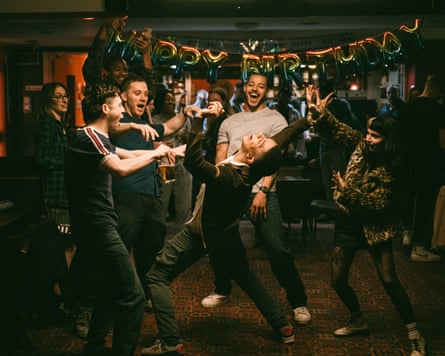
Continuing the exploration of youthful vulnerability and urban disillusionment, Clio Barnard presents I See Buildings Fall Like Lightning. Set against the gritty, atmospheric backdrop of Birmingham, Barnard’s social realist drama explores the complex emotional geography of home. The narrative centers on a tight-knit circle of characters in their late 20s who grapple with the paradoxical impulses of fierce hometown loyalty and an urgent, burning desire to escape. Boasting an ensemble cast brimming with visceral energy—including Joe Cole, Daryl McCormack, Lola Petticrew, Anthony Boyle, and Jay Lycurgo—the film maps out the painful compromises young adults must make as they confront long-term life decisions against the backdrop of changing industrial cities.
In La Gradiva, French cinematographer-turned-director Marine Atlan delivers what early festival indicators suggest could be the finest debut feature of the year. The plot unfurls during a tense school excursion to the ruins of Pompeii, where an emotionally fragile teacher struggles to manage a group of equally troubled adolescents. The narrative anchor is Toni, a young student who clings obsessively to a family myth: that he is the direct descendant of a Pompeii nobleman whose estate was destroyed during Southern Italy’s devastating 1980 earthquake. Conflating the ancient volcanic eruption with modern seismic trauma, Toni’s psychological stability fractures, setting him on a collision course with his own internal catastrophe.
Subversive Dramas and Explorations of Control
The psychological toll of domesticity and institutional entrapment forms the bedrock of several standout releases this season. Gentle Monster, a coldly eloquent and deeply unsettling drama directed by Léa Seydoux, examines the silent prisons constructed by duty and marital loyalty. Seydoux stars as Lucy, an acclaimed musician balancing a high-profile career, a television director husband, and a three-year-old child. The fragile equilibrium of their household shatters instantly when law enforcement officers arrive to confiscate the husband’s digital devices. As Lucy demands answers, her husband offers evasive, shifting explanations. The film’s psychological horror stems not from external threats, but from Lucy’s desperate internal war to bend reality, twisting what she observes to match the comforting lies spun by her partner.
Jesse Eisenberg follows up his acclaimed directorial efforts with The Debut, a sharply observed dramedy centered on the often fierce and fragile politics of community theatre. Julianne Moore leads the cast as a neglected suburban housewife teetering on the edge of a nervous breakdown born from chronic emotional neglect. In a bid to reclaim her identity, she auditions for an amateur theatrical troupe’s local musical—featuring original, deliberately hokey songs penned by Eisenberg himself. Moore’s transformation from an ignored domestic doormat into an incandescent, Bette Davis-esque stage diva has immediately positioned her as a formidable contender for the upcoming awards circuit.
Blending speculative fiction with psychological mystery, Hungarian auteur Lili Horváth makes her English-language feature debut with My Notes on Mars. Known for her fascination with the inexplicable, Horváth casts Mackenzie Davis as Margot, a brilliant scientist battling severe emotional turmoil who abruptly vanishes during a remote hiking expedition with her husband Sam, played by Rupert Friend. In a narrative twist that defies logical explanation, Margot reappears at her own memorial service. Suffering from total retrograde amnesia regarding her disappearance, she nevertheless exhibits an obsessive, urgent drive to destroy her personal field notes concerning the planet Mars—leaving audiences to question whether her psychological break stems from earthly trauma or something far more cosmic.
Rounding out the prestige slate is A Long Winter, an atmospheric and haunting adaptation directed by Andrew Haigh from a short story by Colm Tóibín. Set in the remote, unforgiving landscape of 1950s Colorado, the film studies the anatomy of grief, isolation, and male loneliness. When the household’s emotionally troubled mother, played by Caitriona Balfe, vanishes during the dead of winter, the remaining men decide that any organized search must wait until the spring thaw. This administrative postponement plunges the male family members into a bizarre, haunting period of unearned bachelor freedom, resulting in a poignant and subversive cinematic study of survival and unspoken loss.
Finally, Mike Leigh returns with Tender Loving Care, an intergenerational drama that critics are already celebrating as a masterclass in human observation. Set in West London, the film chronicles the deep friendship between Rosie and Amy, two women who share a flat and work in the demanding field of social care. Through an interlocking mosaic of scenes that balance their professional sacrifices with their personal vulnerabilities, Leigh crafts a muscular, candid, and deeply tender exploration of love, mortality, and human connection. As the industry looks toward the horizon, these diverse cinematic offerings guarantee a theatrical year defined by uncompromising artistic vision and profound emotional resonance.