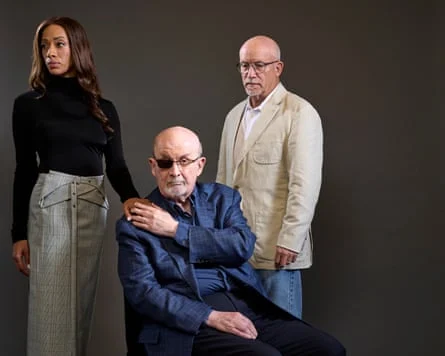
The morning of August 12, 2022, began with familiar domestic tranquility in New York City for poet and photographer Rachel Eliza Griffiths. As she poured her second cup of coffee, her phone rang, delivering news that would shatter her world: Sir Salman Rushdie, the celebrated author she had quietly married just a year prior, had been violently assaulted while preparing to deliver a lecture nearly 400 miles away in upstate New York. What followed was a harrowing descent into trauma, medical uncertainty, and an extraordinary act of creative documentation that has now culminated in a powerful new documentary feature, Knife: The Attempted Murder of Salman Rushdie.
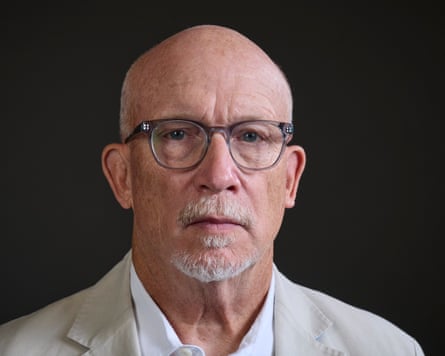
Directed by Oscar-winning documentary filmmaker Alex Gibney, the film merges intimate video diaries recorded by Griffiths during Rushdie’s grueling hospitalization and recovery with archival footage spanning more than three decades. The project serves not merely as a retrospective of a single violent act, but as a sweeping examination of the enduring, high-stakes battle for freedom of expression, the heavy collateral damage of political and religious extremism, and the profound resilience of human love.
Anatomy of an Attack and Immediate Aftermath
The incident occurred at the Chautauqua Institution, an idyllic and historically open community in western New York renowned for its intellectual and cultural gatherings. Rushdie had taken the stage to speak on the importance of the United States as a sanctuary for writers in exile. Without warning, a young assailant rushed the stage, inflicting multiple stab wounds to Rushdie’s neck, abdomen, and eye before being subdued by courageous audience members and security personnel.

Rushdie was airlifted to a regional trauma center, where he spent weeks fighting for his life. The physical toll was severe: the attack resulted in significant nerve damage to his hand, severe injuries to his liver, and the permanent loss of sight in his right eye, which suffered catastrophic trauma.
Within days of the assault, Griffiths secured a charter flight to reach her husband’s bedside, navigating an airport tarmac swarming with law enforcement and media. Recognizing the gravity of their reality, she made a pivotal artistic decision. Rather than relying on a smartphone, she requested the delivery of a professional camera—an act that she later described as a vital reclamation of her identity as an artist and a shared declaration that their stories would not be dictated solely by violence.
The Genesis of the Fatwa and Historical Context
To fully understand the resonance of the 2022 attack, the documentary situates the event within its historical framework, tracing the lineage back to February 14, 1989. On that day, Ayatollah Ruhollah Khomeini, then the supreme leader of Iran, issued a religious decree, or fatwa, calling for the execution of Rushdie and his publishers following the publication of his fourth novel, The Satanic Verses. Critics within certain fundamentalist circles alleged that the book contained blasphemous depictions of Islam.
The resulting geopolitical crisis forced Rushdie into hiding under clandestine British police protection for nearly a decade. The global fallout was swift and devastating:
- The Riverdale Press Incident: In the United States, the offices of the Bronx-based newspaper were firebombed after publishing an editorial defending Rushdie’s right to free expression.
- International Casualties: Riots in Pakistan left six people dead during protests against the novel. Hitoshi Igarashi, the Japanese translator of The Satanic Verses, was stabbed to death in July 1991, while Italian translator Ettore Capriolo survived a knife attack in his Milan apartment.
- Public Demonstrations: Major cities across Europe witnessed angry demonstrations, including public effigy burnings where crowds demanded the author’s execution.
Gibney’s curation of archival footage in the documentary confronts viewers with the sheer scale of the global hostility that followed the fatwa. While Rushdie initially resisted the inclusion of such extensive historical material—preferring to view his attacker as an isolated individual influenced by unknown forces—Gibney argued that contextualizing the broader, systemic nature of the threat was essential for audiences to grasp the historical weight of the moment.
Merging Literature and Documentary Cinema
The film’s structure draws intellectual inspiration from Dennis Potter’s acclaimed 1986 television series The Singing Detective, blending chronological medical recovery with associative, literary memory. Rather than adopting a traditional narrative format, the documentary relies heavily on the text of Rushdie’s 2024 memoir, Knife, serving as the narrative spine for the film. Griffiths’ companion memoir, The Flower Bearers, published earlier in 2026, offers an external perspective on the emotional burden carried by loved ones of survivors of targeted violence.
Through voiceover and archival juxtaposition, the film explores literary foreshadowing. Just hours before the attack, Rushdie had sent Griffiths a photograph of the moon taken from his hotel balcony, blissfully unaware of the danger closing in. The imagery evokes Georges Méliès’s 1902 silent film classic Le Voyage dans La Lune, in which a spacecraft crashes into the eye of the moon—a chilling parallel to the devastating ocular injuries Rushdie sustained.
The decision to feature explicit, unvarnished imagery of Rushdie’s initial medical trauma—including the severe damage to his right eye—was deliberate. Griffiths notes that while the camera initially served as a protective screen against an unbearable reality, it ultimately provided an unyielding record of survival. For Rushdie, viewing the footage alongside his wife became a testament to his physical rehabilitation, providing a stark contrast between his appearance in the immediate aftermath of the assault and his steady recovery in the months that followed.
Implications for Free Speech and Modern Security
The documentary raises critical questions regarding security, public complacency, and the protection of public intellectuals. Rushdie has publicly questioned the lack of basic security protocols at the Chautauqua Institution, contrasting it with the heavy security measures routinely deployed for his appearances in Europe during the decades following the fatwa. However, the film also highlights Rushdie’s complex relationship with security, noting his previous resistance to visible police protection during a 2019 appearance at Oxford University, where he expressed a desire to live a normal public life after years of heavy state monitoring.
Experts and civil liberties advocates analyzing the film point to a broader chilling effect on global discourse. The persistence of the fatwa decades after its initial declaration demonstrates the long shadow cast by state-sanctioned threats against authors, journalists, and artists. Despite a substantial financial bounty remaining on his head by organizations linked to the Iranian regime, Rushdie has maintained his commitment to public writing and engagement.
The Human Dimension and Ongoing Legacy
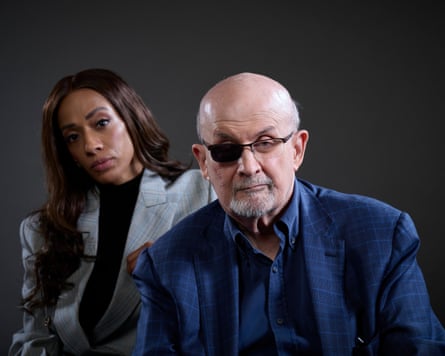
Beneath the geopolitical and historical layers, Knife: The Attempted Murder of Salman Rushdie remains deeply rooted in personal intimacy. The marriage between Rushdie and Griffiths, forged five years prior to the attack at a PEN America literary festival, was kept largely private until the events of August 2022 thrust them both into the global spotlight.
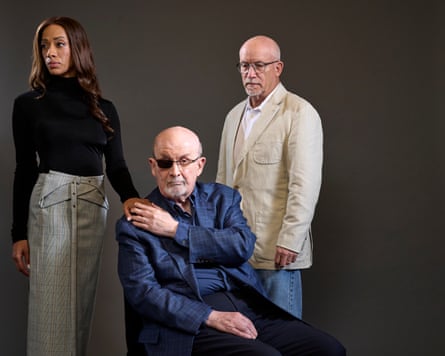
The documentary concludes not on a note of vengeance or despair, but with the couple revisiting the site of the attack to reconcile conflicting memories with physical reality, alongside a celebration of their enduring creative partnership. As they prepare for the film’s premiere in London alongside Rushdie’s sons and grandchildren, both artists reflect on the fundamental alteration of their lives.
Quoting an epigraph from Samuel Beckett utilized in Rushdie’s memoir—"We are other, no longer what we were before the calamity of yesterday"—the documentary posits that while violence attempts to silence and define individuals through the actions of their aggressors, art, love, and documentation can reclaim the narrative, offering a resilient counterweight to forces of intolerance.