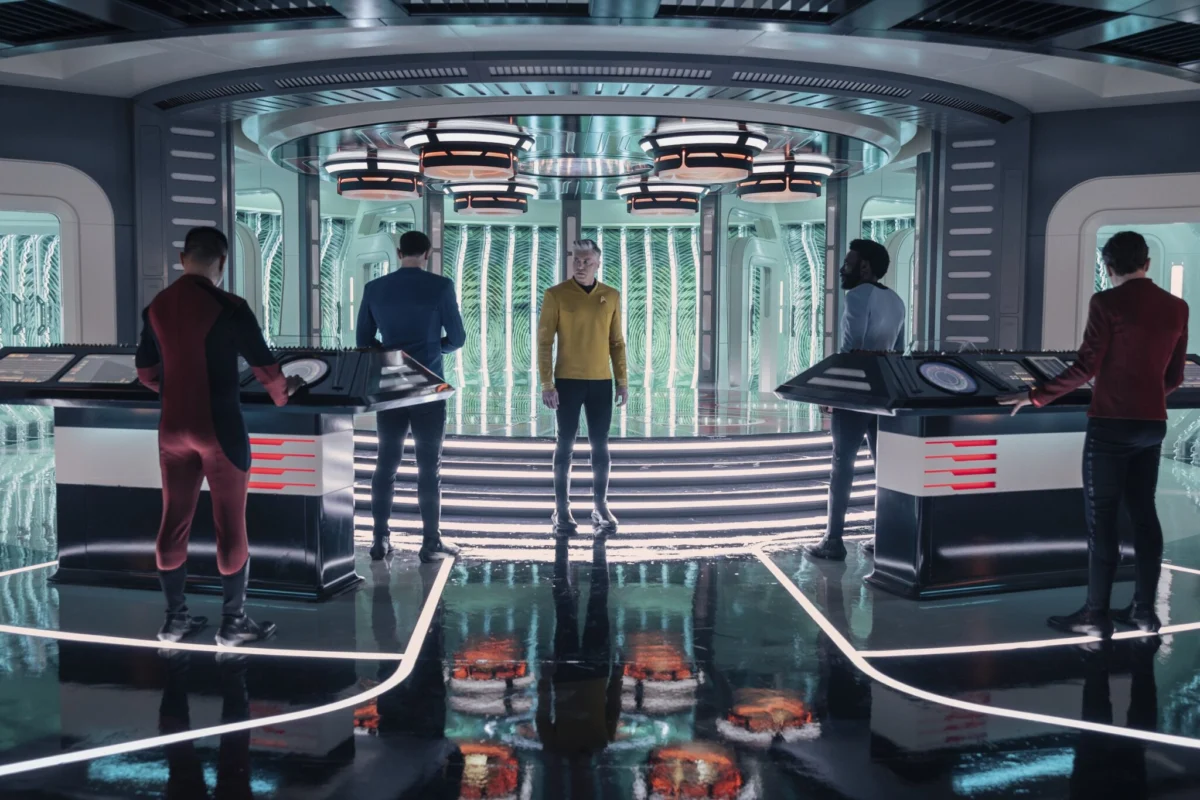
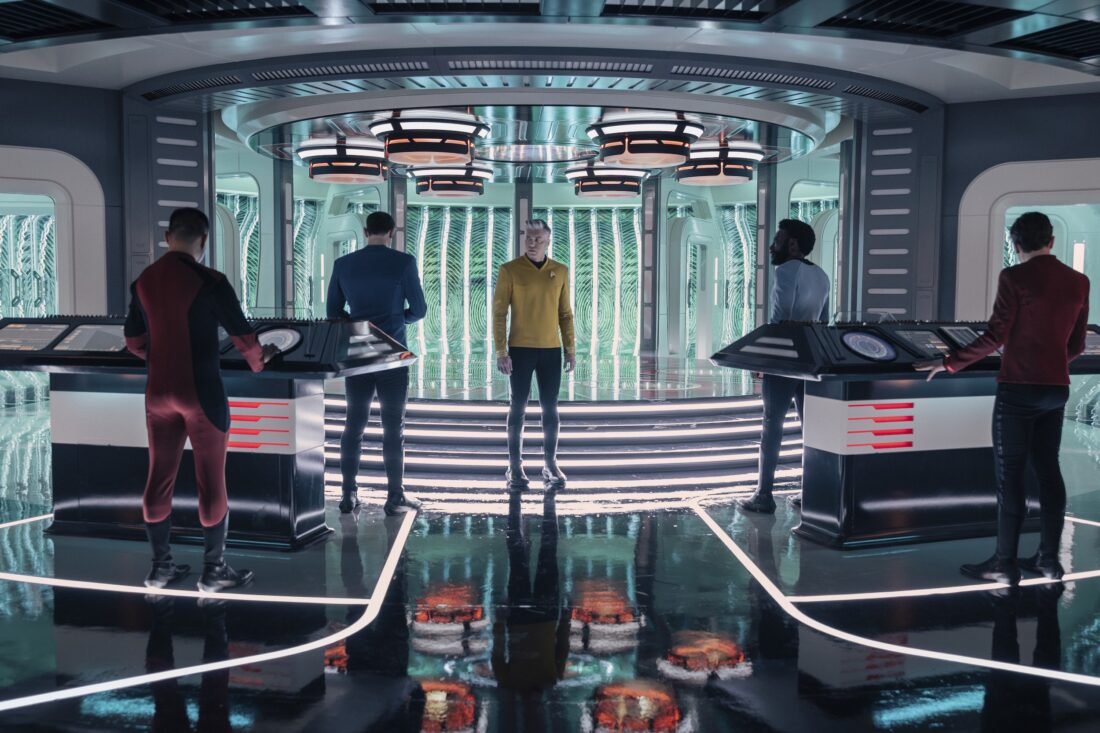
Star Trek: Strange New Worlds has returned for its fourth season, marking a significant moment for the acclaimed prequel series. The season opener, titled "Valles Marineris," debuted today, offering a narrative that is both expansive in its scope and deeply rooted in the exploration ethos of the Star Trek franchise. Following a third season that garnered mixed reception, this premiere episode has been widely praised for its exceptional storytelling and its successful navigation of the inherent challenges of a prequel narrative.
The series, set a decade before Captain James T. Kirk’s five-year mission aboard the USS Enterprise, has often grappled with the delicate balance of honoring established lore while forging its own path. Critics have noted instances where the show leaned too heavily on fan service and intricate lore connections, potentially at the expense of compelling standalone narratives focused on space exploration. However, "Valles Marineris" appears to have largely overcome these hurdles, delivering an episode that is "one hundred percent about a starship exploring space," according to initial reviews.
The Genesis of an Interstellar Mystery
The episode opens with the USS Enterprise, under the command of Captain Christopher Pike, tasked with investigating a peculiar astronomical phenomenon: an interstellar squall of unprecedented rarity. This anomaly has manifested around a star, defying current scientific understanding and prompting the Enterprise’s assignment for extended observation. The transient nature of such squalls, as noted by Spock, makes this an urgent and potentially fleeting scientific opportunity.
Among the crew, only Pelia, the ship’s engineer, possesses any prior experience with such an event. Her recollection, humorously framed as occurring in a "phone box," serves as a subtle nod to potential extraterrestrial encounters and hints at her extensive, and perhaps unconventional, personal history—a characteristic that has fueled fan speculation about her past.

A Perilous Encounter and a Desperate Mission
The scientific investigation quickly escalates into a crisis. The Enterprise detects a distress signal emanating from a buoy within the squall. Upon investigating, the phenomenon unexpectedly intensifies, trapping the ship. Once freed, the Enterprise finds itself severely incapacitated, with its warp engines rendered powerless and a critical shortage of uridium, the element required to ignite them. Compounding their predicament, the crew is disoriented, unsure of their precise location within the star system.
The system contains three M-class planets, one of which is identified as a source of uridium. This discovery necessitates a perilous away mission. First Officer Una Chin-Riley (Number One), Lieutenant Erica Ortegas, and Lieutenant La’an Noonien-Singh are dispatched via shuttlecraft to secure the vital resource, leaving Captain Pike and the remaining crew to contend with the crippled Enterprise.
Diplomatic Strife and the Weight of History
Meanwhile, repairs on the Enterprise are abruptly halted by an external threat. A vessel utilizing a sophisticated tractor beam ensnares the Enterprise, declaring it salvage. Captain Pike engages in a tense negotiation with Battle Commander Cassell, portrayed by Saffron Burrows, who commands the salvage ship. Pike’s efforts to de-escalate the situation culminate in an invitation for Cassell to board the Enterprise for direct discussions.
This encounter provides a crucial platform for exploring the series’ commitment to the Star Trek ethos of diplomacy and understanding over conflict. The exchanges between Pike and Cassell highlight Pike’s unwavering advocacy for communication and peaceful resolution. Cassell’s people, described as Vulcanoid in appearance, are engaged in a protracted conflict with the Dol’Drm, an insectoid species from a neighboring planet. Despite possessing advanced technology, including the ability to phase through solid matter, Cassell’s people lack faster-than-light travel and universal translators, hindering effective communication with their adversaries. Pike offers his assistance in bridging this communication gap, potentially paving the way for peace.
A Stunning Temporal Revelation
The true complexity of their situation unfolds as Spock, through meticulous calculation, determines the Enterprise’s location not only in space but also in time. They are in the Sol system, approximately 65 million years in the past. The planet from which Cassell’s people hail is revealed to be Mars, and the planet where the landing party is attempting to procure uridium is Earth.
This temporal displacement introduces a dramatic new layer to the narrative. The "interstellar squall" is revealed to be a temporal anomaly, and the "distress buoy" was, in fact, a signal sent by the Enterprise itself after its power loss. The immediate implication is the presence of prehistoric life on Earth, leading to the climactic revelation that the large creature encountered by the landing party is a dinosaur.
Prehistoric Perils and a Moral Quandary
The episode masterfully interweaves two distinct plotlines. The landing party, mindful of the potential for catastrophic temporal paradoxes—evoking parallels to Ray Bradbury’s "A Sound of Thunder"—navigates the dangers of prehistoric Earth, employing non-lethal methods to bypass formidable dinosaurs. Number One utilizes a phaser set to stun, while La’an demonstrates surprising effectiveness with a direct physical confrontation against a raptor, showcasing a blend of tactical ingenuity and raw capability.
Simultaneously, on the Enterprise, Pike’s diplomatic efforts with Cassell are undermined by a critical omission. Cassell discovers that the Enterprise originates from the distant future, a detail Pike deliberately withheld. This revelation, coupled with the knowledge that Mars, in the future, is a desolate world and that Valles Marineris was formed by a devastating Dol’Drm weapon that claimed millions of lives, shatters any trust Cassell had placed in Pike. Her people’s long and brutal conflict with the Dol’Drm, coupled with Pike’s perceived deception, extinguishes her interest in diplomacy. Instead, she resolves to steal the Enterprise’s antimatter containment unit to destroy the Dol’Drm homeworld.
A Catastrophic Choice and the Birth of an Asteroid Belt
The landing party successfully returns with the uridium, which, incidentally, was recovered from a crashed Dol’Drm ship. This allows the Enterprise to restore power. The crew’s relief is palpable, particularly regarding the discovery of a backup antimatter containment unit. This detail, often overlooked in science fiction narratives, addresses a common logistical concern for ships on extended deep-space missions, highlighting a commitment to plausible technological grounding.
With sensors restored, Spock pinpoints the Dol’Drm homeworld to the fifth planet in the system, a world of significant size situated between Mars and Jupiter. The Enterprise moves to intercept Cassell’s ship, aiming to prevent her from initiating a genocidal act.

However, at the last moment, Captain Pike orders his crew to stand down. The presence of this fifth planet fundamentally alters the strategic calculus. Pike realizes that 65 million years in the future, this region of space will be characterized by an asteroid belt between Jupiter and Mars. He is faced with an agonizing decision: allowing the destruction of the Dol’Drm homeworld to occur naturally, or intervening and potentially creating an unforeseen temporal paradox.
The episode does not shy away from the profound emotional toll of Pike’s choice. He recognizes that inaction, while seemingly passive, is the only path that aligns with the established future. He understands the inevitability of the future, including the eventual destruction of the Dol’Drm civilization, which, from their perspective, is already a civilization lost to time.
The Enterprise crew is forced to witness the cataclysmic destruction of an entire world and its civilization, including Cassell’s vessel, which was on a suicide mission and caught in the ensuing blast. This event, however, provides the immense energy surge required for the Enterprise to return to its native time, inadvertently creating the very interstellar squall they were initially sent to investigate.
Echoes of the Past, Shaping the Future
Upon returning to the 23rd century, Spock confirms the grim realities of their temporal intervention. The former fifth planet is now the asteroid belt, and a significant piece of debris from the explosion struck Earth, triggering the extinction-level event that wiped out the dinosaurs. Furthermore, Mars’ orbit was irrevocably altered, leading to the loss of its atmosphere.
The episode commendably avoids sanitizing the moral weight of Pike’s decision. It underscores the principle that sometimes, doing nothing is the most necessary, albeit harrowing, course of action. The characters, while witnessing immense destruction, are also confronting a future that, from their temporal vantage point, is already set.

A Tapestry of Star Trek Elements
"Valles Marineris" successfully weaves together a rich tapestry of Star Trek lore and thematic elements. The narrative incorporates:
- A high-stakes CGI adventure: The prehistoric Earth sequences, featuring the landing party’s encounters with dinosaurs, provide thrilling visual spectacle.
- Pike’s unwavering diplomacy: Captain Pike’s persistent appeals to Cassell for peaceful resolution embody the core Star Trek ethos.
- Complex character arcs: Cassell’s internal struggle between a lifetime of war and a nascent desire for peace, ultimately thwarted by Pike’s omission, is a poignant portrayal of the costs of conflict and deception. Saffron Burrows’ performance is lauded for its dignity and gravitas, complemented by a script from executive producers Akiva Goldsman and Henry Alonso Myers, and a story by Myers and co-executive producer Alan B. McElroy.
- Nods to classic Star Trek: Subtle references abound, including Pelia’s cryptic remark about a "phone box," hinting at interdimensional or time-traveling companions. The Vulcanoid appearance of Cassell’s people subtly echoes early Star Trek concepts where Spock was originally conceived as Martian. M’Benga’s detection of DNA similar to Alpha Quadrant species provides a continuity link to Star Trek: The Original Series‘ "Return to Tomorrow," where Vulcan origins and potential extraterrestrial influences were discussed.
- Character evolution: The episode showcases younger versions of familiar characters, offering insights into their development. Notably, a younger Scotty’s vigilant monitoring of engine strain and the promotion of Number One to full Commander are well-received details. Uhura’s mentorship of a notably insubordinate Vulcan cadet also provides a glimpse into her future command style.
- Pulp sci-fi influences: The episode embraces a "pulp-y" aesthetic, drawing inspiration from classic science fiction narratives like Edgar Rice Burroughs’ A Princess of Mars, particularly in its depiction of Mars and the concept of a shattered planetary body forming an asteroid belt.
- Familiar tropes with new twists: While Pike’s refusal of a promotion to Commodore might seem like a tired trope, it leads to Number One’s well-earned promotion.
Implications and the Road Ahead
The season premiere of Star Trek: Strange New Worlds has set a high bar for the season. By delivering a narrative that is both intellectually stimulating and emotionally resonant, the episode demonstrates a mature understanding of the franchise’s legacy while pushing its own creative boundaries. The exploration of temporal mechanics, the moral complexities of intervention, and the deep dives into character histories suggest a season rich with compelling storytelling and significant implications for the future of the Enterprise and its crew. The successful re-establishment of the show’s narrative strength positions Strange New Worlds as a vital and enduring chapter in the ever-expanding Star Trek universe.