The Karlovy Vary International Film Festival (KVIFF) has marked its milestone 60th edition, celebrating eighty years of tumultuous history, cultural endurance, and cinematic excellence in the scenic Czech spa town. As one of the world’s oldest continuously operating film events, the festival’s diamond jubilee highlights its remarkable journey from post-war restoration through decades of state-mandated communism, ultimately re-emerging as one of Europe’s premier progressive showcases for international and regional cinema.
Main Facts and Festival Scope
The 2026 edition of KVIFF—often styled as the "Vary Special" festival—offered a characteristically eclectic program that bridged its complex historical legacy with contemporary global filmmaking. The festival balanced regional debuts of critical darlings from major circuits like Sundance, the Berlinale, and Cannes with deep-cut retrospectives of Eastern European cinema, both classic and contemporary.

Operating out of its iconic, Brutalist headquarters at the Hotel Thermal—a structure affectionately likened to a nostalgic sanatorium—the festival maintained its unique operational ethos, including a strict booking cap of three tickets per day to prevent attendee burnout and encourage measured engagement. This year’s lineup drew international critics, industry professionals, and cinephiles to examine how historical memory intersects with modern geopolitical realities on screen.
Historical Chronology and Evolution
The institutional lineage of the Karlovy Vary International Film Festival is inextricably bound to the political upheavals of Central and Eastern Europe:
- 1946: The inaugural edition of the festival is held in Czechoslovakia, marking the country’s cultural restoration following Nazi occupation and taking place just weeks ahead of the very first Cannes Film Festival.
- 1958: Following a communist coup and a decade of systemic political shifts, KVIFF is officially designated a Category-A film festival by the International Federation of Film Producers Associations (FIAPF), recognizing its elite international status.
- 1959–1994: Under direct geopolitical pressure and decrees from the Soviet Union, the festival is forced into an alternating biennial schedule with the Moscow International Film Festival, a restriction that remained in place until two years after the establishment of the independent Czech Republic.
- 2021: KVIFF restructures its competitive programming, replacing the long-running "East of the West" section—historically dedicated exclusively to Eastern European filmmakers—with "Proxima," a borderless competitive section designed to platform youthful, international, and up-and-coming cinematic voices.
- 2026: The festival celebrates its 60th edition across an 80-year timeline, reinforced by retrospective programming such as "Out of the Past – KVIFF 60/80," which revisited foundational milestones from the festival’s archives.
Retrospective Programming and Cultural Memory
A central pillar of the 2026 festival was the "Out of the Past – KVIFF 60/80" retrospective, which curated landmark screenings reflecting both the geopolitical pressures and the artistic triumphs of the region. Notable inclusions ranged from Powell and Pressburger’s post-war British masterpiece A Matter of Life and Death (1946)—which reached Czechoslovak audiences shortly after the end of Nazi rule—to major Crystal Globe winners such as Ján Kadár and Elmar Klos’s courtroom drama The Defendant (1964) and Ken Loach’s Kes (1970).

The retrospective also addressed the suppression of domestic talent during the Communist era, screening Juraj Jakubisko’s Birds, Orphans and Fools (1969), a film that was systematically censored and shelved until the fall of the regime in 1990. Alongside Eastern European rediscoveries, the sidebar demonstrated KVIFF’s historical outward-looking posture through prints like Glauber Rocha’s Brazilian Cinema Novo debut Barravento (1962). Furthermore, high-demand repertory screenings of digitally restored classics, including Jonathan Glazer’s Sexy Beast (2000) and Věra Chytilová’s psychosexual tragicomedy Tainted Horseplay (1988), drew capacity crowds at the Grand Hall.
Competitive Sections and Major Award Winners
KVIFF’s competitive landscape underscored the festival’s dual focus on seasoned international masters and boundary-pushing debut directors.
In the Crystal Globe competition—traditionally reserved for established filmmakers with global reach—Aung Phyoe claimed the top prize for Fruit Gathering, a tender romance centered on two seamstresses in Yangon, Myanmar. Meanwhile, Slovak auteur Ivan Ostrochovský secured the prestigious FIPRESCI prize for Only Beautiful Things to Look At.

The Proxima competition, continuing its mission to champion daring, borderless artistic visions since its 2021 overhaul, awarded its Grand Prix to Slovak director Martina Buchelová for her debut feature, Lover, Not a Fighter. The film follows a 20-year-old protagonist navigating modern romance against the backdrop of an impending family relocation to a bunker, utilizing an innovative, fragmented montage of vertical phone footage and reflexive subtitling to examine contemporary youth culture.
Key Festival Debuts and Political Commentary
Several high-profile titles imported from the international festival circuit generated substantial discourse among attendees and critics, notably two films addressing historical and contemporary fascism and complacency:
- A Man of His Time (Directed by Emmanuel Marre): Starring Swann Arlaud, this 155-minute historical portrait explores the moral compromises of a protagonist, Henri, climbing the ranks of the Vichy regime. Utilizing static, corner-of-the-room cinematography by Olivier Boonjing, the film examines the banality of evil and the mechanics of creeping fascism driven by ambition and political mediocrity.
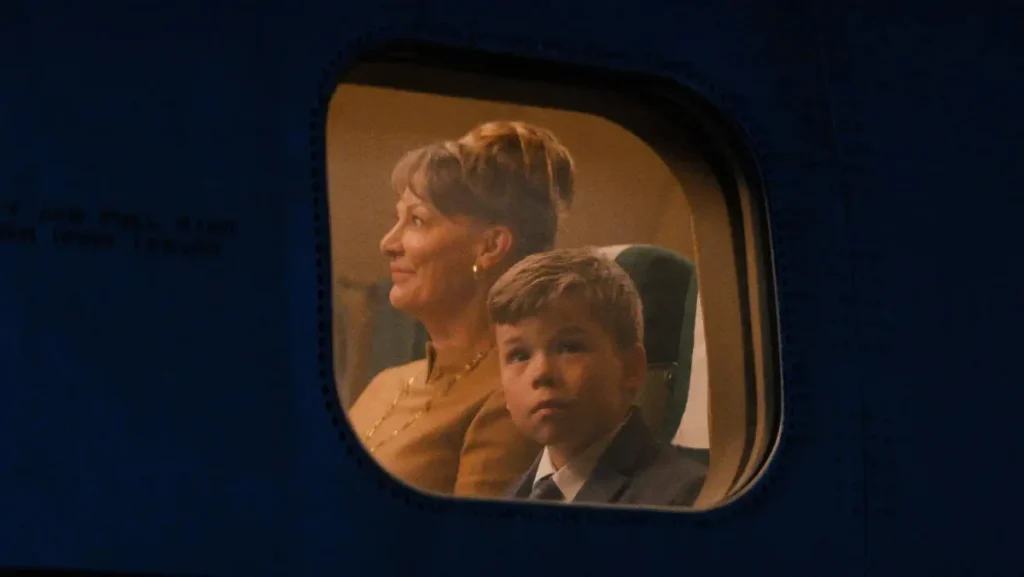
- Everytime (Directed by Sandra Wollner): Sharing a cinematographer (Gregory Oke) and thematic territory with Charlotte Wells’s Aftersun (2022), Wollner’s memory piece tracks a Berlin family’s preparations for a trip to Tenerife. The film blends urban realism with a hallucinogenic register to explore childhood grief and the elusiveness of irreversible change.
- Black Money for White Nights (Directed by Kristina Grozeva and Petar Valchanov): A standout narrative feature at the festival, this Bulgarian dark comedy follows an elderly couple who spend a lifetime collecting minor workplace bribes to finance a dream trip to St. Petersburg to witness the city’s "white nights." The narrative collides with contemporary geopolitical reality when their final payment coincides with Russia’s full-scale invasion of Ukraine. Rather than functioning strictly as a localized expose of corruption, the film operates as a satirical fable regarding the psychological defense mechanisms used by citizens attempting to distance themselves from state violence and political complicity.
Institutional Analysis and Broader Implications
Industry analysts and festival organizers note that KVIFF’s enduring relevance lies in its ability to reconcile its complicated institutional heritage with modern democratic values. By openly interrogating the ideological baggage of its past—exemplified by works like Black Money for White Nights that directly invoke the historical and political contexts shaping Eastern Europe—the festival positions itself not merely as a celebratory showcase, but as an active participant in regional self-reflection.

The success of the 60th edition demonstrates that KVIFF has successfully transitioned from a state-controlled instrument of the Eastern Bloc into a globally respected, independent nexus for international cinema. As artistic director Karel Och and the festival administration continue to curate programming that honors both cinematic history and contemporary geopolitical urgency, Karlovy Vary remains an essential fixture on the global cultural calendar, proving that institutional resilience is secured through rigorous artistic freedom and critical engagement with the past.