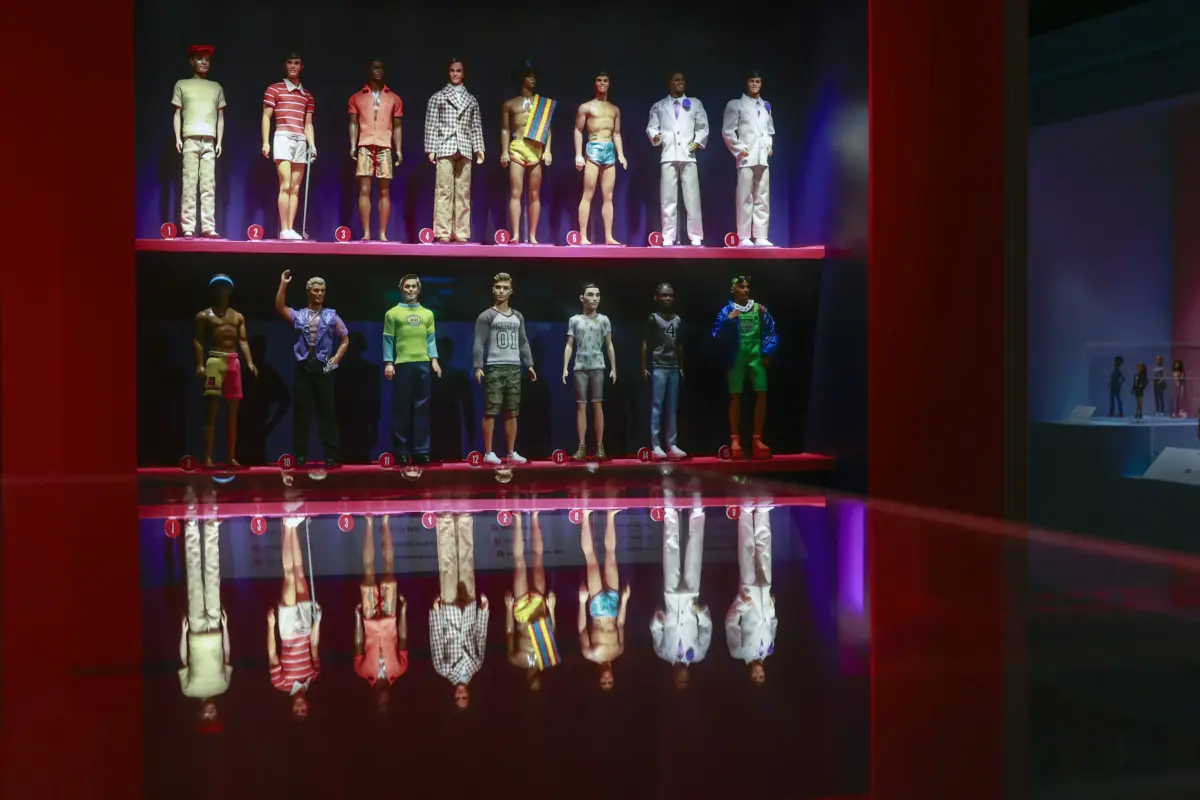
Mattel has officially appointed Catherine Wood, a veteran of the entertainment industry formerly associated with Warner Bros. Discovery, as its new General Manager and Global Head of Dolls. This strategic hire signals a major shift for the toy giant as it looks to lean further into the "franchise-first" model that propelled the Barbie brand to unprecedented heights during the 2023 film release. In her new capacity, Wood will oversee the long-term vision, global strategy, and commercial operations for an expansive portfolio that includes Barbie, American Girl, Monster High, Polly Pocket, and the company’s broader doll category.
Wood’s transition from a major Hollywood studio to a global toy manufacturer represents a significant crossover in the current media landscape, where the lines between cinematic storytelling and consumer product merchandising have become increasingly blurred. By tapping an executive with deep experience in managing intellectual property (IP) like Harry Potter, Game of Thrones, and The Lord of the Rings, Mattel is clearly signaling its intent to treat its physical toys as interconnected entertainment ecosystems rather than standalone products.
The Strategic Rationale Behind the Appointment
The appointment comes at a pivotal time for Mattel. Following the gargantuan success of the Greta Gerwig-directed Barbie movie—which grossed over $1.4 billion at the global box office—the company has been searching for a sustainable way to replicate that synergy across its other brands. Wood’s background in global franchise strategy at Warner Bros. Discovery is seen as the perfect fit for this mandate.
At Warner Bros. Discovery, Wood was instrumental in managing the lifecycle and fan engagement strategies for some of the most profitable franchises in history. Her ability to synthesize product development with narrative storytelling is precisely what Mattel’s leadership, including current management, has prioritized in recent earnings calls. By placing Wood in charge of the entire doll portfolio, Mattel is consolidating its strategy to ensure that brands like Monster High and American Girl receive the same level of holistic brand management that turned Barbie into a cultural phenomenon.
Professional Background and Industry Context
Catherine Wood arrives at Mattel with a pedigree that spans across the digital, broadcast, and cinematic frontiers. Her tenure at Warner Bros. Discovery involved navigating the complex intersection of consumer behavior and high-stakes media production. Her expertise lies not just in marketing, but in the structural development of franchises—a process that requires constant collaboration between creative teams, merchandising divisions, and global distribution partners.
This move mirrors a broader industry trend where toy companies are effectively operating as mini-studios. The strategy is to foster "evergreen" franchises that remain relevant across multiple generations. For Mattel, this means moving beyond the traditional toy aisle and into the realm of digital media, immersive experiences, and lifestyle branding. Wood will be tasked with orchestrating this cross-functional collaboration, working closely with Mattel Studios—the production arm established to oversee the company’s film and television output—to ensure that every doll product has a clear, compelling narrative foundation.
Chronology of Recent Executive Realignment
The landscape of corporate leadership between the toy and entertainment sectors has seen significant flux in recent weeks. The following timeline illustrates the shifting allegiances between Mattel and its cinematic partners:
- July 2023: The global release of the Barbie movie, produced by Mattel Films and Warner Bros., redefines the potential for toy-based intellectual property, resulting in a surge in quarterly revenue for Mattel.
- Early 2024: Mattel announces a ramp-up in its development pipeline, including projects for Barney, Hot Wheels, and Polly Pocket.
- September 2024: Industry reports highlight a series of executive departures and rotations within the C-suite of major media conglomerates.
- October 2024: Ynon Kreiz, the former CEO of Mattel who was pivotal in the company’s pivot to film, transitions to a co-CEO role at Skydance, the media powerhouse now associated with Warner Bros. assets.
- November 2024: Mattel officially announces the hiring of Catherine Wood, effectively bringing a key Warner Bros. strategist into the Mattel fold just as the two companies continue to navigate their complex licensing and production relationships.
Data-Driven Market Positioning
Mattel’s doll segment remains the cornerstone of its financial performance. According to recent fiscal disclosures, the doll category consistently accounts for approximately 40% to 50% of the company’s total gross billings. The "Barbie" brand alone remains the primary driver of this growth, but investors have long expressed interest in seeing similar growth trajectories for underutilized assets like Monster High and American Girl.
The integration of Wood is aimed at optimizing these "secondary" brands. Market research indicates that the "doll and collectible" sector is currently experiencing a CAGR (Compound Annual Growth Rate) of approximately 5% to 7% globally, driven by an aging consumer base—often referred to as "kidults"—who are increasingly purchasing legacy brands for nostalgia and collection purposes. Wood’s experience in the "fandom" spaces of Game of Thrones and Lord of the Rings positions her uniquely to tap into this adult collector demographic, a segment that Mattel has been aggressively targeting with higher-price-point, limited-edition products.
Official Statements and Corporate Vision
In a statement released alongside the appointment, Wood emphasized the transformative power of play. "Dolls have a unique ability to bring brands and stories to life through play, imagination, and self-expression," Wood stated. "What drew me to Mattel is the opportunity to bring a franchise perspective to an extraordinary portfolio of brands, each with its own heritage, audience, and potential. I’m excited to work with the teams across Mattel to build on what makes these brands distinctive and create new ways for them to grow, evolve, and connect with fans around the world."
From the perspective of the executive suite, the hiring is an endorsement of the company’s current direction. By bringing in outside talent from the entertainment sector, Mattel is signaling that it is no longer content to simply compete with other toy companies. Instead, the company is positioning itself to compete for the "share of voice" in the broader entertainment market.
Implications for Future Product Development
The implications of Wood’s hire are wide-reaching. Industry analysts suggest that we can expect a more aggressive release schedule for content related to Mattel’s doll brands. This likely includes:
- Narrative Integration: Increased collaboration between the design team and the content team to ensure that toys are released in tandem with specific narrative beats in media, whether that be streaming series, social media content, or feature films.
- Global Brand Uniformity: A more cohesive visual and narrative identity for Mattel dolls in international markets, leveraging the global distribution strategies Wood honed during her time at Warner Bros.
- Expanded Licensing: A renewed focus on consumer products beyond the toy itself, including apparel, home goods, and digital experiences that deepen the consumer’s relationship with the brand.
Broader Impact on the Toy Industry
The crossover between Hollywood and the toy industry is not entirely new, but the velocity at which it is occurring is unprecedented. As legacy media companies struggle with the decline of traditional cable and the volatility of streaming, they are looking to stable, physical consumer goods to provide reliable revenue streams. Conversely, toy companies are realizing that without the "halo effect" of blockbuster media, even the most iconic toys risk fading into obsolescence.
Wood’s appointment is a concrete example of this symbiotic evolution. As she settles into her role at Mattel, the industry will be watching closely to see if she can successfully apply the "franchise-first" methodology to a diverse array of brands that possess significantly different cultural footprints than a cinematic universe.
The challenge, however, will be balance. While the franchise-first model is highly effective for marketing, it must also respect the fundamental nature of the toy industry: physical play. Over-intellectualizing a brand can sometimes alienate the core demographic of children. Wood’s ability to bridge the gap between complex franchise management and the simplicity required for child-led play will likely define the success of her tenure at Mattel.
As the company looks toward the next fiscal year, the focus remains on growth, innovation, and the leveraging of its intellectual property. With a seasoned Hollywood strategist now at the helm of its most important division, Mattel is well-equipped to navigate the evolving challenges of the global toy and entertainment marketplace.