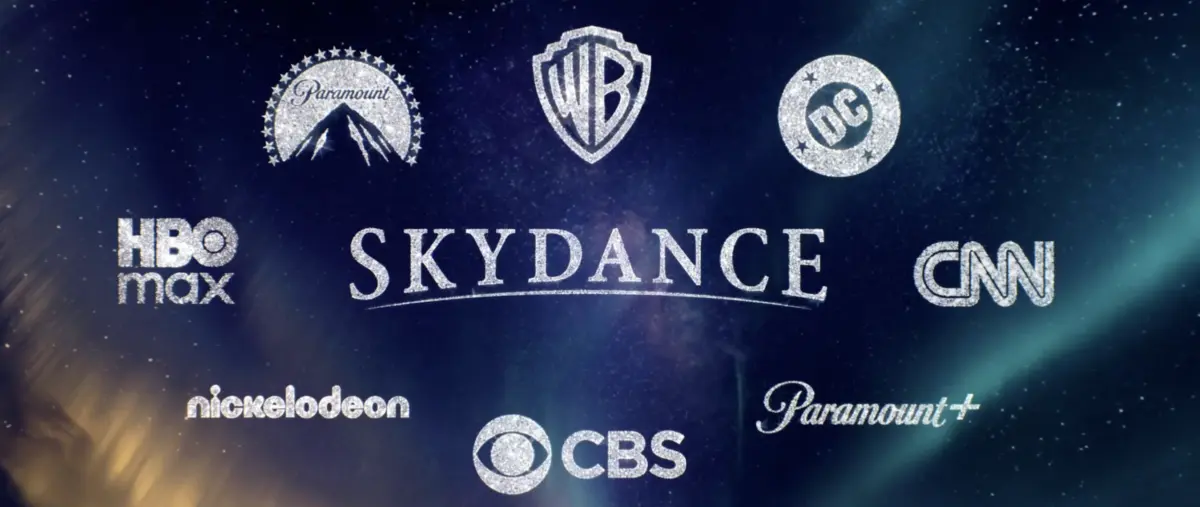
The landscape of global media is undergoing a tectonic shift as David Ellison, the visionary force behind Skydance Media, formally announced that his burgeoning entertainment empire will operate under the banner of Skydance. This rebranding marks the final stage of a $111 billion mega-merger that unites two of Hollywood’s most storied institutions—Paramount and Warner Bros. Discovery—under a single corporate umbrella. While the holding company will bear the Skydance name, the move is calculated to preserve the immense cultural equity of the underlying studios, ensuring that the legacy of Paramount and Warner Bros. remains front and center for audiences worldwide.
The Strategic Architecture of a Media Giant
The decision to adopt Skydance as the parent brand, while retaining Paramount and Warner Bros. as distinct, high-profile sub-brands, is a strategic maneuver designed to solve the "house of brands" dilemma. In the modern era of consolidated media, corporate entities often struggle to reconcile their internal operational efficiency with the consumer-facing loyalty attached to individual studios.
By positioning Skydance as the parent, Ellison effectively creates a corporate shell that functions as a powerhouse for innovation and resource management, while the studios themselves continue to operate as the creative engines. This structure is intended to allow for the cross-pollination of assets, such as leveraging DC Comics’ intellectual property through the production capabilities of Skydance, or integrating the news and sports infrastructure of CNN and CBS into a unified streaming strategy.
Chronology of the Mega-Merger
The path to this consolidation has been a whirlwind of high-stakes negotiations and strategic acquisitions. The timeline of this transformation reveals a clear, aggressive trajectory:
- 2006: David Ellison founds Skydance Media, initially focusing on film production and co-financing deals with major studios.
- 2023: After years of steady growth and successful franchise management (including the Mission: Impossible and Top Gun series), Skydance initiates an aggressive acquisition phase.
- Early 2024: Skydance completes its acquisition of Paramount, signaling a move from a production-focused entity to a massive studio owner.
- Mid-2024: The industry is rocked by reports of a merger between the newly expanded Paramount and the debt-laden but content-rich Warner Bros. Discovery.
- October 2026: Ellison confirms the official corporate name and the transition of the company’s stock ticker to SKYD on the New York Stock Exchange.
This rapid expansion represents one of the most significant vertical integrations in the history of the entertainment industry. The transition from the Nasdaq to the New York Stock Exchange, set to coincide with the closing of the merger, underscores the company’s intent to command a seat at the table alongside long-standing industry titans like The Walt Disney Company and Netflix.
Market Context and Corporate Identity
For the average consumer, the corporate name of a media conglomerate is often immaterial. History has shown that viewers care about the content they consume—be it the prestige of an HBO drama, the reach of a CBS broadcast, or the family-friendly nature of Nickelodeon programming—rather than the parent company holding the purse strings.
However, for investors and analysts, the corporate brand serves as a signal of institutional intent. By adopting a name that has been synonymous with Ellison’s own brand of "smart risk-taking" and high-concept production, the new entity seeks to distance itself from the historical baggage of its predecessors. This is a crucial distinction. Paramount and Warner Bros. Discovery have both faced significant challenges regarding debt, streaming profitability, and the decline of traditional linear television. By rebranding, the organization effectively draws a line in the sand, suggesting a new chapter of fiscal discipline and creative synergy.
The Power of the Portfolio
The sizzle video shared by Ellison via his official channels provided the first glimpse into the vastness of the new Skydance portfolio. The visuals displayed a sprawling ecosystem of brands, including CBS, HBO, Max, DC Comics, Paramount+, and CNN. This assembly represents a "best-in-class" collection of intellectual property.

Industry analysts point to the unique synergy between these brands as the primary driver for the merger. For example, the combination of CNN’s news gathering and CBS’s sports broadcasting creates a powerhouse for live content that is largely immune to the "on-demand" shifts that have disrupted traditional scripted entertainment. Meanwhile, the integration of Nickelodeon and DC Comics provides the new Skydance with an evergreen library of content that is essential for competing in the global streaming wars.
Leadership and Governance
The $111 billion deal, which is expected to close within the coming week, brings a new leadership paradigm to Hollywood. David Ellison will serve as co-CEO alongside Ynon Kreiz, the former chief of Mattel. Kreiz is widely credited with the revitalization of Mattel, turning the toy company into a powerhouse of intellectual property through the successful Barbie film. His expertise in brand management and licensing is viewed as a perfect complement to Ellison’s deep roots in film and television production.
While the rest of the executive team is currently being finalized, the emphasis on this leadership structure suggests that Skydance is prioritizing a "brand-first" mentality. The goal is not merely to cut costs through synergy, but to expand the cultural footprint of the properties within their portfolio.
Broader Economic and Industry Implications
The formation of Skydance as a media behemoth creates a new competitive equilibrium. The "Big Three" of Hollywood—Disney, Netflix, and now Skydance—will likely dictate the future of streaming economics and talent management.
For the broader market, the shift to the New York Stock Exchange with the ticker symbol SKYD is a move intended to attract institutional capital that has previously been hesitant to bet on legacy media companies. By demonstrating a willingness to leverage the assets of Paramount and Warner Bros. while modernizing the infrastructure, the company is positioning itself as a growth stock in a sector that has often been viewed as stagnant.
Furthermore, the emphasis on "smart risks" mentioned by Ellison in his public correspondence suggests that the company will not be afraid to invest in high-budget, high-concept original content, while simultaneously leaning on the stability of their legacy franchises. This balancing act is essential for survival in an environment where content fatigue is becoming a legitimate concern for subscribers.
Looking Toward the Future
As the merger nears its conclusion, the focus will shift from the corporate identity to the execution of the business plan. Questions remain regarding the integration of overlapping streaming platforms—specifically the relationship between Max and Paramount+—and how the company intends to manage its significant debt load.
However, by clearly delineating the corporate brand from the consumer-facing studio brands, Ellison has provided a roadmap for how the new company will function. It is a structure that respects the past while aggressively positioning for the future. The success of Skydance will ultimately be measured not by its stock ticker or its corporate name, but by its ability to maintain the "extraordinary legacies" of the studios it now stewards while adapting to a digital-first global market.
The move marks the end of an era for the independent identities of Paramount and Warner Bros. as standalone corporate entities, but it also signals a rebirth. As Ellison noted, the company intends to "honor what makes Paramount and Warner Bros. special," suggesting that while the name on the front door may have changed, the creative spirit driving the industry’s most iconic stories will remain under the new, larger, and more technologically capable umbrella of Skydance. In the coming months, as the integration efforts move from boardroom strategy to operational reality, the world will be watching to see if this colossal bet on synergy can deliver the returns investors expect and the content audiences crave.