The BFI London Film Festival, now in its 70th iteration, served as the backdrop for a candid and wide-ranging Screen Talk session featuring Spanish cinematic icon Javier Bardem. Addressing an early-morning audience on Sunday, the Academy Award-winning actor navigated the complexities of his multi-decade career, offering professional insights into his craft while detailing the creative risks that have come to define his most memorable screen portrayals. The event, held in the heart of London, highlighted Bardem’s current promotional commitments, including his involvement in Florian Zeller’s Bunker and Rodrigo Sorogoyen’s The Beloved.
A Legacy of Excellence and Evolution
Born into one of Spain’s most storied acting dynasties, Bardem’s professional trajectory has been characterized by a transition from domestic acclaim to global prominence. His filmography serves as a case study in range, spanning the raw, intimate realism of Biutiful (2010) and Jamón jamón (1992) to the blockbuster spectacle of the Dune franchise and the high-octane tension of Pirates of the Caribbean: Dead Men Tell No Tales (2017).
During the festival session, Bardem discussed the evolution of his relationship with the stage and screen, noting that while his career has reached the highest echelons of Hollywood, he continues to view the actor’s role through the lens of human connection. He noted that in an era increasingly dominated by artificial intelligence and digital automation, the preservation of the human element in performance remains a vital cultural imperative. For aspiring actors, his counsel was characteristically wry—initially suggesting they seek alternative employment—before shifting into a profound defense of the profession as a unique vehicle for fostering empathy and emotional exchange.
Deconstructing the Silva Performance: A Bold Artistic Choice
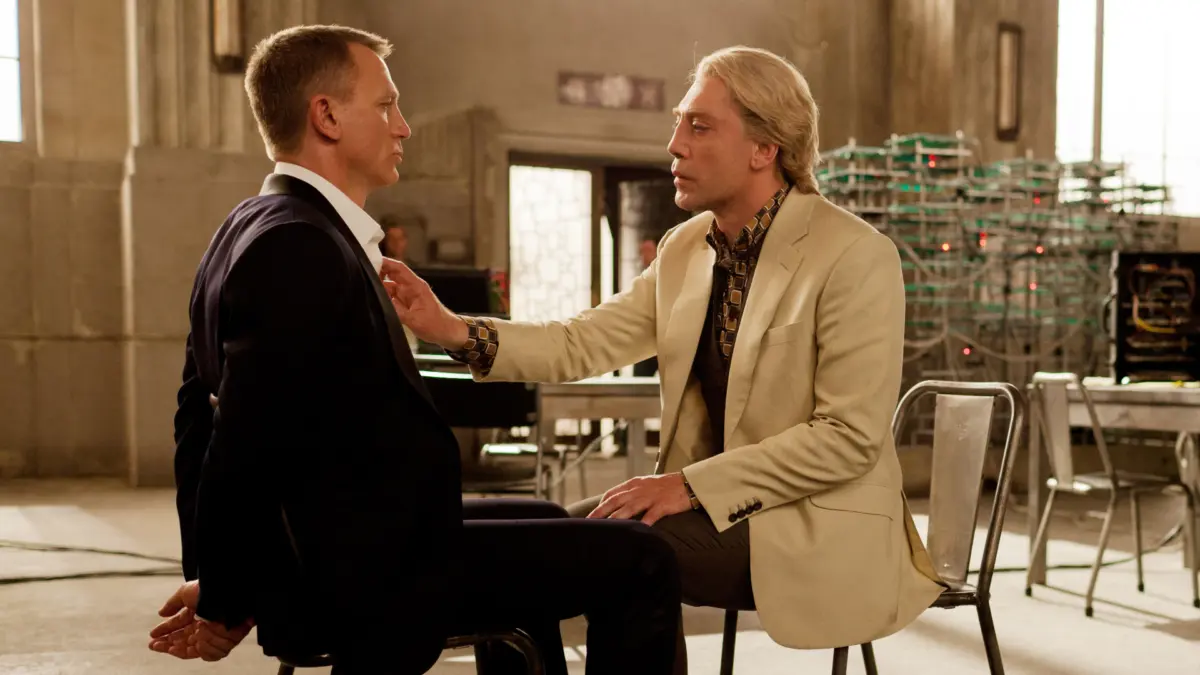
Perhaps the most revealing portion of the conversation centered on his portrayal of Raoul Silva in the 2012 James Bond installment Skyfall. Bardem admitted that his initial reaction to the offer was one of hesitation, citing a lack of clarity regarding his specific contribution to the storied franchise. However, his collaboration with director Sam Mendes proved transformative.
Bardem revealed that he actively challenged the traditional archetype of the "world-destroying" villain, proposing a more psychological and intimate threat. By introducing a sexually charged undercurrent to the dynamic between Silva and Daniel Craig’s James Bond, Bardem sought to unsettle the protagonist in a way that had never been explored in the franchise’s 50-year history. The resulting scene, in which Silva suggestively brushes his hand against a restrained Bond, remains one of the most discussed sequences in the modern 007 era. Bardem credited the studio’s willingness to embrace this unorthodox direction, noting that the scene was designed to force Bond into an unfamiliar, vulnerable position, thereby heightening the narrative stakes.
The actor’s humility regarding his own stardom was evident as he recalled his first day on the Skyfall set. Despite his extensive resume, the gravity of joining the Bond universe and sharing the screen with Dame Judi Dench caused him to momentarily lose his composure. The production had to pause when a starstruck Bardem realized he was witnessing the chemistry between Dench and Craig firsthand, a moment he described as a profound realization of the joy inherent in high-level filmmaking.
The Dynamics of Collaboration and Craft
Bardem’s analytical approach to his work was further illustrated by his reflection on the Coen brothers’ No Country for Old Men (2007). The film, which earned him the Academy Award for Best Supporting Actor, features a legendary four-minute sequence involving a coin toss. Bardem was quick to redirect credit toward his scene partner, Gene Jones. He emphasized that the efficacy of the scene was not a solo achievement but a byproduct of Jones’s ability to project vulnerability and authentic terror.
This philosophy of "commonality"—the idea that performance is a collaborative architecture built on mutual responsiveness—has become a cornerstone of his methodology. According to Bardem, an actor’s power is only as strong as the security and emotional intelligence of their counterpart, a sentiment that underscores his reputation as a disciplined and generous collaborator.

Current Projects and Industry Outlook
The actor is currently at the BFI London Film Festival to support two distinct projects. Bunker, directed by Florian Zeller, represents a shift into high-concept psychological drama. The film features an ensemble cast including Stephen Graham, Paul Dano, and Patrick Schwarzenegger, and explores the moral decay of an architect tasked with designing a survivalist retreat for a paranoid billionaire. The project is expected to examine themes of existential dread and marital instability.
Simultaneously, The Beloved, directed by Rodrigo Sorogoyen, offers a meta-commentary on the film industry itself. Bardem stars as an aging, two-time Oscar-winning filmmaker who makes the decision to cast his estranged daughter in a period drama. The narrative is expected to delve into the complexities of professional versus personal relationships, a theme that mirrors the current industry-wide discussions regarding the intersection of fame and family.
These films coincide with a busy period for his spouse, Penelope Cruz, who is also enjoying critical attention for her roles in La Bola Negra, The Invite, and Bunker. The couple’s parallel success remains a focal point for international media, though both actors have maintained a rigorous focus on their individual artistic trajectories.
Analytical Context: The State of the Industry
The 70th BFI London Film Festival, which runs from October 7 to October 18, serves as a critical barometer for the state of global cinema. Bardem’s presence underscores a trend of prestige actors moving seamlessly between intellectual, character-driven dramas and high-budget studio projects.
From a professional standpoint, Bardem’s comments regarding the future of acting in the age of AI suggest a growing anxiety within the industry about the displacement of human emotion by synthetic alternatives. His assertion that acting is an "important job to preserve" because it facilitates a "connection between us" aligns with recent labor negotiations in Hollywood, where the protection of human likeness and performance rights became a central pillar of industry-wide strikes and policy changes.
Furthermore, his success in subverting the "Bond Villain" trope in 2012 helped set a precedent for more nuanced, psychologically complex antagonists in tentpole films. This shift has had long-term implications for franchise management, as studios increasingly prioritize character depth to maintain audience engagement in an oversaturated market.
Looking Ahead
As the London Film Festival continues, the industry will be watching closely to see how the reception of Bunker and The Beloved impacts the upcoming awards season. Bardem’s career, which has evolved from a young hopeful in Spain to an international titan, remains a testament to the longevity afforded to those who balance technical discipline with a willingness to challenge convention.
While rumors continue to circulate regarding the casting of the next James Bond—a role that has recently been the subject of intense public speculation—Bardem’s focus remains firmly on the work currently at hand. His ability to navigate the pressures of global stardom while retaining the curiosity of a novice actor ensures his continued relevance in a rapidly changing cinematic landscape. As he continues to promote his latest projects, the discourse surrounding his contributions serves as a reminder that the essence of great cinema lies not in the spectacle, but in the nuanced, often vulnerable connections forged between actors on the screen.