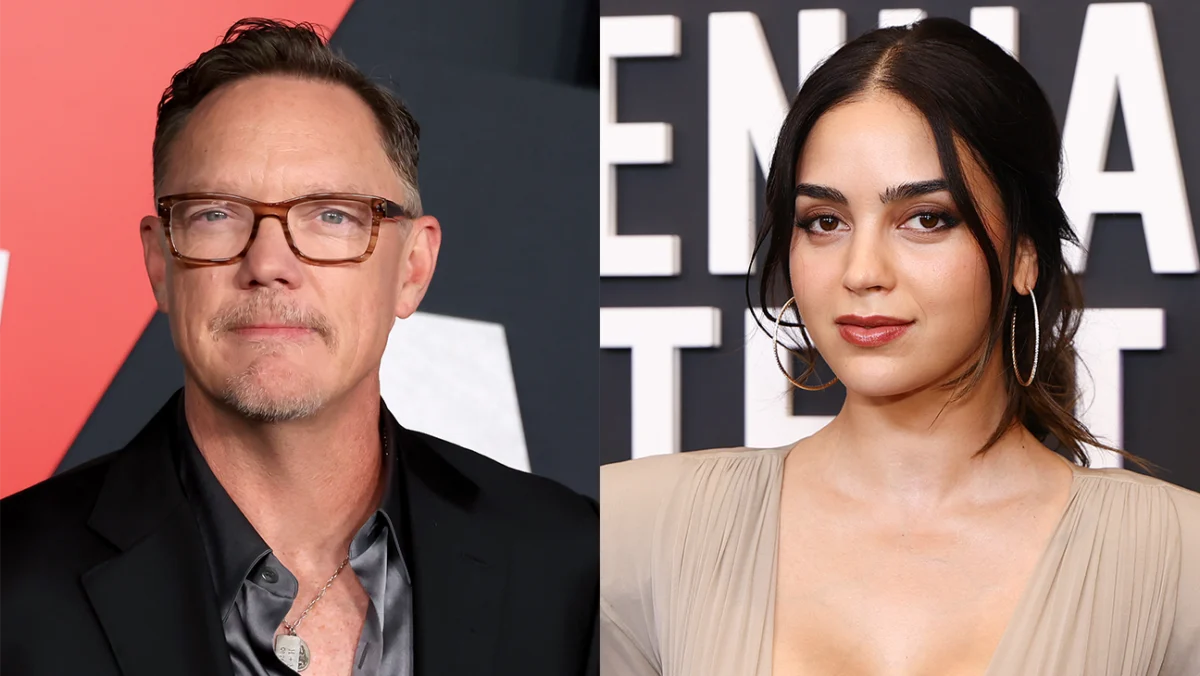
The ongoing tension within the horror film industry regarding the intersection of celebrity activism and studio oversight has reached a new boiling point, as veteran actor Matthew Lillard has publicly admitted to feeling a profound sense of "shame" and "embarrassment" regarding his return to the Scream franchise. Lillard, known for his iconic portrayal of Stu Macher in the original 1996 slasher classic, recently addressed the fallout surrounding the November 2023 dismissal of actress Melissa Barrera, who was removed from the seventh installment of the series after expressing support for Palestine on social media.
The Catalyst: Barrera’s Dismissal and the Studio Response
The controversy originated in late 2023, during the immediate aftermath of the October 7 Hamas-led attacks on Israel. Barrera, who had emerged as a central figure in the Scream franchise’s recent reboot, utilized her Instagram platform to share messages advocating for a ceasefire and highlighting the humanitarian crisis in Gaza.
Spyglass Media Group, the production company behind the franchise, moved swiftly to terminate its professional relationship with the actress. In a statement released on November 21, 2023, the studio explicitly cited a “zero tolerance” policy regarding what they characterized as antisemitism and hate speech. The statement read: “Spyglass’ stance is unequivocally clear: We have zero tolerance for antisemitism or the incitement of hate in any form, including false references to genocide, ethnic cleansing, Holocaust distortion or anything that flagrantly crosses the line into hate speech.”
The industry response was immediate and bifurcated. While some supporters of the studio’s decision argued that professional entities have the right to curate their public image and enforce conduct policies, a significant portion of the creative community and the public characterized the firing as a punitive measure against legitimate political expression.
The Chain Reaction: A Franchise in Flux
Barrera’s departure triggered a cascading effect that fundamentally altered the development of Scream 7. Within days of the announcement, the production faced a talent drain. Jenna Ortega, who starred alongside Barrera as Tara Carpenter, exited the project, citing scheduling conflicts—though industry insiders noted the timing of her departure occurred shortly after the controversy. Shortly thereafter, director Christopher Landon, who had been tapped to helm the seventh entry, announced his own departure, stating that the project had become a "nightmare" that he no longer wished to manage.
The vacuum left by the exiting cast and crew necessitated a radical shift in the production’s trajectory. Spyglass eventually pivoted to bring back legacy star Neve Campbell, who had previously declined to participate in Scream VI due to a pay dispute. This shift effectively rebranded the seventh installment as a return to the franchise’s foundational roots, rather than a continuation of the modern storyline established by Barrera and Ortega.
Matthew Lillard’s Reflection and Moral Conflict
Lillard’s recent comments, captured during a public Q&A and circulated via social media, offer an intimate look at the internal conflict faced by legacy performers in a polarized environment. While discussing the importance of standing up for marginalized communities, including his own advocacy for queer and transgender rights, Lillard pivoted to the situation surrounding Barrera.
"It’s just human, it’s like who we are," Lillard stated. He characterized Barrera’s stance as being "on the right side of history," suggesting that her firing was a disproportionate reaction to a moral position. Addressing the criticism he received for his decision to return to the Scream universe, Lillard admitted to a lack of foresight regarding the broader implications of his professional choices. "I got called out for it… I feel bad about that, I feel shame about that. Because in that moment, I was so excited to go back, I didn’t really think about Melissa and the journey, and I didn’t say ‘no.’"
His comments underscore a growing trend in Hollywood where actors are increasingly held accountable by their fan bases for the institutional decisions made by the studios that employ them. For Lillard, the "embarrassment" stems from the realization that his return served to legitimize a studio entity that had just taken a controversial stance against one of his peers.
Contextualizing Celebrity Activism in Hollywood
The situation surrounding Scream 7 is not an isolated incident but rather a symptom of a larger, systemic shift in how entertainment conglomerates manage political discourse. Historically, Hollywood studios have preferred to maintain an image of neutrality to maximize global box office appeal. However, the rise of social media has forced both talent and executives into a position where silence is often interpreted as complicity, and expression is often treated as a liability.
Statistical data from industry analysts suggests that public perception of a studio’s "values" now plays a non-negligible role in consumer behavior. During the weeks following the announcement of Barrera’s firing, the #Scream7 hashtag experienced a massive surge in negative sentiment, with a significant volume of mentions originating from users calling for a boycott of the franchise. This, combined with the loss of two of the modern franchise’s biggest stars, forced Spyglass to spend months in damage control, eventually restructuring the film to rely on the nostalgia of legacy characters.
Implications for the Future of the Slasher Genre
The Scream franchise has long been defined by its meta-commentary on the horror genre, frequently deconstructing the "rules" of slasher films. The real-world drama surrounding the production of the seventh entry has, in a sense, become its own form of meta-narrative. The film is now a case study in the difficulties of maintaining a long-running intellectual property in an era where the off-screen political alignments of a cast can derail an entire production.
For production houses like Spyglass, the challenge remains balancing commercial viability with the increasingly vocal political expectations of their talent pool. When studios act decisively to distance themselves from controversial statements, they risk alienating the very creative talent that defines their product. Conversely, failing to address public outcry can lead to perceptions of indifference or complicity.
The Broader Impact on Artistic Expression
The discourse prompted by Lillard’s comments also touches upon the broader issue of "cancel culture" within the creative arts. Critics of the current landscape argue that the fear of termination prevents actors from engaging in meaningful social commentary. Proponents of studio oversight, however, argue that celebrities, by virtue of their massive platforms, carry a responsibility to adhere to corporate guidelines, particularly when their comments could influence public opinion on highly sensitive geopolitical issues.
Lillard’s candid admission highlights the personal cost of this conflict. It is a rare instance of a high-profile actor choosing to prioritize the principle of solidarity with a colleague over the financial and professional benefits of returning to a lucrative franchise role. As the industry continues to navigate the complexities of political and social polarization, the Scream franchise will likely remain a key reference point for how Hollywood manages the tension between corporate interest and individual conscience.
Ultimately, the situation serves as a stark reminder that in the modern digital age, the boundaries between a film’s fictional world and the reality of those who create it are increasingly porous. For Matthew Lillard, the experience has been a sobering lesson in the weight of professional association, leaving him to grapple with the realization that even in the business of horror, the most difficult decisions are often the ones made behind the scenes, away from the cameras and the scripts.