This behind-the-scenes account of the film’s genesis is currently being revisited by the filmmaker himself in a forthcoming episode of The Hollywood Reporter’s It Happened in Hollywood podcast. The revelations provide a stark look at the volatile environment of early 1990s independent film production, where the line between artistic ambition and personal ruin was often dangerously thin.
A Two-Year Struggle for Legitimacy
The journey to bring Bad Lieutenant to the screen was fraught with resistance from the outset. Throughout the two years of pre-production, Ferrara and producer Edward R. Pressman faced significant pushback from potential financiers. The primary point of contention was the film’s narrative premise: a New York City police detective who is himself a consumer of illegal narcotics, a gambler, and a figure of profound spiritual decay.
In an era before the gritty, anti-hero narratives of modern prestige television became standard, the industry was hesitant to back a project that lacked a traditional moral anchor. Ferrara recounts reaching a point of total exhaustion, nearly abandoning the project entirely after countless rejections from studio heads and private investors who found the script’s unflinching portrayal of police corruption and drug abuse too transgressive for a mainstream release.
The Chateau Marmont Departure
The pivotal moment of the production occurred during a Saturday morning meeting at the Chateau Marmont in Los Angeles. Ferrara, Pressman, and Walken had spent the previous week in intensive rehearsals, working to refine the character and tone of the piece. Walken had been the focal point of the development process, and the script was being tailored specifically to his acting sensibilities.
Without warning, Walken signaled his exit. He turned to Pressman and stated definitively that while he understood Ferrara’s vision, he could not personally commit to delivering the performance required for the role. With that, the actor departed, leaving the director and producer in a state of immediate uncertainty. Ferrara later admitted that he had already spent his entire fee for the project, creating a scenario where he had no financial buffer should the production fail to move forward. The departure of the lead actor effectively rendered months of preparation and rehearsal obsolete, forcing the creative team to restart the casting process under extreme time constraints.
The Intervention of Harvey Keitel
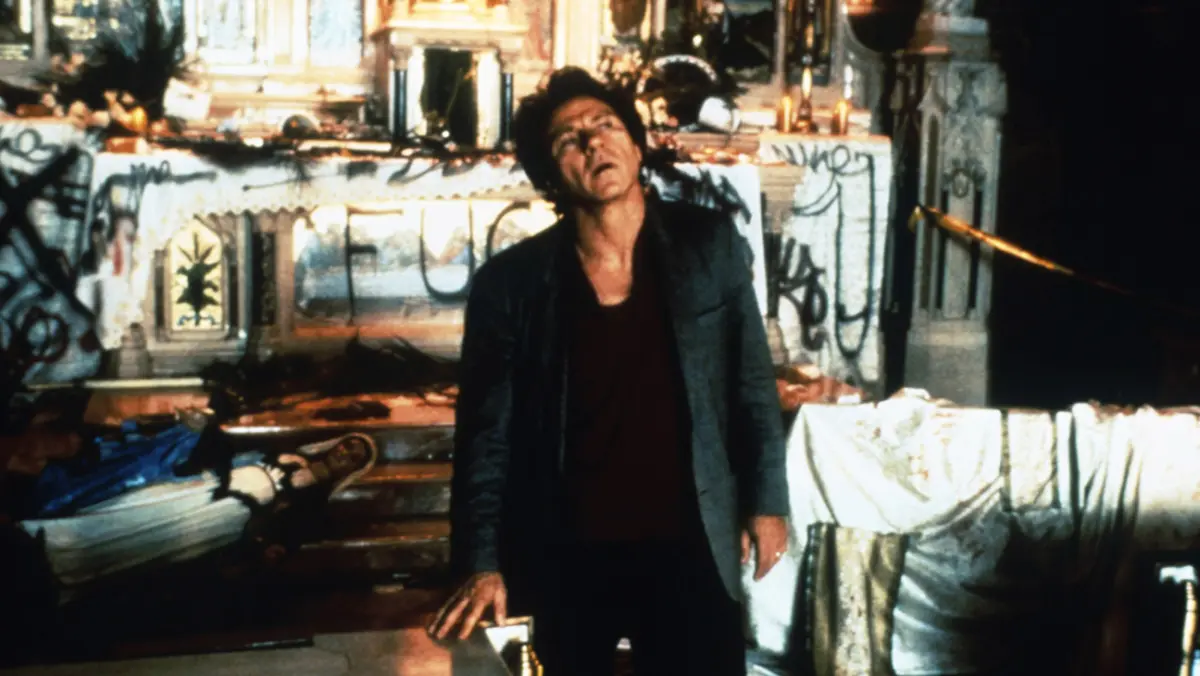
Following Walken’s departure, the script was presented to Harvey Keitel. The initial reception was, by all accounts, dismal. According to Ferrara, Keitel reviewed the first three pages of the unconventional, 30-page treatment and immediately discarded it.
The project was rescued by the intervention of actor Victor Argo, a close associate of Keitel and a recurring player in Ferrara’s filmography. Argo recognized the potential in the material and urged Keitel to reconsider. The turning point for the actor was a specific, intense passage penned by screenwriter Zoë Lund—who also starred in the film as the detective’s drug-addicted companion. The scene, which detailed the confession of a nun who had been the victim of a brutal assault, resonated with Keitel in a way the preceding pages had not. Upon accepting the role, Keitel’s involvement necessitated a complete reimagining of the character, as the work performed during the week of rehearsal with Walken was entirely discarded to accommodate Keitel’s distinct style and creative input.
Production Data and Industry Context
Bad Lieutenant was produced on a modest budget, a common feature of Ferrara’s work during that period. The film’s eventual release served as a polarizing cultural moment, drawing praise for its uncompromising exploration of Catholic guilt and the "spiritual despair" of its protagonist.
Data regarding the film’s financial performance suggests that while it was not a massive commercial blockbuster, it achieved significant cultural longevity, solidifying its place in the Criterion Channel’s "Directed by Abel Ferrara" retrospective. The film’s success is often measured not by its initial box office receipts but by its influence on subsequent generations of filmmakers who utilized the "corrupt detective" trope to explore existential themes.
The Legacy of Artistic Instability
Reflecting on his career, which spans over 35 directorial features, Ferrara notes that the public and critical discourse remains disproportionately focused on Bad Lieutenant and King of New York. This, he suggests, is a testament to the intensity of those specific productions—a direct byproduct of the instability and high-stakes environment in which they were created.
The transition from Walken to Keitel fundamentally altered the trajectory of the film. While Walken might have brought a different, perhaps more detached or cerebral quality to the role, Keitel’s visceral, raw intensity became the definitive hallmark of the character. The shift underscores the reality that, in independent cinema, the final product is often a result of contingency and external pressures rather than a pre-determined creative path.
Implications for Modern Filmmaking
The production of Bad Lieutenant serves as a reminder of the volatility inherent in the independent film industry prior to the digital revolution. The reliance on individual relationships, the necessity of personal financial risk, and the fragility of actor commitments were standard elements of the landscape.
The story of the film’s near-collapse highlights several key factors:
- The Role of the Producer: Edward R. Pressman’s role as a stabilizer was crucial in keeping the project afloat after the lead actor departed.
- Script Development: The use of a non-traditional, shorter screenplay format reflected the experimental nature of the filmmaking process at the time.
- The Power of Collaboration: The success of the film was contingent upon the specific chemistry between Ferrara and Keitel, which only materialized after the initial, failed casting attempt.
As streaming platforms continue to curate retrospective collections, the story of Bad Lieutenant remains a central narrative in film history. It is a portrait of a director who, despite his own personal struggles and a series of professional near-misses, managed to execute a vision that transcended the limitations of its budget and the instability of its cast. The forthcoming podcast episode is expected to provide further granular detail on the specific financial and creative hurdles that Ferrara faced, cementing the film’s status as a product of genuine, if chaotic, artistic necessity.
The impact of the film continues to be felt in modern cinema, as directors continue to look toward the gritty, unvarnished realism that Ferrara pioneered. While the industry has changed, the fundamental challenges of securing talent, financing, and creative vision remain as relevant today as they were in 1992.