Marvelous Inc. signaled a significant shift in its portfolio during its Pre-Tokyo Game Show 2026 presentation by unveiling Eternal Anima, an ambitious time-travel role-playing game that seeks to bridge the aesthetic and mechanical gap between the 16-bit golden age of gaming and contemporary design standards. Developed by a core team of industry veterans, including personnel who held pivotal roles in the production of Chrono Trigger and the early Final Fantasy series, the title represents a deliberate attempt to capture the narrative weight and mechanical depth that defined the genre during the 1990s.
The Genesis of a Collaborative Vision
The project originated over five years ago, emerging from a period of industry-wide reflection catalyzed by the global pandemic. Producer Makoto Shioda, seeking to craft a JRPG that prioritized legacy, approached lead programmer Katsuhisa Higuchi to helm the project. Higuchi, whose career spans four decades and includes foundational contributions to the 8-bit era, viewed the collaboration as an opportunity to synthesize his extensive technical expertise with modern development capabilities.

The assembly of the development team was a strategic exercise in reuniting industry pioneers. By leveraging professional networks forged during the mid-90s at Square, the production team secured the participation of scenario writer Kazushige Nojima and music producer Hitoshi Sakimoto. This reunion of creative talent—supported by scenario draft writer Keisuke Makino, scenario director Hironao Fukuda, and character designer Max Berthelot—was reportedly characterized by a high degree of creative friction and collaborative exchange, allowing the team to iterate on core concepts without the limitations often found in larger, corporate-mandated franchises.
Themes of Legacy and Temporal Mechanics
At its core, Eternal Anima utilizes a dual-era time travel mechanic to explore the concept of generational inheritance. Players are tasked with altering the past to avert the destruction of entire continents, a narrative structure that demands a deep understanding of cause and effect. By oscillating between two distinct time periods, the game explores what the inhabitants of the past entrust to their descendants and how the present generation navigates the burden of that history.
This focus on legacy is not merely thematic; it is a meta-commentary on the JRPG genre itself. According to Shioda, the game is designed to reflect the developers’ own feelings regarding the evolution of role-playing games. The narrative is anchored by the protagonist, Wade, who is designed to resonate with an aging player base. Unlike traditional genre tropes that favor youthful coming-of-age protagonists, Wade possesses a sense of adult composure and emotional complexity, a character choice intended to provide a more mature perspective on the responsibilities of leadership and temporal intervention.

Technical Innovation: The Future Sight Battle System
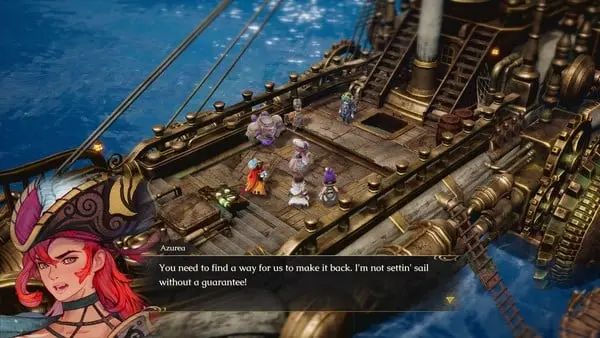
While the game pays homage to the turn-based classics of the past, the development team has implemented a proprietary system known as "Future Sight Battles." In the context of modern RPG design, where action-oriented combat has become the industry standard, the decision to refine turn-based mechanics is a bold strategic choice.
Higuchi, who considers battle programming to be the defining characteristic of a successful JRPG, focused approximately 80% of his developmental attention on these systems. Future Sight Battles are intended to look familiar to the veteran player while introducing subtle layers of predictive strategy that differentiate the experience from its predecessors. This system represents an attempt to honor the lineage of turn-based combat while ensuring the game remains viable in a market dominated by real-time combat systems.
The Challenges of Modernizing a Retro Aesthetic
Development was not without significant hurdles, particularly regarding the game’s visual identity. Early iterations of Eternal Anima favored a lighter, more stylized aesthetic, which the team eventually discarded. The current visual direction is the result of extensive adjustments to character proportions, environment color palettes, and lighting models. These changes were made to align the game’s visual narrative with its more serious, legacy-focused story.

The timeline of development, spanning five years, allowed the team to undergo these radical visual re-evaluations. This prolonged incubation period stands in contrast to the rapid, iterative cycles common in modern mobile-first game development, reflecting a return to the long-form development methodologies of the 1990s.
Industry Context and Competitive Landscape
The release of Eternal Anima coincides with a broader industry trend of "nostalgia-plus" titles, where developers leverage modern engines to replicate the feel of classic titles. The success of games like Octopath Traveler and Sea of Stars has proven that there is a robust market for high-fidelity, retro-inspired experiences. However, Eternal Anima differentiates itself through its pedigree.
By integrating creators who were present at the inception of the time-travel narrative in gaming, Marvelous Inc. is positioning the title as an "authentic" evolution of the genre. The inclusion of Hitoshi Sakimoto—known for his distinct orchestration in the Final Fantasy and Tactics Ogre series—further cements the game’s appeal to a demographic that prioritizes the "Square-era" aesthetic.

Broader Implications for the JRPG Genre
The development of Eternal Anima raises questions about the future of the JRPG format. As the original architects of the genre begin to reach the later stages of their careers, projects like this serve as a repository for their institutional knowledge. The "legacy" theme, which the developers cite as their primary motivation, can be interpreted as a literal passing of the torch.
If Eternal Anima succeeds, it may provide a blueprint for other legacy developers to revisit classic formulas without being tethered to the constraints of existing intellectual property. The project demonstrates that there is a viable path for "prestige" retro-inspired games that utilize high-level talent to create something that is both nostalgic and functionally modern.
Data and Historical Perspective
To understand the significance of this project, one must look at the historical trajectory of its creators. Katsuhisa Higuchi’s work on Chrono Trigger remains the gold standard for branching narrative design. Data regarding the game’s 1995 release indicates that it was one of the first titles to successfully integrate multiple endings based on temporal choices, a mechanic that clearly informs the "Future Sight" systems in Eternal Anima.

Furthermore, the involvement of Christopher Lloyd—an icon of the time-travel genre through his role as Doc Brown in Back to the Future—serves as a touchstone for the developers. Shioda’s anecdote regarding waiting in line to meet the actor highlights the team’s deep, personal connection to the genre’s cultural roots. This personal passion, while anecdotal, is a critical component of the marketing strategy, framing the game as a "passion project" rather than a cynical cash-grab.
Conclusion: A Synthesis of Eras
As the industry looks toward the conclusion of the 2026 Tokyo Game Show, Eternal Anima stands out as a focal point for discussion regarding the sustainability of the classic JRPG model. By balancing the technical requirements of modern hardware with the narrative sensibilities of the 90s, Marvelous Inc. is attempting to solve a central problem in game design: how to progress a genre without losing the essential qualities that made it popular in the first place.
The game’s success will ultimately depend on whether the "Future Sight" battle system offers enough depth to satisfy modern players while maintaining the accessibility of the classics. However, regardless of commercial outcomes, Eternal Anima serves as a significant historical document—a testament to the enduring influence of the designers who defined the medium and a glimpse into how those same designers perceive the evolution of their life’s work. The project stands as a clear indicator that for the architects of the JRPG, the act of creation is, and always has been, an exercise in legacy.