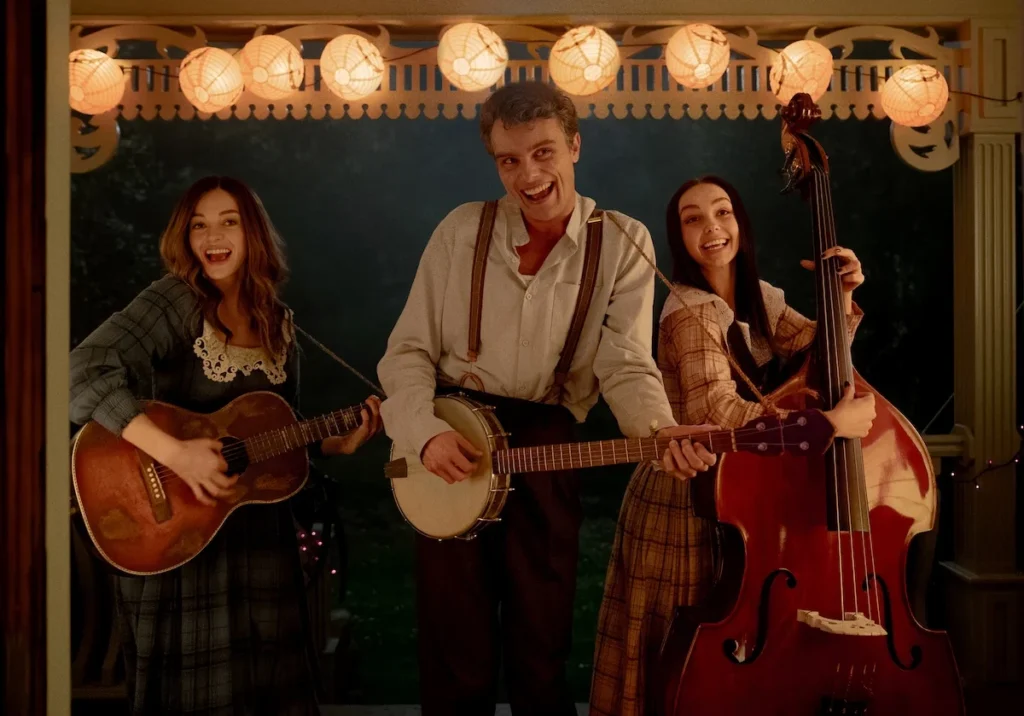
The landscape of horror television is currently undergoing a significant shift as Brad Caleb Kane’s series Crystal Lake attempts to bridge the gap between iconic slasher iconography and modern social commentary. By recontextualizing the origins of Jason and Pamela Voorhees, the series has moved away from traditional supernatural slasher tropes and into the realm of corporate malfeasance and the erosion of the 1970s American Dream. This departure represents a calculated risk for the franchise, which has historically relied on the ambiguity of its antagonist to maintain its terrifying allure.

Historical Context and the Myth of Jason Voorhees
For decades, the Friday the 13th franchise has operated on a relatively consistent mythology: a tragic drowning, a grieving mother’s descent into madness, and a revenant son returning to exact vengeance on the youth of Camp Crystal Lake. This narrative has spanned twelve feature films, a television series, and a plethora of novels and comic books. Throughout these iterations, the core appeal of the series remained rooted in the relentless, unstoppable nature of Jason Voorhees—a figure of primal, unthinking retribution.
However, modern horror audiences have shown a growing fatigue for legacy sequels that rely solely on nostalgia. Brad Caleb Kane’s adaptation for Peacock recognizes this, opting to move the timeline of the central tragedy to the early 1970s. This adjustment is not merely cosmetic; it allows the series to root the Voorhees family’s suffering in a period of intense American instability, characterized by the post-Watergate disillusionment, the energy crisis, and the slow decline of the postwar economic miracle.

A Chronology of Corporate Intrusion
The series’ penultimate episode, "Friday…," directed by Quyen Tran and written by Laura Marks, serves as the narrative pivot point. The episode establishes a dual focus: the domestic aspirations of Pamela Scott, played by Linda Cardellini, and the professional trajectory of Elias Wittering, portrayed by Hamish Linklater.
The timeline established in the show creates a distinct departure from the established film canon:

- Early 1970s: The introduction of "Project Argonaut" by the fictional Bellflower Chemical, a entity that mirrors the real-world corporate expansionism of the era.
- Mid-1970s: The period of intense corporate-led human experimentation, which the series uses as a catalyst for the supernatural abilities later attributed to Jason.
- Late 1970s: The tragic drowning of Jason, now framed not as a simple accident, but as a byproduct of environmental and chemical negligence facilitated by the state of his family life.
This restructuring frames the iconic mask-wearing killer not as a force of nature, but as a victim of scientific hubris. By introducing the pharmaceutical and industrial interests of Bellflower Chemical, the show shifts the horror from the supernatural to the systemic.
Performance and Character Analysis
Hamish Linklater’s portrayal of Elias Wittering represents one of the series’ most notable deviations from the source material. In previous non-canonical accounts, Elias was depicted as an abusive, secondary figure. In Crystal Lake, he is presented as a "company man," a personification of the middle-class desire for stability and upward mobility.

Critics and viewers have noted the psychological complexity of this choice. Linklater’s transition from a wholesome, well-meaning father to an instrument of corporate bureaucracy highlights the central theme of the show: the corruption of the individual by the institution. His character serves as a warning against the dangers of blind adherence to the status quo, effectively making him more terrifying than the monster his son eventually becomes.
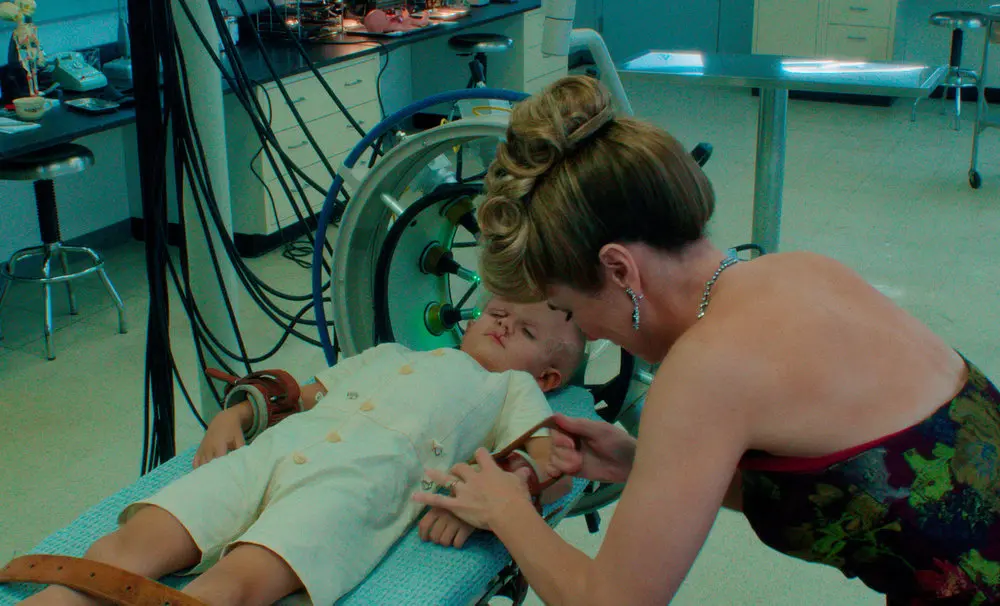
Linda Cardellini’s Pamela Scott serves as the emotional anchor of the series. Her struggle is presented as a tragic deconstruction of the 1950s/60s ideal of motherhood. The "Argonaut" procedures, depicted in sterile, clinical environments, serve as a visual counterpoint to the warmth of her domestic life. The show effectively utilizes the visual language of the era—bright colors fading into cold, metallic blues—to signify the erosion of her agency.

The Philosophical Implications of Modernizing Horror
The decision to link Jason’s supernatural resilience to corporate human trials has generated significant debate within the horror community. Traditionally, the "slasher" genre relies on a sense of moral judgment; the killer punishes those who violate social norms. By removing the "moral" component and replacing it with scientific exploitation, the show fundamentally alters the genre’s purpose.
Brad Caleb Kane has defended this creative choice by grounding it in reality. In various interviews, he has emphasized that the series is not attempting to engage in science fiction, but rather to reflect historical "science fact." He draws a parallel to the pharmaceutical and industrial history of the United States, where large corporations often prioritized profit over the long-term health and safety of their subjects.

This approach serves a dual purpose:
- It updates the franchise for a modern audience that is more skeptical of institutional power than the audiences of the 1980s.
- It provides a grounded, if dark, explanation for the supernatural aspects of the series, moving it closer to the "body horror" tradition popularized by filmmakers like David Cronenberg.
Broader Impact and Industry Reception
The release of these episodes marks a critical juncture for the Friday the 13th brand. By taking such a "big swing," the creators are risking the alienation of a core fanbase that expects a specific formula. Yet, this approach aligns with a broader trend in horror television—the elevation of genre material to explore complex sociopolitical issues.

Industry analysts observe that this strategy is increasingly common among platforms like Peacock and A24, who seek to distinguish their horror content through prestige production values and thematic depth. While the "mad science" explanation for Jason’s powers may be met with resistance, the show’s commitment to its chosen aesthetic and tone suggests a long-term goal of redefining the franchise for a new generation.
Conclusion: The Death of Innocence
Ultimately, the narrative arc of Crystal Lake seeks to define the death of Jason Voorhees as a metaphor for the death of American innocence. The series posits that the horror we fear is not born in the woods, but in the boardrooms and research facilities of the society we trust. By turning the spotlight toward the complicity of the family and the state, the show offers a sobering critique of the American Dream.

As the series concludes, the audience is left with a challenging question: is it possible to empathize with a monster if we understand the machinery that created him? For now, the response from the public, as seen in various fan discussions and critical reviews, indicates that the show has succeeded in generating intense engagement. Whether this "reimagining" will hold up as a definitive chapter in the lore remains to be seen, but it has undoubtedly secured its place as one of the most provocative entries in the long history of the Friday the 13th franchise.
The show continues to invite discourse, and the creative team behind Crystal Lake has expressed a willingness to hear feedback as they navigate this complex, often contentious, expansion of a legacy property. By refusing to lean on the crutch of familiar tropes, they have ensured that the story of Camp Crystal Lake remains a subject of intense, and necessary, conversation.