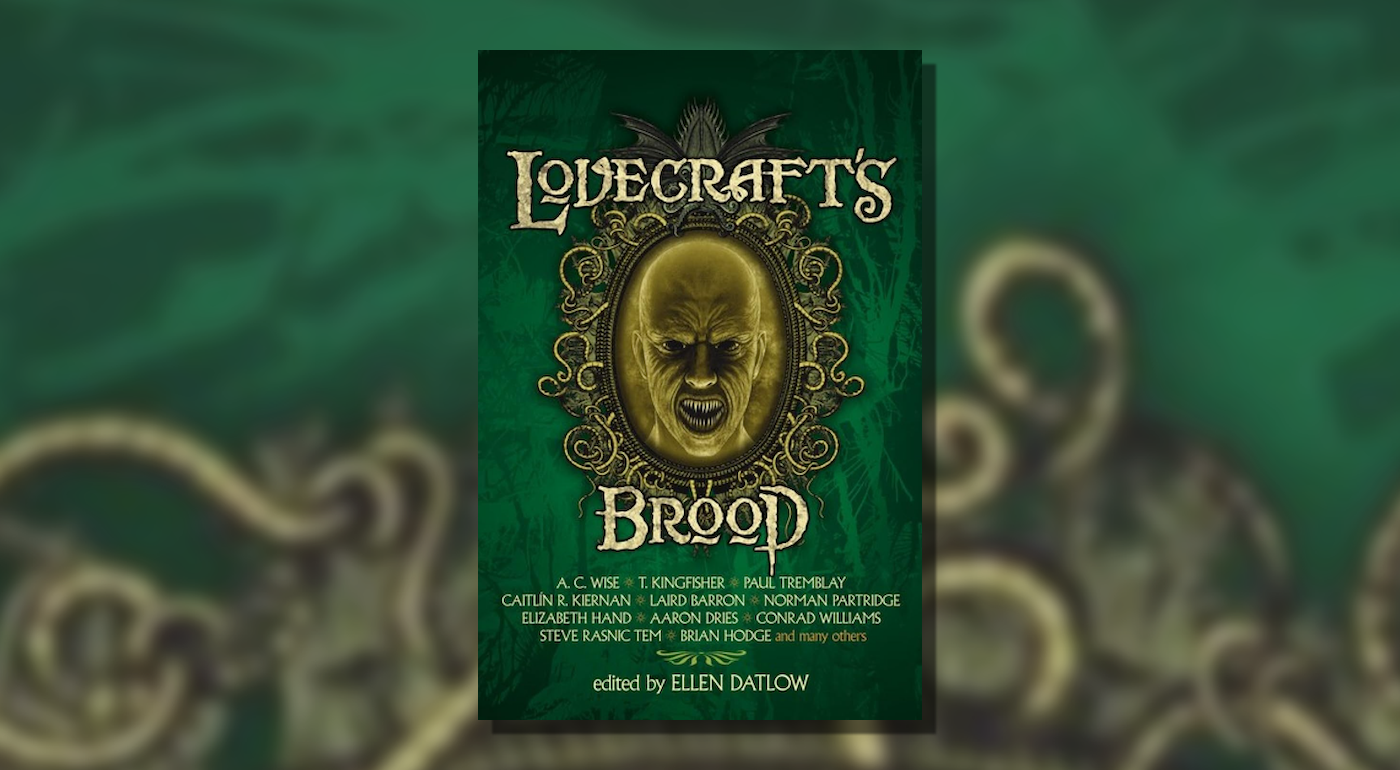
The intersection of modern speculative fiction and classic cosmic horror has long provided fertile ground for examining existential dread, yet few contemporary works have tackled the weaponization of the built environment quite like Brian Hodge’s short story “One Possible Shape of Things to Come.” Originally published in the 2015 anthology Eulogies III, edited by Tony Tremblay, Naci Kalanta, and Christopher Jones, and later anthologized in Ellen Datlow’s Lovecraft’s Brood, the narrative has recently re-entered critical discussions surrounding the subversion of domestic safety. The story presents a terrifying premise: an extradimensional incursion that utilizes the fundamental geometry of human architecture—specifically right angles and room corners—to systematically eradicate humanity by targeting its youngest demographic.
Main Facts and Narrative Premise
The plot centers on Brook, a man visiting his sister Meredith, brother-in-law Ethan, and five-year-old nephew Micah in California. What begins as an ordinary family reunion rapidly deteriorates into the uncanny when Micah is discovered standing motionless in his bedroom corner, whispering that "they" have told him to wait for punishment. While Brook initially dismisses the incident as an isolated behavioral anomaly or sleepwalking, the phenomenon quickly reveals itself to be a global crisis.
Across the world, children of various ages—subsequently categorized by authorities under the grim acronym STODS (Sudden Toddler Death Syndrome)—exhibit identical compulsions to face room corners before perishing. As the death toll rises, domestic safety protocols fail, and society faces an unprecedented existential threat from an enemy that bypasses traditional military defenses entirely.
Chronology of the Incursion
The progression of events in Hodge’s narrative traces a rapid descent from domestic normalcy to global societal collapse:
- Day One: Brook arrives in California, enjoying a brief respite as the "cool uncle." Later that night, Micah is found standing mute and compliant in his bedroom corner, claiming he has "been bad" and must await punishment.
- Day Two: Brook attempts to rationalize the event while observing playground interactions. That night, Micah retreats to the corner again. Brook investigates the empty space, witnessing a localized spatial distortion where the ceiling corner bubbles outward into a hexagon-faceted eye, emitting dimensional light.
- Day Three: Despite sleeping with his parents, Micah slips away into a corner. Meredith discovers his lifeless body.
- The Global Pandemic: The phenomenon spreads worldwide, affecting infants to grade-schoolers. Marriages dissolve under the strain of grief, and public infrastructure begins to fail as skeptics and theorists alike fail to find medical explanations.
- The Discovery of "Black Lightning": Nanny-cam footage of a victim named Heather Myers reveals a pulse of unseen energy—dubbed "black lightning"—striking the skull from a ceiling corner. Theoretical physicists propose higher-dimensional collisions, realizing that the entities are waging a patient, targeted extermination campaign against human youth.
- The Fermilab Counter-Offensive: Scientists make a desperate final attempt to disrupt the invasion using the Fermilab Main Injector particle accelerator. The experiment results in a catastrophic failure, causing the accelerator ring to collapse into a deep trench.
- The Final Event: The sky turns a deep lavender, and black lightning sweeps the globe, simultaneously killing all biological life and reworking inanimate matter into rigid, angular formations.
Supporting Data and Historical Context of Child Mortality
To fully grasp the psychological devastation deployed within the narrative, one must examine the historical framework of child mortality and parental anxiety. Throughout human history, biological vulnerabilities—ranging from infectious diseases and malnutrition to lack of sanitation—historically claimed the lives of approximately half of all children before their fifteenth birthday. Over the past century, public health milestones such as the widespread adoption of vaccines, the discovery of antibiotics, the green revolution, improved sanitation, and targeted infant safety campaigns drastically inverted these statistics, allowing modern parents the relative security to raise children without the constant, immediate expectation of childhood loss.
Hodge’s narrative exploits this hard-won sense of security by introducing an external, incomprehensible variable that bypasses modern medicine entirely. Unlike traditional plagues or viral outbreaks that function on biological imperatives of replication, STODS targets children with a deliberate, punitive malice. The inversion of historical mortality trends—suddenly plunging a peaceful, vaccinated society back into an era where children are systematically and inexplicably wiped out—creates a profound psychological shockwave.
Official Responses and Scientific Speculation
As the phenomenon defies medical and epidemiological classification, governments and academic institutions find themselves entirely unequipped to manage the crisis. Public health officials initially search for behavior-altering viruses or environmental toxins, delaying effective comprehension while skeptics deny the reality of the threat.
Once nanny-cam footage confirms the existence of extradimensional strikes, theoretical physicists step into the public sphere to offer models of space-time foam collisions. They hypothesize that overlapping dimensions possess fundamentally incompatible laws of matter and energy. According to these scientific models, the entities inhabiting the adjacent dimensions view human spatial geometry—specifically the right angles ubiquitous in human construction—as an intolerable encroachment. Rather than engaging in open warfare with adult populations, the entities adopt an efficient, long-term extermination strategy: eliminating the young to ensure the natural extinction of the human species within a single generation.
Broader Impact and Societal Implications
The societal fallout depicted in the story reflects a rapid dismantling of human civilization. The psychological toll fractures families, leading to widespread separations and collateral tragedies, such as Ethan’s fatal fall from a wind turbine. In response to the architectural vulnerability of standard housing, public behavior shifts radically. Citizens attempt to adapt by constructing amoeboid, angle-less dwellings or by laboriously plastering over the interior corners of existing homes in a daily, exhausting battle against spatial geometry.
The ultimate failure of the Fermilab particle accelerator counter-offensive underscores the futility of human technological resistance against higher-dimensional forces. When the accelerator ring collapses, it signals not merely a failed experiment, but the permanent sealing of humanity’s fate. The final transformation of the sky into a deep lavender hue and the simultaneous geometric reconfiguration of the planet illustrate a total conquest.
Ultimately, “One Possible Shape of Things to Come” serves as a stark exploration of vulnerability, questioning the security of the modern world when confronted with forces entirely indifferent to human civilization. By transforming the most mundane domestic feature—the corner of a room—into a threshold for annihilation, the narrative exposes the fragile boundary between safety and existential erasure.