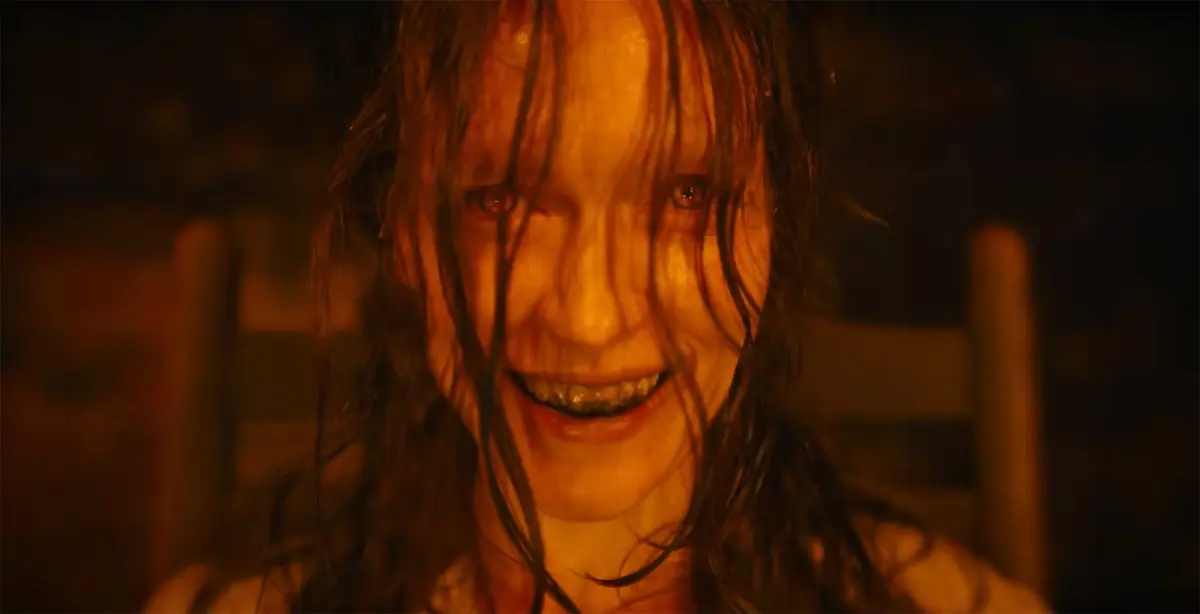
Saban Films has officially released the high-stakes theatrical and digital trailer for The Caged, an independent supernatural horror feature directed by genre filmmaker Jeffrey Scott Collins. Steeped in dark folklore and historical trauma, the film is directly inspired by the notorious real-world location known simply as "The Cage" in the historic town of Essex, United Kingdom. Long recognized by paranormal researchers and historians alike, the real-life property historically served as a medieval holding cell for individuals—predominantly women—accused of witchcraft during the turbulent persecutions of 1582.
Following a successful festival run that included its world premiere at Screamfest LA, the film is scheduled for a theatrical release in select United States cinemas on December 1, 2026, followed by a wider video-on-demand (VOD) rollout in January 2027. The project stars a notable ensemble cast featuring Tamzin Merchant, Edmund Kingsley, Raffiella Chapman, and Callen Carter. By anchoring a traditional supernatural haunting narrative within a specific, documented historical atrocity, The Caged attempts to bridge the gap between psychological family drama and terrifying folklore-based horror.
The Real History of The Cage in Essex
To fully understand the premise of Jeffrey Scott Collins’ latest cinematic venture, one must examine the grim history of the physical location that inspired it. Situated in the unassuming village of St Osyth in Essex, England, The Cage is not merely a cinematic set piece, but a documented historical site. During the height of the European witch hysteria in the late 16th century, the building functioned as a parish holding cell. It was specifically utilized to detain local women accused of practicing witchcraft prior to their formal trials and subsequent executions.

Most infamously, the site is tied to the Essex witch trials of 1582, a wave of mass hysteria that resulted in numerous accusations, tortures, and executions. Among the accused was Ursula Kemp, a local healer and midwife whose life and tragic end are deeply embedded in the dark mythology of the region. Over the centuries, the physical structure transitioned from a medieval jail to a residential cottage, only to accumulate a modern reputation as one of the most haunted locations in the United Kingdom. In recent decades, the property operated as a haunted overnight museum, drawing paranormal investigators, history enthusiasts, and horror creators seeking to commune with the alleged lingering spirits of the wrongfully accused.
Production Background and Festival Reception
Director Jeffrey Scott Collins, whose previous credits include Poor Greg Drowning and Above the Line, approached the project with the intent of fusing historical tragedy with intimate marital and familial breakdown. Produced by a collaborative team consisting of Collins, Joseph C. Grano, Llewelynn Greeff, and Gabrielle Whyte Hart, the film moved from development into active production by utilizing the authentic atmosphere of the Essex region to ground its supernatural elements.
The film made its official debut on the festival circuit this past autumn, securing a prestigious slot at Screamfest LA 2026, North America’s largest and longest-running horror film festival. Early industry response highlighted the film’s reliance on practical tension, claustrophobic set design, and the psychological burden placed upon its central characters. Rather than depending exclusively on standard jump scares, the creative team focused on how historic trauma can psychologically infiltrate and degrade modern family structures.
Director Jeffrey Scott Collins noted in promotional statements that the physical architecture of England provided a unique narrative foundation. According to the filmmaker, The Caged was conceptualized to explore a high-pressure environment where modern domestic conflicts collide with ancient, inescapable malice. By utilizing a real historical site as a thematic blueprint, the production aimed to honor the gravity of the 1582 trials while delivering a harrowing contemporary narrative experience.

Plot Synopsis and Narrative Overview
The narrative of The Caged follows a contemporary family as they relocate to a seemingly idyllic country cottage nestled within the rural landscape of Essex. Seeking a fresh start, the family quickly realizes that the historical property harbors a dark, predatory intelligence within its foundational stone walls.
What begins as innocuous environmental anomalies—unexplained nocturnal sounds, shifting temperatures, and a general sense of unease—rapidly escalates into physical danger. As the malevolent force inside the home begins actively hunting the inhabitants, the family finds themselves increasingly isolated. Local residents, keenly aware of the property’s sinister past, offer little comfort as mysterious deaths begin to mount in the surrounding community. Realizing that the entity residing within the walls has spent centuries waiting for new occupants, the family is forced to rely on a local individual who harbors a dark, personal connection to the house’s tragic history. With escape routes cut off and the supernatural pressure mounting, the characters must confront both the immediate physical threat and the generational weight of historical injustices that refuse to remain buried.
Thematic Analysis and Industry Implications
The release of The Caged arrives during a period of sustained commercial and critical interest in "elevated horror" and folk-horror narratives that draw heavily from local folklore and historical tragedies. Films that examine real-world atrocities through a supernatural lens often resonate strongly with contemporary audiences by transforming historical marginalization into visceral cinematic tension.

In the case of The Caged, the focus on the 1582 Essex witch trials taps into a broader cultural reckoning regarding the historical persecution of women under the guise of witchcraft. While the film operates primarily as a genre entertainment piece, its grounding in documented history adds a layer of solemnity that distinguishes it from purely fictional supernatural thrillers. By framing the haunting not as a random haunting, but as an awakening of historical violence, the film enters a thematic dialogue with other recent folk-horror projects that examine how physical landscapes retain the trauma of past societal failures.
Distribution Strategy and Upcoming Schedule
Saban Films has mapped out a calculated distribution strategy for the project, reflecting standard practices for mid-tier independent genre releases in the post-pandemic theatrical landscape. By securing a targeted theatrical run beginning December 1, 2026, the distributor aims to capture the attention of dedicated horror enthusiasts and festival audiences seeking cinematic experiences on the big screen.
Following the brief theatrical window, the film will transition to video-on-demand (VOD) platforms in January 2027, making it broadly accessible to home viewers. This hybrid release model allows specialty distributors to maximize word-of-mouth marketing generated by festival screenings while catering to the substantial consumer demand for on-demand horror content during the winter viewing season.
As the release date approaches, the combination of a historically documented haunted location, an acclaimed international cast, and a polished directorial vision positions The Caged as a notable entry in the 2026–2027 horror calendar. Whether the film can successfully translate its atmospheric festival reception into mainstream box office and streaming success remains to be seen, but its deep roots in actual British folklore ensure it will command the attention of horror aficionados and history buffs alike.