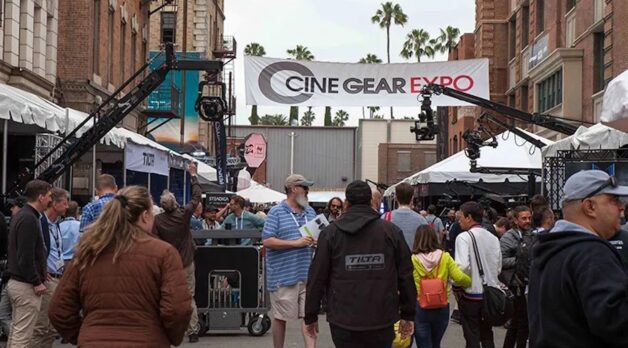
The annual Cine Gear Expo returned for its flagship two-day gathering on the historic Universal Studios Lot, welcoming thousands of cinematographers, gaffers, lighting technicians, and industry professionals. Unlike its sprawling, multi-industry counterpart, the NAB Show in Las Vegas—which frequently navigates corporate video trends, artificial intelligence integration, and shifting broadcast paradigms—Cine Gear remains anchored strictly in the art and execution of motion picture photography. Set against the functional backdrop of a working studio lot, this year’s convention served as both an exhibition of cutting-edge optical and electrical hardware and a vital networking hub for the Los Angeles film community.
Background Context and Event Evolution
Originally established decades ago to bridge the gap between emerging camera technologies and practical on-set application, Cine Gear has evolved into North America’s premier specialized event for filmmaking tools. The venue rotates periodically among Southern California studio facilities, having previously occupied the Warner Bros. lot before its recent move to Universal. This backlot environment inherently contrasts with traditional convention centers, offering attendees an immersive festival atmosphere complete with outdoor vendor tents, shuttle navigation across production stages, and direct proximity to working soundstages.
The 2026 edition arrived at a critical juncture for the entertainment industry. Following years of labor disruptions, budgetary contractions, and technological disruption, the mood among attendees was characterized by a distinct cautious optimism. Independent filmmakers, union-card-carrying studio veterans, and film school cohorts converged on the lot to evaluate how manufacturers are responding to modern production demands, which increasingly balance digital workflows with a renewed appetite for analog and vintage aesthetics.
The American Society of Cinematographers and Industry Discourse
The weekend’s programming heavily featured panels addressing the philosophy and technique of visual storytelling. Among the most anticipated events was the annual American Society of Cinematographers (ASC) panel, which brought together a large contingent of society members, including veteran cinematographers Jeff Cronenweth, Rachel Morrison, Karl Walter Lindenlaub, and Natasha Braier.
The session opened with a retrospective montage celebrating more than a century of ASC contributions to cinema, highlighting milestone achievements such as John Toll’s Oscar-nominated work on The Thin Red Line. Given the panel’s size, individual speaking times were brief, yet the remarks offered deep insight into the psychological and physical dimensions of camera operation. Steven Fierberg emphasized the importance of "body consciousness" on set, noting how physical intuition often dictates camera placement. Meanwhile, Natasha Braier discussed how her upbringing under a military dictatorship in Argentina and her background among psychoanalysts influenced her approach to subtext and the unconscious.
Advancements in Lighting Technology and Console Control
On the exhibition floor, particularly within Stage 17, lighting and electrical vendors showcased significant leaps in fixture design and control software. Drew Moe and Jeffrey Taylor, Local 728 gaffers and principals of the boutique rental house Canary Yellow, spent the weekend evaluating equipment for their inventory.
Moe noted that the timeline of technological advancement in lighting has accelerated dramatically compared to historical standards. While Hollywood relied for decades on a slow evolution from tungsten to HMIs and fluorescents, the modern era is defined by annual chip-level updates to LED systems. Manufacturers like Aputure drew substantial attention for proprietary innovations such as the Blair CG color engine, which aims to provide precise color rendering across complex mixed-lighting environments.
Control systems also received major updates. Ian Peterson demonstrated Version 3 (V3) of the Blackout Lighting Console to industry professionals. The updated software introduces visual control components to workflows that have historically relied on numerical values, allowing gaffers and board operators to manage complex fixtures via fluid, intuitive iPad interfaces. Industry analysts suggest that V3 could redefine software standards in lighting control upon its commercial release later in the year.
Breakthroughs in Analog and Hybrid Camera Engineering
One of the most talked-about hardware developments on the backlot was the Cinelux Sixteen, a 16mm motion picture camera developed by Cinelux Cinema Tools and presented in prototype form at the CSLA rental house booth. Designed by a small engineering team over a two-and-a-half-year period, the Cinelux Sixteen addresses a long-standing logistical friction point in modern filmmaking: the desire of directors to shoot on celluloid weighed against producers’ demands for immediate digital dailies.
The camera is engineered to record film and digital data simultaneously, capturing to an SD card at 3.2k resolution while exposing 16mm film. The digital capture utilizes a Sony sensor, bypassing the need for proprietary sensor development, while generating proxies and files embedded with a film-emulation LUT. Caz Voorhees, chief engineer on the project, noted that while the digital integration proceeded smoothly, the primary engineering challenge lay in designing the physical film magazine within an extremely tight spatial tolerance to ensure zero-friction transport. Furthermore, the development team plans to make the magazine designs open-source, allowing users to 3D-print components in the field. The project targets a commercial release by mid-2027.
Optical Innovations: Vintage Preservation and Modern Anamorphic Lenses
The optics sector exhibited a dual focus on historical preservation and large-format adaptation. Zero Optik, known for rehousing vintage photographic lenses into functional cinema housing, highlighted its ongoing work with historical glass. Operations manager Alex Baxter explained that photographic lenses from the 1930s through the 1980s—previously discarded or sidelined because they were incompatible with traditional film cameras featuring mirror shutters—have found a lucrative second life in the era of digital cinematography.
Zero Optik’s portfolio includes rehousing Canon FD lenses from the 1980s and restoring rare 1950s Todd-AO 65mm prime lenses discovered in the ASC archives, a project commissioned by the Society and executed in collaboration with cinematographer Greig Fraser for exclusive rental via Keslow Camera. These restored optics offer distinct aberrations and character sought after by contemporary cinematographers working on large-format digital sensors.
Simultaneously, Atlas Lens Co. detailed the continued expansion of its anamorphic lens lines. Co-founder Dan Kanes, whose background spans lighting, digital imaging technician (DIT) work, and wireless transmission development through Paralinx, transitioned his focus to anamorphic optics following the launch of his first prototype at the 2017 NAB Show. Over the subsequent nine years, Atlas lenses have become staples on major studio productions, including Babylon, Dune: Part Three, and Project Hail Mary.
Atlas showcased its flagship Orion series alongside the newly shipping Kaizen Series Anamorphic lenses. Engineered specifically for ultra-large-format sensors such as the Fujifilm GFX Eterna 55, the Arri Alexa 265, and the Blackmagic Design Ursa Cine 17K, the Kaizen lenses maintain compatibility with Super 35 and full-frame formats. Kanes emphasized that modern anamorphic design has evolved to mitigate the excessive field curvature found in vintage glass, enabling cinematographers to frame multiple actors across a wide shot with consistent edge-to-edge sharpness.
Broader Impact and Industry Implications
As Cine Gear Expo 2026 concluded with educational seminars—such as M. David Mullen’s structural breakdown of multi-camera tracking shots from The Marvelous Mrs. Maisel—attendees gathered at the ASC Clubhouse in Hollywood for the traditional closing barbecue.
The convergence of historical appreciation, open-source hardware experimentation, and rapid software iteration underscores a resilient manufacturing sector. Equipment developers are no longer merely chasing higher pixel counts or brighter outputs; instead, they are engineering tools that directly address the workflow inefficiencies, aesthetic preferences, and budget realities of modern film production. By bridging the gap between archival preservation and contemporary digital utility, the innovations unveiled at Universal Studios signal a pragmatic, craft-oriented path forward for the global cinematography community.