The landscape of modern television comedy is continuously evolving, challenged by the demands of the streaming era where series must frequently fight for visibility and renewal. Within this competitive environment, television writer and producer Michael Schur has consistently cultivated long-running, critically acclaimed hits that merge character-driven storytelling with moral philosophy and deadpan humor. Known for his pivotal creative roles in defining comedies such as The Office, Parks and Recreation, Brooklyn Nine-Nine, and The Good Place, Schur has established an enviable track record for building worlds anchored by warmth, intricate ensemble dynamics, and empathetic writing. This legacy forms the backdrop for his latest creative endeavor, a Peacock original series titled Dig, which reunites Schur with comedy veteran Amy Poehler, marking their first major television collaboration since their celebrated tenure on NBC’s Parks and Recreation.
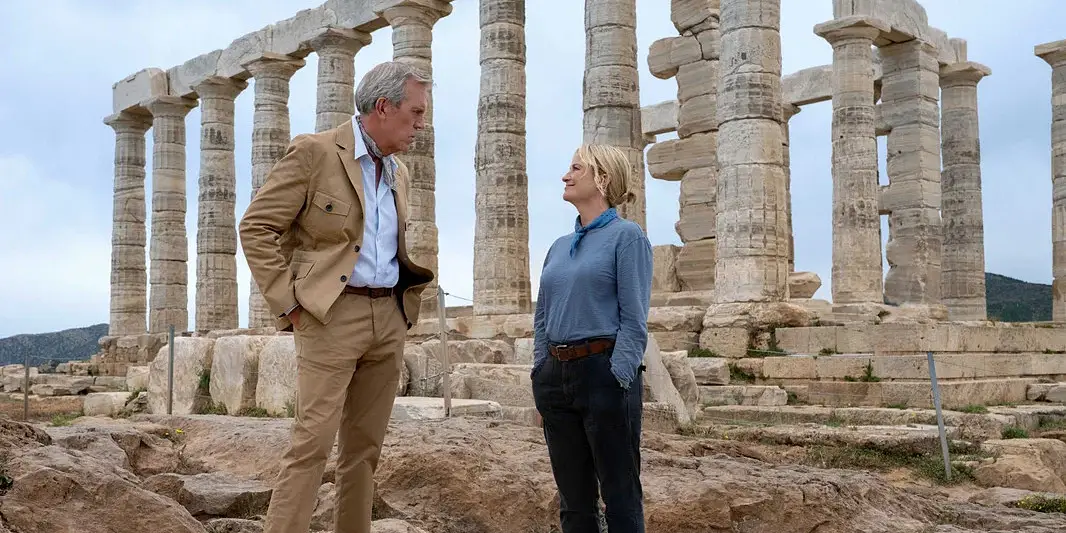
Based on Kate Myers’s 2023 bestselling novel Excavations, Dig shifts the traditional workplace comedy framework from municipal government offices and paper supply companies to the sun-drenched, dust-covered terrain of a summer archaeological excavation site in Greece. The narrative centers on four women working at the dig who unearth a rare, history-altering artifact, inadvertently dragging themselves into a complex and messy international conspiracy. While the series carries the pedigree of two of comedy’s most successful modern architects, its debut season navigates a delicate tightrope between workplace humor, character-driven drama, and a serialized mystery plotline across its ten-episode run.
Production Background and Literary Adaptation
The journey from the printed page to the streaming screen began shortly after the publication of Kate Myers’s Excavations in 2023. The novel received critical praise for its vibrant depiction of archaeological fieldwork, generational friction, and the intricate social dynamics among women working in a historically male-dominated scientific field. Recognizing the cinematic potential and comedic veins within the source material, Michael Schur and Amy Poehler spearheaded the adaptation for Peacock, seeking to translate the book’s mix of academic rivalry and sun-baked adventure into a serialized television format.
Production for the series was split between authentic on-location shoots in Greece and controlled studio environments in Los Angeles, California. This dual-production approach allowed the series to capture the breathtaking natural beauty and historical atmosphere of the Mediterranean landscapes, though it also introduced noticeable disparities in production design during certain interior studio sequences. Budgetary allocations leaned heavily toward international travel, securing prominent cast members, and logistical coordination overseas, occasionally resulting in studio-shot scenes that lacked the tactile depth of the physical excavation locations.
Ensemble Cast and Character Dynamics
At the heart of Dig is a sprawling ensemble cast led by Amy Poehler, who stars as Elise, the second-in-command at the archaeological site. Elise’s annual return to Greece is marked by a growing sense of professional stagnation and deep-seated resentment toward her superior, Neville, played by seasoned actor Hugh Laurie, for his reluctance to retire and cede control of the top position. Poehler’s portrayal of Elise diverges significantly from the boundless, relentless optimism of her iconic former television persona, Leslie Knope. Instead, Elise embodies a much more restrained, acerbic, and dry temperament, frequently functioning as the grounded straight woman amid the unfolding chaos.
The supporting ensemble features Antonia Thomas as Clare, the diligent head preservationist, and Jon Pointing as Gary, the weary wrangler of undergraduate students. The transient nature of the dig introduces a rotating crop of young scholars each summer, highlighted by Fina Strazza as Patty, a sheltered twenty-year-old archaeology enthusiast experiencing the world outside her hometown for the first time. Geraldine Viswanathan rounds out the main lineup as Dylan, a researcher returning to the site after a five-year hiatus to resolve lingering personal and professional matters, much to Elise’s dismay. Additionally, the series incorporates notable guest performances, including Kayvan Novak as local mayor Stavros, delivering memorable moments amidst the overarching narrative arc.

Narrative Structure and Chronology of the Season
Structured across ten episodes, Dig adopts a slow-burn narrative style typical of serialized mystery dramas, prioritizing character introduction and world-building in its early chapters over immediate comedic payoffs. In the initial episodes, the series establishes the academic hierarchy, personal grievances, and interpersonal tensions among the staff at the Greek excavation site.
As the narrative progresses past the midpoint, the discovery of the rare artifact accelerates the plot, weaving various subplots and character motivations into the central international conspiracy. The final episodes of the season serve as a convergence point for the narrative threads planted throughout the earlier hours, delivering substantial resolutions to the central mystery. This meticulous plotting reflects the structural sensibilities of its creators, ensuring that narrative breadcrumbs laid down in the expositional episodes ultimately pay off by the season finale, even if the transition from character comedy to high-stakes conspiracy thriller occasionally strains the pacing.
Critical Reception and Audience Expectations
Upon its release on Peacock, Dig has drawn mixed reactions from critics, primarily concerning its tonal balance between comedy and suspense. Reviewers have noted that while the series benefits from intelligent writing, a compelling overarching mystery, and a dedicated ensemble cast, it is noticeably lighter on laugh-out-loud comedic moments than fans might expect from a collaboration between Schur and Poehler.
Critics have pointed out that relegating Poehler to a more subdued, straight-woman role occasionally restricts the comedic firepower she is known to deliver, holding back the full potential of its lead asset. Conversely, the supporting performances—particularly Fina Strazza’s earnest portrayal of the undergraduate Patty—have been praised for providing emotional grounding and satisfying character arcs. Musical accompaniment, supervised by Oliver Hild and Kerri Drootin, has also received positive notices for incorporating inventive Greek covers of popular American tracks alongside a resonant original score.
Industry Implications and Future Prospects
The premiere of Dig arrives at a crucial juncture for streaming platforms investing in mid-budget, star-driven comedies that attempt to cross genres into mystery and drama. In the current television ecosystem, comedies frequently require time to establish their creative footing and discover their distinct identity—a trajectory famously demonstrated by the developmental leap between the first and second seasons of Parks and Recreation.
Industry analysts suggest that the longevity of Dig will depend heavily on whether Peacock and its viewership afford the creative team the patience necessary to refine the series’ tone and allow the characters to evolve organically. With a critical focus centering on its strong writing and potential for accolades in categories such as Outstanding Writing in a Comedy Series, the future of the show rests on its ability to strike a more harmonious balance between its comedic roots and its thriller ambitions should it secure a second season renewal.