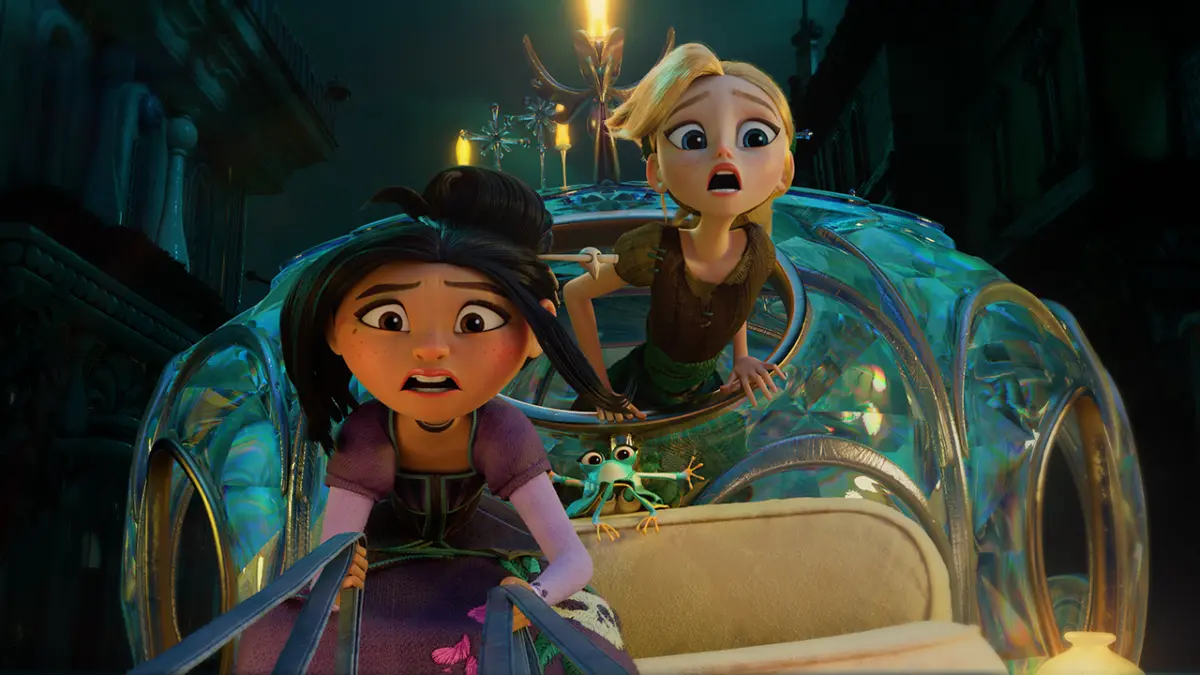
Netflix’s animated feature Steps has captured audiences worldwide, offering a fresh, subverted take on the traditional Cinderella narrative. Blending the aesthetic charm and tonal warmth of classic Disney fairy tales with the sharp, satirical revisionism popularized by DreamWorks productions such as Shrek, the film delves into nuanced themes of privilege, isolation, sisterhood, and systemic accountability. Featuring a star-studded voice cast including Amanda Seyfried as Cinderella, Ali Wong as her stepsister Lilith, Bette Midler as the Fairy Godmother, and Young Mazino as Gef the troll, the movie challenges centuries-old tropes about predetermined destinies. For viewers seeking clarity on the film’s complex time-travel mechanics, thematic underpinnings, and final resolutions, a comprehensive analysis of the conclusion illuminates how the kingdom of Alouette is ultimately saved.
Main Facts and Narrative Premise
At its core, Steps operates as a satirical deconstruction of classic folklore architecture. The narrative centers on Cinderella, portrayed by Seyfried, who appears to the public as an immaculate, saintly figure, while her stepsister Lilith, voiced by Wong, is systematically cast as a malicious antagonist. However, this dichotomy is revealed to be entirely manufactured by the Fairy Godmother, voiced by Bette Midler.
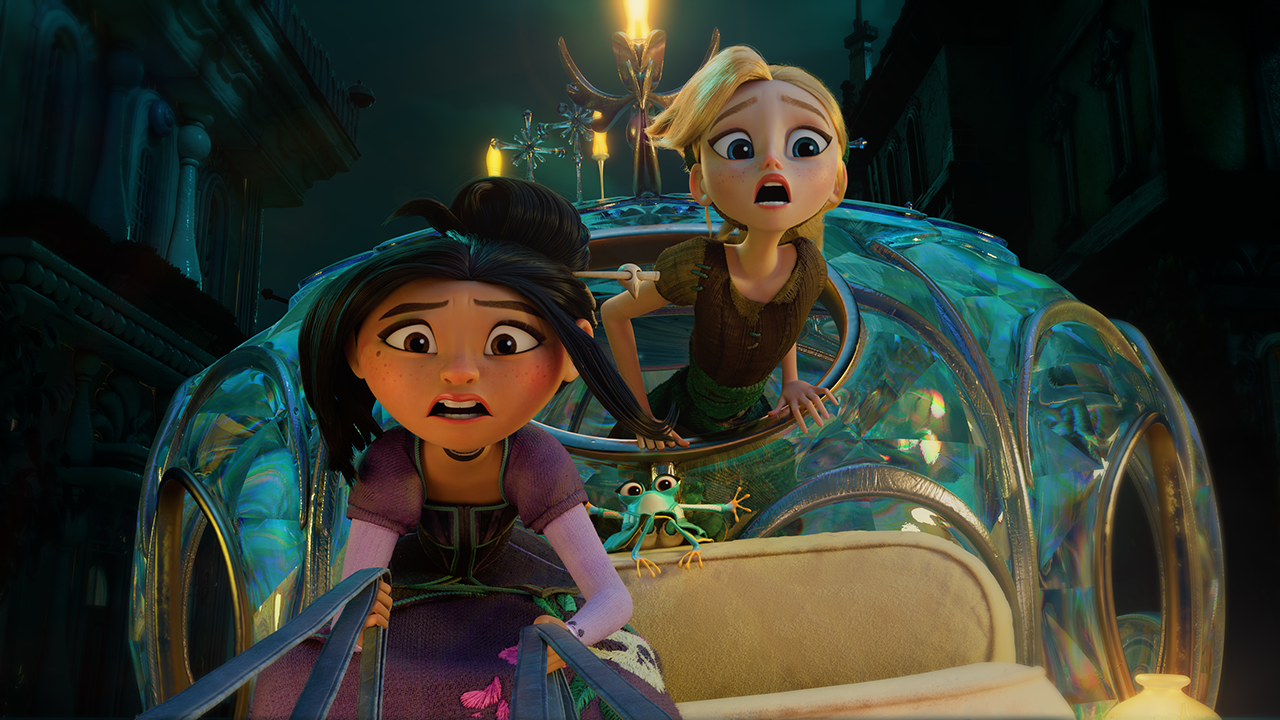
In this universe, Fairy Godmothers function as corrupt, omnipotent oracles whose sole professional objective is to author fairy tales and utilize covert magic to ensure those prophecies materialize in reality
, regardless of the collateral damage inflicted on individuals. The status quo is disrupted when Lilith pilfers the Fairy Godmother’s wand to attend the Prince’s royal ball, transforming the traditional aristocratic gathering into an energetic goth rave. Complications compound when local bully Priscilla steals the wand, utilizing its immense power to manipulate the Prince into believing she is his predestined true love, thereby fracturing established Cinderella canon.
To salvage the kingdom and restore order, Cinderella, Lilith, and their other stepsister, Margot, embark on a high-stakes race against the clock to reach the Prince by midnight. Their objective is to have the Prince fit the crystal slipper onto Cinderella’s foot, an action designed to activate the residual magic embedded within the artifact. This activation would theoretically grant Cinderella the temporal capability to travel back in time, preventing Priscilla from stealing the wand and averting the collapse of the narrative structure.

Chronology of the Climax
The third-act sequence accelerates rapidly as the sisters, aided by a strikingly handsome troll named Gef, execute a daring raid on the royal castle. Navigating defenses that include townspeople transformed into lifeless porcelain dolls by Priscilla’s unstable magic, Cinderella successfully reunites with the Prince. Simultaneously, Lilith secures the second crystal slipper, delivering it to the pair at the final moment to successfully trigger the temporal magic.
Upon activation, Cinderella is presented with the opportunity to travel backward in time to the moment immediately preceding Priscilla’s theft of the wand. However, she experiences a profound moment of hesitation. Having spent the duration of the film forging genuine bonds of solidarity, mutual understanding, and sisterly affection with Lilith and Margot, Cinderella recognizes that returning strictly to the ball would merely reset the oppressive fairy-tale script, forcing her stepsisters back into marginalized roles of antagonism.
Opting for a more radical intervention, Cinderella bypasses the ball entirely and travels further back in time to an inciting incident from earlier in the film: a social gathering where she, Lilith, and Margot were targeted by a cruel prank orchestrated by Priscilla. In the original timeline, Cinderella had remained a passive bystander, choosing self-preservation and alignment with the popular social strata over the defense of her newly acquired family members. In the revised timeline, Cinderella diverges from her past compliance, actively intervening to assist Lilith and Margot, extending a supportive hand, and explicitly choosing familial solidarity over superficial social standing.
Supporting Data and Production Background
Directed by Alyce Tzue, Steps has been widely recognized by industry critics as a landmark animated release for Netflix. During early promotional panels and work-in-progress presentations at the Annecy International Animation Film Festival, the creative team articulated a deliberate philosophy regarding character morality. The foundational thesis guiding the production was that no individual character should be portrayed as purely benevolent or entirely malevolent.
This ethos directly informs the character arc of Cinderella, whose initial passivity and reliance on unearned social privilege are held up to critical scrutiny. According to critical reviews, the film achieves a rare cinematic feat by offering marginalized audiences a resonant narrative of belonging while simultaneously presenting privileged viewers with a compelling blueprint for accountability. Furthermore, the voice cast brings significant emotional depth to these archetypes, with Gwendoline Yeo portraying Li Mei, Lilith’s mother, and original musical contributions enhancing the emotional resonance of the narrative’s conclusion.
Official Responses and Creative Intentions
Director Alyce Tzue has publicly discussed the personal inspiration behind the film’s thematic core, noting that Lilith’s character design and emotional arc were constructed around childhood sensations of isolation and the arduous journey toward finding true community. By rewriting the past, Cinderella does not merely repair a broken plot point; she dismantles an exclusionary system.
The narrative resolution emphasizes that the stolen wand was merely a symptom of a deeper societal fracture. The true rupture occurred years prior when systemic hierarchy and peer pressure dictated interpersonal relationships. By utilizing her distinct social standing—her inherent privilege as the town’s favored archetype—to bridge the gap between herself and her stepsisters, Cinderella initiates a profound sociological ripple effect throughout Alouette.
Broader Impact and Implications of the Resolution
The concluding montage of Steps details the sweeping, positive transformations experienced by nearly every resident of Alouette as a direct consequence of Cinderella’s altered choice.
- Lilith and Margot: Liberated from isolation, Lilith develops the emotional capacity to extend kindness to others. Margot, who spent a significant portion of the narrative transformed into a frog, is restored to her human form within the new timeline, finally experiencing the harmonious sibling relationship she always desired.
- Priscilla: While the film leaves Priscilla’s full psychological background largely unexplored, the revised timeline depicts Lilith extending an invitation to a lonely Priscilla, thereby short-circuiting the cycle of bullying and preemptively altering the trajectory of the would-be antagonist.
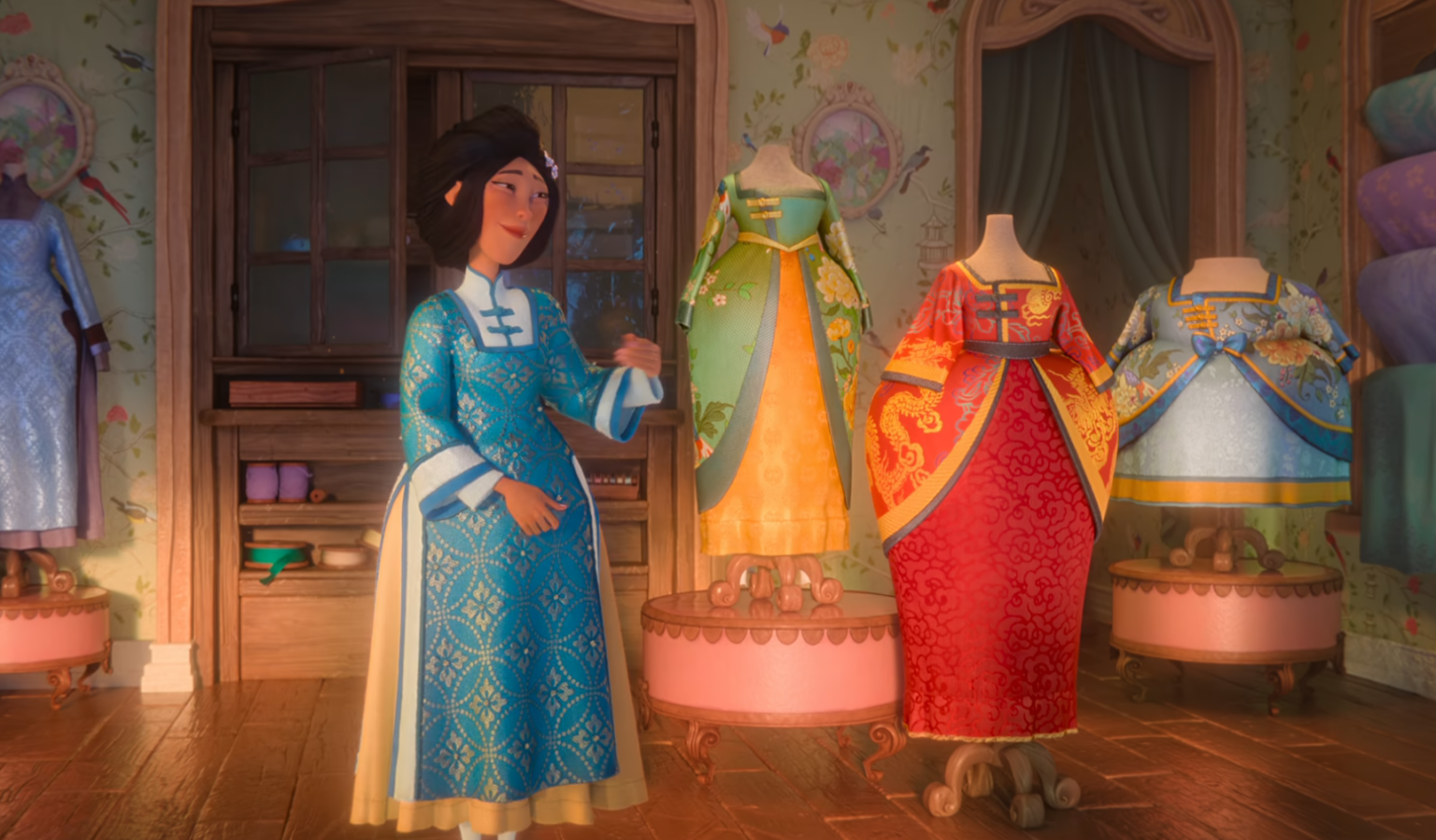
- Li Mei and Family Business: In the original timeline, Li Mei operated an uninspired fast-fashion factory. In the revised reality, the blending of European and Asian cultural influences inspires her to design unique, bespoke garments, culminating in a successful boutique that celebrates immigrant culture rather than forcing its assimilation or concealment.
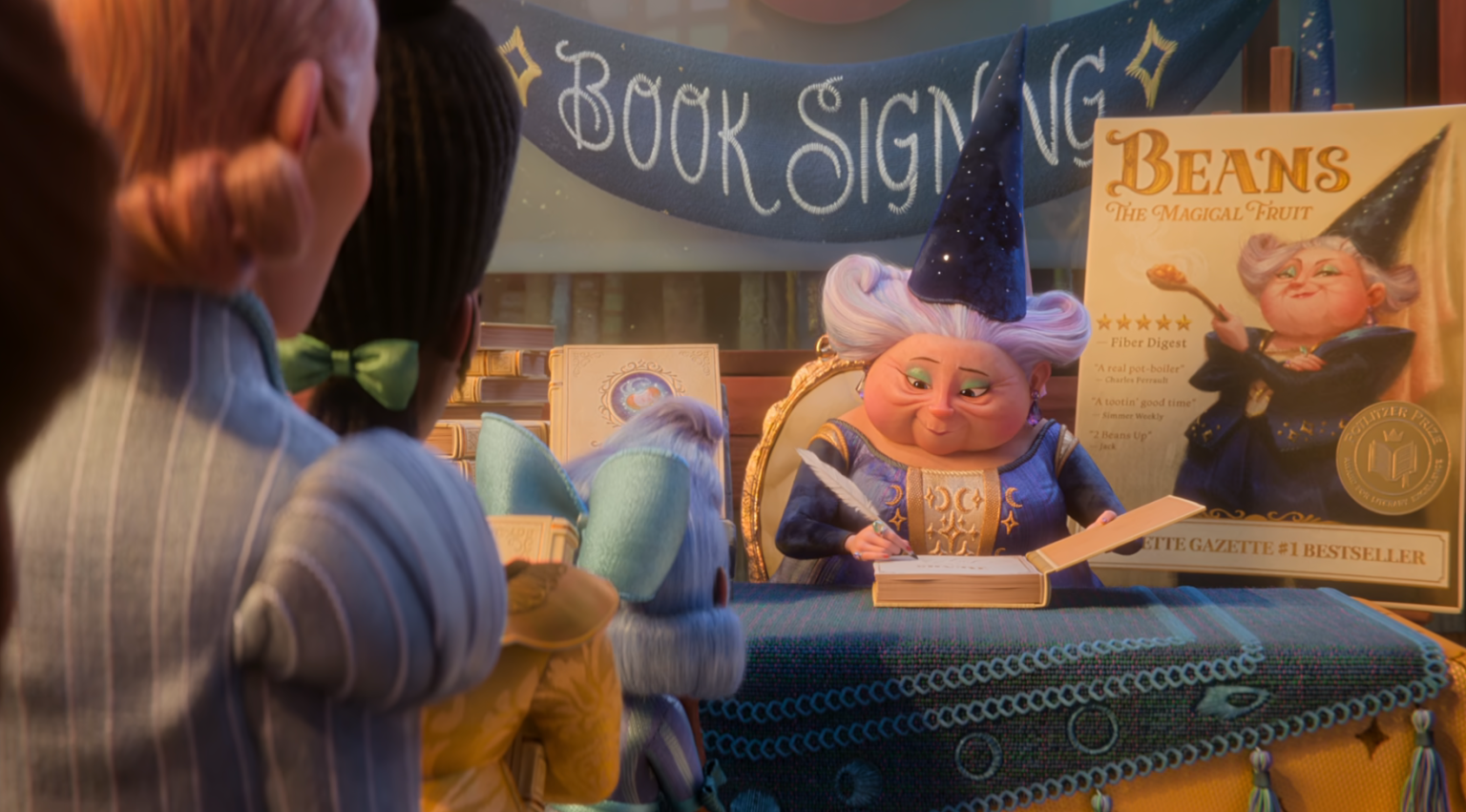
- The Fairy Godmother: Dispensing with coercive magical manipulations of orphans, the Fairy Godmother channels her organizational energy into authorship, publishing Beans: The Magic Fruit, which garners critical acclaim in Fiber Digest. She also finds genuine companionship with a long-haired, mustached gentleman holding a mini-guitar.
- Romance and Relationships: Cinderella and the Prince encounter one another organically at a local market, unburdened by midnight deadlines or magical glass footwear, yet still finding a natural path toward one another. Similarly, Cinderella engineers a subtle introduction between Lilith and Gef by dispatching golden invitations to the trolls, ensuring that Lilith’s romance is preserved in the new reality.
A poignant, bittersweet element of this resolution is that Cinderella appears to be the sole individual retaining memories of the original, harsher timeline. Because the conclusion unfolds via a musical montage set to Jess Glynne’s "I’ll Be There" and JENNIE’s original track "Someone to Hold," Cinderella never explicitly vocalizes the sacrifices she made or the trials the sisters endured together. Consequently, her orchestration of events—such as securing the troll invitations for Lilith—is performed quietly, allowing her family members to experience genuine connection while she silently shoulders the weight of history. Ultimately, Steps concludes not with the rigid enforcement of a traditional fairy-tale destiny, but with the empowering proposition that individuals possess the agency to discard established texts and author their own futures.