The landscape of Indian digital entertainment has undergone a seismic shift as independent creator-led content successfully bridges
the gap between open-video platforms and premium subscription-based streaming services. Bhuvan Bam, one of the pioneers of India’s digital content creation ecosystem, has officially transitioned his critically acclaimed comedy-drama universe to Netflix. Following a record-breaking run on YouTube that accumulated hundreds of millions of views, Bam’s signature series returned for its second season, landing all eight episodes on the global streaming platform on November 20, 2026.
This strategic partnership underscores a broader industry trend: traditional streaming giants increasingly recognize the value of pre-validated intellectual properties boasting deeply engaged, organic fanbases. For Bam, whose channel BB Ki Vines redefined digital sketches in India over the past decade, the transition to Netflix represents both a validation of his storytelling prowess and an opportunity to scale his unique brand of multi-character comedy for an international audience.
The Genesis and Phenomenal Rise of BB Ki Vines and Dhindora
To understand the magnitude of Dhindora’s arrival on Netflix, one must examine the meteoric rise of Bhuvan Bam. Beginning in 2015, Bam gained widespread recognition by uploading raw, unpolished, two-minute humorous videos filmed on a front-facing phone camera. Operating under the banner of BB Ki Vines, he pioneered a distinct style of sketch comedy wherein he single-handedly played an entire ensemble of fictitious characters. From the exasperated teenager Bhuvan and his hyperactive friend Bancho to the lovably eccentric father Babloo Ji, the perpetually stressed mother Janki, and the iconic, smooth-talking uncle Titu Mama, Bam established a universe populated by eccentric yet intensely relatable working-class Indian archetypes.
As his subscriber count surged into the tens of millions, Bam expanded his creative ambitions. In October 2021, he released the pilot episode of Dhindora, an ambitious eight-episode comedy-drama series funded independently. Unlike his bite-sized YouTube sketches, Dhindora followed a serialized narrative centered on an ordinary middle-class family whose lives are upended when the patriarch, Babloo Ji, unexpectedly wins a lottery.
The gamble paid off spectacularly. The premiere episode alone amassed an astonishing 85 million views, while subsequent chapters consistently pulled in tens of millions of eyeballs, cementing the series as a watershed moment for independent Indian web series. Recognizing the undeniable pulling power of this built-in audience, Netflix integrated the IP into its high-profile content roadmap during the Next on Netflix India showcase in February 2026. To prime global audiences for the new chapter, the streaming platform made Season 1 available to stream on October 28, 2026, paving the way for the simultaneous worldwide release of Season 2 less than a month later.
Production Scale and Creative Evolution
Moving from an independent YouTube production to a Netflix Original afforded the creative team unprecedented resources, allowing them to expand the visual scope of the Dhindora universe without compromising its grounded, culturally specific roots.
Bhuvan Bam reflected on this creative evolution, noting that while the original YouTube series was born out of a chaotic yet deeply relatable environment, the second season elevates the humor and emotional stakes onto a significantly larger canvas. By partnering with Netflix, the creators maintained the localized nuances that resonated with millions of home viewers while packaging the narrative for international consumers.
Behind the camera, Season 2 underwent notable changes while retaining core creative continuity. Bam returned alongside long-time collaborator Rohit Raj to produce the project. However, the directorial reins were handed over to Sneha Shetty Kohli, marking her directorial debut for the franchise as she succeeded Season 1 director Himank Gaur. Kohli expressed enthusiasm for the project, emphasizing the joy of capturing Bam’s inimitable comedic timing while preserving the intrinsic DNA of the established universe.
The writing room expanded to refine the narrative arc, featuring a collaborative effort between Bam, Chetan Dange, Gopal Dutt, Shubham Dubey, and Anant Dubey. Furthermore, acclaimed dialogue writers Abbas Dalal and Hussain Dalal returned to lend their linguistic flair to the Hindi screenplay, ensuring sharp comedic delivery and emotional resonance across the eight-episode run, with individual episodes spanning tightly paced durations of 27 to 37 minutes.
Plot Dynamics and Character Expansion in Season 2
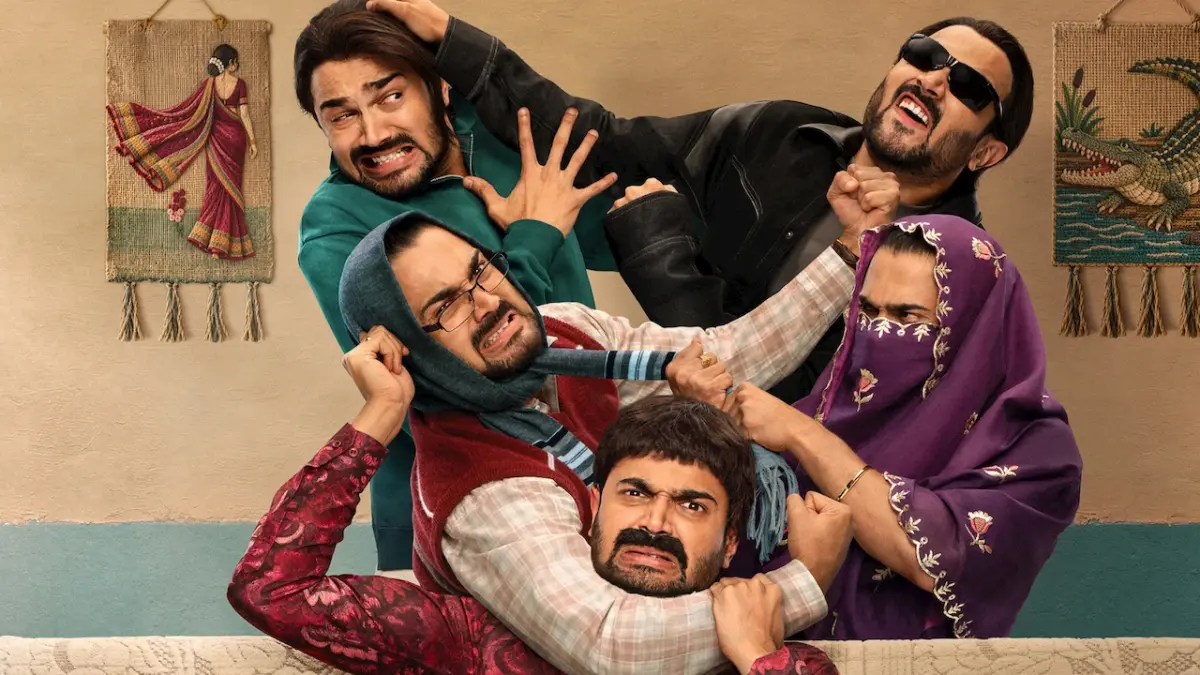
Central to the narrative appeal of Dhindora is its blend of domestic realism and farcical calamity. Netflix’s official synopsis for Season 2 frames the central conflict around the fan-favorite character Titu Mama, portrayed by Bam.
The narrative kicks off with Titu Mama grappling with a staggering financial setback—a ruinous 11 crore loss—which threatens to permanently destabilize fragile family dynamics. In a desperate bid to salvage his reputation and financial standing, Titu Mama orchestrates a reconciliation with his sasural (in-laws). Naturally, rather than restoring peace, the maneuver acts as a catalyst for an entirely new cascade of chaotic misadventures, leaving viewers questioning whether he will recover his lost fortune or simply accumulate a truckload of fresh troubles.
While Bam continues his trademark feat of portraying nine distinct characters simultaneously—including Bhuvan, Babloo Ji, Janki, Sameer, Bancho, and Titu Mama—Season 2 introduces a monumental addition to the established dynamic: the physical screen debut of Titu Mama’s elusive wife, Kavita Mami.
Played by acclaimed actress Sanjeeda Shaikh, known for her compelling work in projects like Heeramandi, Kavita Mami brings a much-needed counterweight to Titu Mama’s erratic schemes. Shaikh noted that what initially attracted her to the role was the character’s unwavering ability to stand her ground against Titu Mama. In a household where Titu Mama is perpetually equipped with elaborate justifications for his failures, Kavita Mami serves as the singular figure capable of cutting through the rhetoric, leading to rich comedic interplay with Bam across multiple setups.
Broader Industry Implications and Streaming Strategy
The acquisition and release of Dhindora Season 2 highlight a vital shift in how major subscription video-on-demand (SVOD) services curate content for the South Asian market. Historically, platforms like Netflix relied heavily on traditional cinematic releases and high-budget thriller or drama series produced by established Bollywood studios. However, the explosive growth of creator-driven economies in India has forced a strategic pivot.
Creators who built their empires on open-access platforms like YouTube possess proven, validated intellectual properties backed by intensely loyal, demographically diverse consumer bases. By onboarding a proven comedy brand like Dhindora, Netflix effectively mitigates the risk associated with launching unproven original concepts. It bridges the digital divide, funneling millions of domestic digital natives into paid subscription ecosystems while offering independent creators institutional backing, higher production values, and global distribution.
Furthermore, the strategic staging—releasing the entirety of Season 1 weeks before dropping all eight episodes of Season 2 globally on November 20, 2026—demonstrates a sophisticated audience-acquisition model. It allows casual viewers to catch up on lore while satisfying immediate binge-watching demands for existing fans.
Rated TV-MA in the United States primarily for language and adult thematic elements, Dhindora Season 2 stands as a testament to the maturation of India’s creator economy. It proves that digital-first talent can successfully scale enterprise-grade episodic narratives without losing the authentic, grassroots humor that propelled them to stardom in the first place. As global streamers continue scanning the digital horizon for proven properties, Bhuvan Bam’s successful leap to Netflix may well serve as a blueprint for the next wave of independent creators aiming for the global stage.