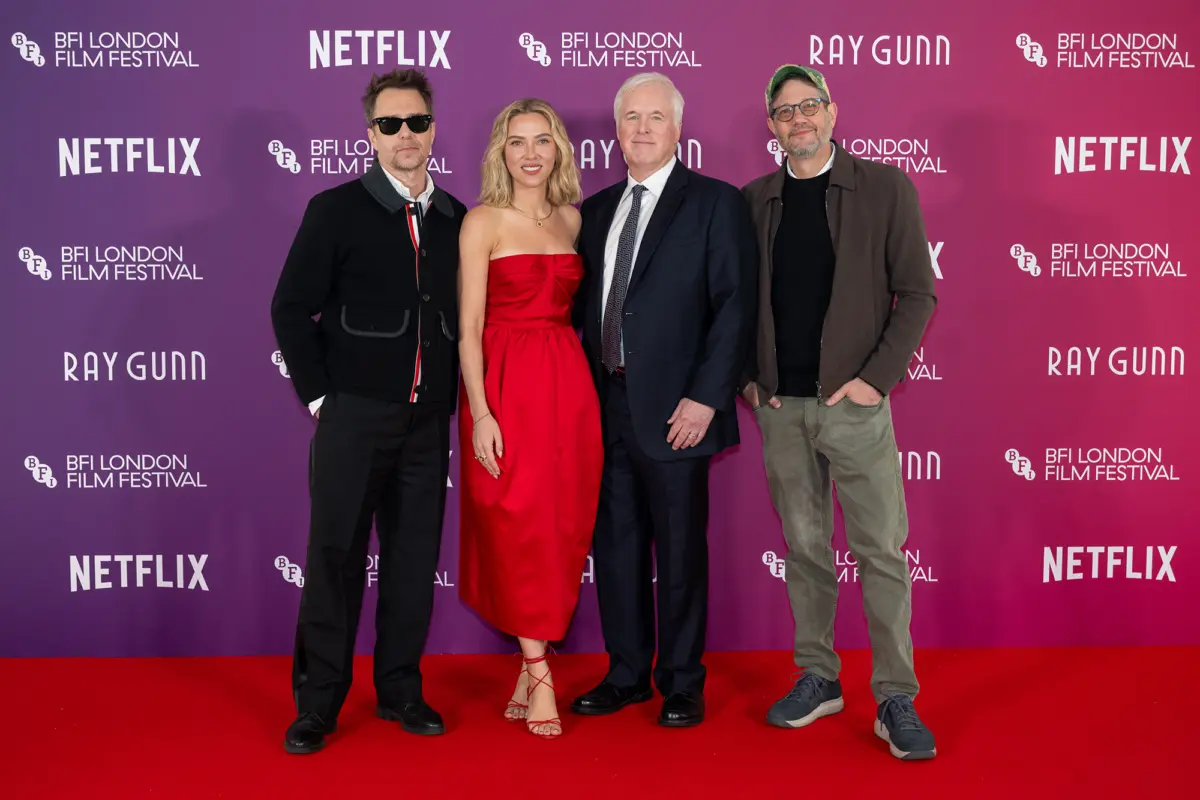
After more than thirty years of false starts, studio shifts, and meticulous development, acclaimed animation director Brad Bird has finally brought his passion project, Ray Gunn, before a live public audience. The retro-futuristic science-fiction noir epic celebrated its world premiere at the 70th edition of the BFI London Film Festival, drawing immediate acclaim from festival attendees, a rapturous reception in the hall, and a strong initial critical consensus. While the picture has endured a notoriously protracted gestation period, its arrival signals a major milestone for both Netflix’s original animated slate and Bird’s illustrious filmmaking career.
Festival Artistic Director Kristy Matheson formally introduced the screening at the Royal Festival Hall, highlighting Bird’s stature as one of the definitive masters of contemporary animation. Matheson praised his past cinematic achievements—including The Iron Giant, The Incredibles, and Ratatouille—before emphasizing the historical significance of the evening. She welcomed Bird to the stage alongside an elite creative team, including composer Michael Giacchino, as well as star voice talent Scarlett Johansson and Sam Rockwell, who anchors the narrative as private investigator Raymond “Ray” Gunn. Dan Lin, Netflix’s head of film, was also in attendance, signaling the streamer’s substantial corporate backing and confidence in the project’s box office and streaming potential.
A Thirty-Year Genesis Rooted in Misheard Music and Creative Persistence
The journey of Ray Gunn from an abstract concept into a fully realized feature film spans over three decades, tracing an unconventional path through Hollywood’s shifting animation landscapes. Brad Bird revealed during the event’s post-screening Q&A that the entire premise originated from a simple auditory misunderstanding. While listening to the BSF-52s track “Planet Claire,” the director initially believed he was hearing a modern interpretation of Henry Mancini’s iconic television theme for Peter Gunn. Upon realizing the song was entirely distinct, his mind gravitated toward a phonetic alternative: Ray Gunn.
This whimsical acoustic misinterpretation planted the seed for a hard-boiled detective story set against a sprawling, stylized futuristic backdrop. Bird first elaborated on this origin story during an industry panel at the Annecy International Animation Film Festival, noting that musical influence remains deeply woven into the fabric of the production. The thematic celebration of music culminated on stage in London, where the audience joined Kristy Matheson in singing a surprise rendition of “Happy Birthday” to composer Michael Giacchino, commemorating his creative partnership with the director.
The collaboration between Bird and Giacchino represents one of the most enduring creative alliances in modern animation, tracing back to Pixar milestones such as The Incredibles and Ratatouille. Describing their working dynamic, Giacchino likened their process to two childhood friends collaborating next door, emphasizing a mutual candor and creative honesty that bypasses Hollywood pleasantries. This longstanding synergy translates directly to the screen, where critics have singled out Giacchino’s swinging, jazz-infused score as a standout element driving the film’s tense set pieces and atmospheric world-building.
Behind the Booth: Scarlett Johansson, Sam Rockwell, and Unique Voice Acting Dynamics
The vocal performances anchoring Ray Gunn bring a distinct layer of prestige and theatricality to the animated medium. Scarlett Johansson stars as Venus Nova, a complex multimedia star whose path crosses with Rockwell’s cynical private eye. Discussing her motivation for joining the project, Johansson cited her long-standing admiration for Bird’s directorial sensibilities, noting that she actively sought out any opportunity to collaborate with him.
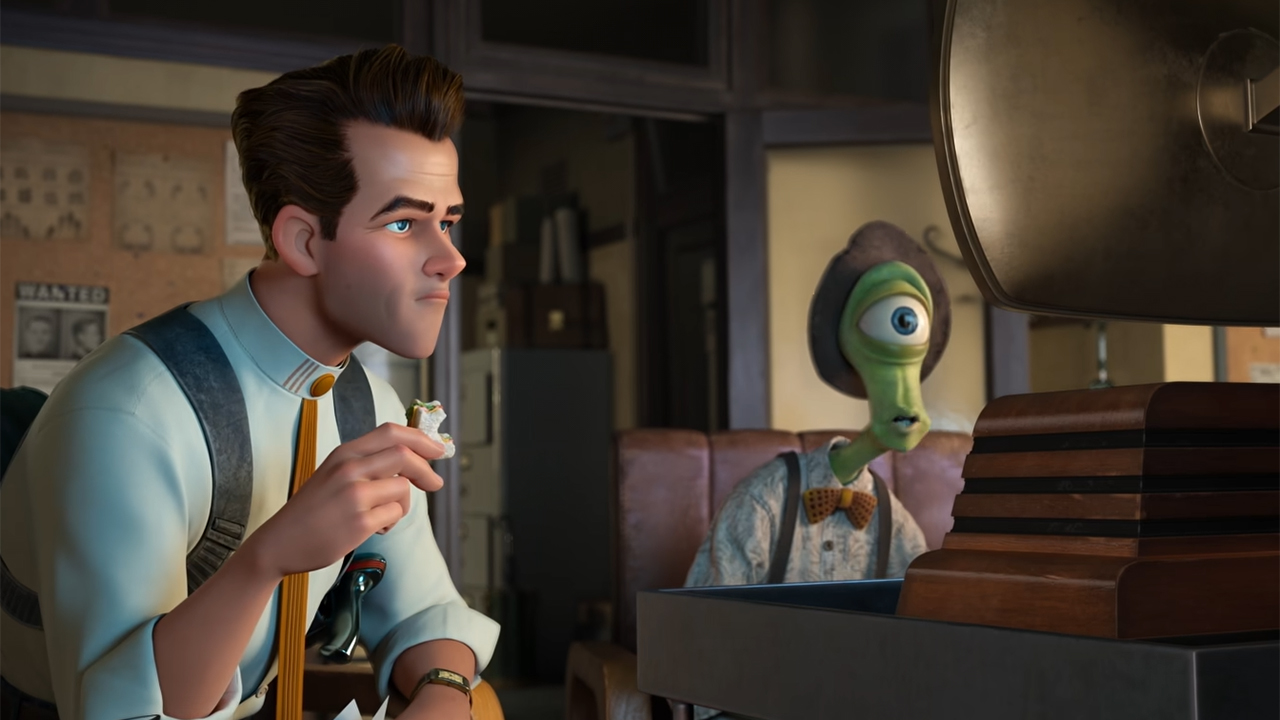
Unlike standard animated productions where voice actors typically record their lines in isolation over intermittent sessions, Bird fostered a uniquely collaborative environment for his principal cast. Johansson recalled acting in the same physical space alongside the director during early recording phases, describing the process as a refreshing departure from convention. When Sam Rockwell joined the production to record their shared dialogues, the sessions evolved into dynamic, unscripted explorations of character chemistry. Bird noted that the performers frequently recorded while lying on the studio floor, a testament to the loose, experimental, and deeply immersive atmosphere cultivated behind the scenes.
In addition to Rockwell and Johansson, the sprawling voice cast features an eclectic mix of veteran actors and comedic talent. Tom Waits lends his distinctive raspy delivery to the production, while Matt Berry takes on the primary antagonist role. The ensemble is rounded out by Alan Tudyk, Bobby Cannavale, and Michael Chernus, establishing an impressive roster that reflects Netflix’s commitment to high-profile voice casting for its premier animated features.
Critical Reception and Initial Box Office and Streaming Projections
As the review embargo lifted alongside the London premiere, Ray Gunn secured a strong 91% approval rating on Rotten Tomatoes, indicating widespread critical appreciation for its visual ambition and stylistic execution. Major publications offered glowing assessments of the film’s artistic merits. Peter Bradshaw of The Guardian awarded the picture a maximum five-star rating, characterizing it as smart, witty, and deeply humane. Similarly, Drew Taylor of TheWrap hailed the project as a visually stunning and thematically rich masterpiece, while David Little White Lies critic David Jenkins praised the screenplay—co-written by Bird and Matthew Robbins—as an example of pristine cinematic craftsmanship.
Not all responses were universally enthusiastic, however. Some reviewers pointed to pacing issues and familiar genre tropes. Angie Han of The Hollywood Reporter offered a more critical perspective, dismissing the film as a predictable synthesis of neo-noir and science-fiction clichés, while Wendy Ide of Screen International felt the narrative structure leaned toward the laboured and inert despite its striking aesthetic presentation. Reviewers from Variety and IGN noted that the detective narrative occasionally struggles with pacing and humor, aligning with a more moderate 3.5/5 review from specialized outlets that praised Bird’s technical mastery while wishing for a more relentless narrative drive.
Despite minor critical divisions, the film’s overall reception positions it as a major contender in the awards circuit and a marquee title for Netflix’s end-of-year release calendar.
Broader Industry Implications and Upcoming Release Schedule
The successful premiere of Ray Gunn carries significant implications for the broader animation industry and Netflix’s long-term content strategy. By financing a traditionally difficult, high-budget, hand-drawn and CG-hybrid passion project that major Hollywood studios repeatedly passed over for decades, Netflix continues to position itself as a sanctuary for auteur-driven animation. The streaming giant’s willingness to support Bird’s uncompromising vision underscores a broader shift in how high-risk, prestige animated features are funded and distributed in the modern media landscape.
Audiences eager to experience the film outside of the festival circuit will have multiple viewing options. Following its festival run, Ray Gunn is scheduled for a limited 70mm theatrical release, satisfying Brad Bird’s ongoing campaign for a traditional large-format cinematic rollout. The film will subsequently make its global streaming debut on Netflix on December 18, 2026. As the release date approaches, industry analysts will be closely monitoring how the title performs both in specialized theatrical engagements and on the streaming platform, potentially setting a new benchmark for how legacy passion projects find commercial viability in the digital era.