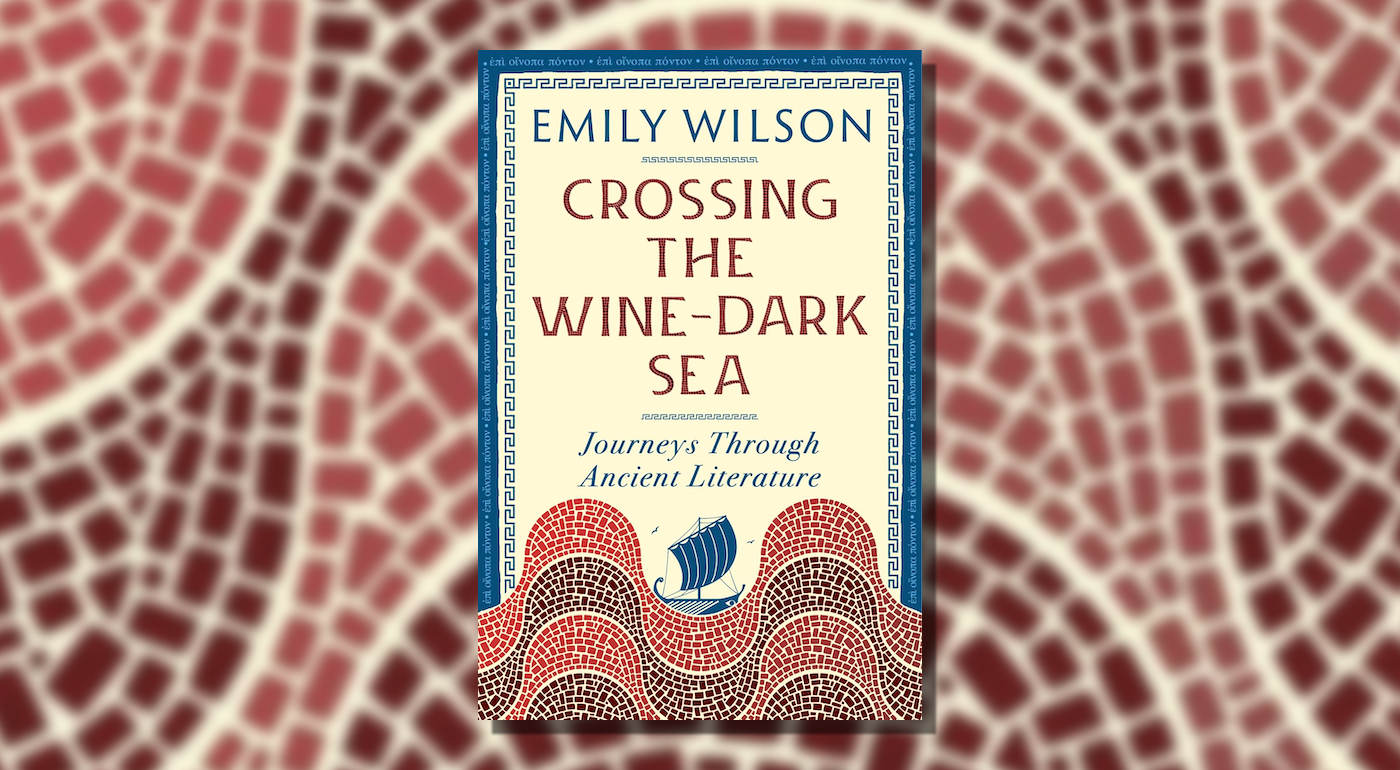
Emily Wilson’s latest literary release, Crossing the Wine-Dark Sea: Journeys Through Ancient Literature, marks a significant contribution to contemporary classical scholarship, bridging the gap between inaccessible academic discourse and modern literary appreciation. Published to critical acclaim, the collection of essays navigates the complex terrain of translating ancient Greek and Roman texts for modern audiences. Wilson, renowned globally for her groundbreaking, million-copy-selling translation of Homer’s The Odyssey, utilizes her platform to dissect the foundational biases, hidden moral complexities, and linguistic choices that have shaped Western literature for millennia.
The release of the book arrives at a pivotal juncture in modern classicism, a field currently undergoing intensive self-examination regarding its historical association with elitism and cultural exclusivity. Scholars and educators have increasingly debated how ancient texts should be taught, translated, and interpreted in the twenty-first century. Wilson’s collection addresses these debates head-on, investigating how historical translations frequently reflect the ideological frameworks and prejudices of their respective eras rather than the authentic context of antiquity.
Background Context and Evolution of Classical Translation
The practice of translating ancient texts has evolved significantly since the early European renaissances, shifting from rigid, literal interpretations to highly fluid, localized adaptations. Historically, translators have often fallen into two distinct camps: those who favor an "invisible" translation—rendering ancient texts into modern, highly accessible language that strips away cultural barriers—and those who lean into archaic tropes, utilizing stylized phrasing that reinforces a romanticized, monolithic vision of "Western values."
Wilson’s essays critique both extremes. She argues that smoothing over the rough, alien edges of classical literature robs modern readers of the opportunity to confront historical differences in human behavior, ethics, and societal structure. Conversely, she condemns the imposition of artificial "past-ness"—language designed to sound perpetually ancient, reminiscent of the King James Bible or theatrical medievalism—because it flattens the distinct moral nuances of specific periods, such as fifth-century BCE Athens or Augustan Rome.
Chronology of Classical Reception and Modern Scholarship
The historical trajectory of how classic literature is received by the public has experienced several distinct waves over the last century:
- Early-to-Mid 20th Century: Popularizers like Edith Hamilton introduced classical mythology to millions of English speakers, frequently framing the ancient world through an uncritical lens of enlightened democratic ideals, aligning classical antiquity with modern notions of cultural supremacy.
- Late 20th Century: Academic translation began to diversify, with feminist and post-colonial scholars challenging traditional interpretations of marginalized figures in classical epics, such as enslaved individuals, foreign populations, and female characters.
- 21st Century: Celebrated translators, most notably Emily Wilson, have embraced linguistic precision and psychological realism, rejecting traditional euphemisms to expose the raw power dynamics, systemic violence, and gender politics embedded within foundational texts.
Key Thematic Analyses Within the Collection
Crossing the Wine-Dark Sea examines several cornerstone texts through a rigorous, unsparing critical lens. Among the primary subjects are the fragmentary poetry of Sappho, the characterization of Helen of Troy, the ethical frameworks of Greek tragedy, and the enduring political utility of Stoicism.
When addressing Sappho, often hailed by Plato as the "Tenth Muse," Wilson explores the profound challenges of translating an author whose work survives almost entirely in fragments. She critiques prominent contemporary translators, such as Anne Carson, for occasionally diluting or omitting explicit same-sex desire where Sappho’s surviving texts are clear, while inserting definitive heterosexual framing where the original Greek remains ambiguous.

Similarly, Wilson confronts the historical mistreatment of marginalized figures in epic poetry, noting how translators routinely sanitize acts of extreme violence and systemic oppression. In The Odyssey, when Odysseus commands his son to execute the enslaved women who had been forced into intimacy with the suitors, the original text reflects an alien, patriarchal anxiety regarding honor, yet maintains an underlying psychological empathy toward the tragic nature of their deaths. Mainstream translations, however, have historically tended to heighten the culpability of the victims or soften the brutal reality of the murders to appease modern moral sensitivities.
Another essay addresses the persistent "slut-shaming" of Helen of Troy across centuries of literature. Wilson points out that ancient Greek anxieties surrounding female agency and seduction map poorly onto modern frameworks, and that classical writers frequently utilized Helen’s ambiguous culpability to debate national identity, the limits of free will, and the geopolitical cost of war.
Broader Impact and Implications for Speculative Fiction
While primarily a work of classical criticism, Crossing the Wine-Dark Sea offers profound implications for contemporary writers, particularly those working within speculative fiction, epic fantasy, and worldbuilding. Wilson’s insights challenge creators to evaluate how myths are weaponized, reinterpreted, and commodified by successive generations of political powers.
Furthermore, the collection serves as a masterclass in linguistic intentionality. Wilson demonstrates that no story—and no translation—is entirely apolitical. Every creative choice carries implicit values regarding power, gender, violence, and societal hierarchy. By examining how historical translators navigated the strange and the familiar, modern authors gain valuable frameworks for constructing deeply realized secondary worlds that avoid generic, homogeneous tropes in favor of visceral cultural specificity.
Official Reactions and Critical Reception
Literary critics and classicists have widely praised the collection for its intellectual rigor, wit, and accessibility. Reviewers have noted that Wilson’s celebrity status within the discipline allows her to bring advanced scholarly debates to a broader public audience without sacrificing academic integrity.
Statements from contemporary literary critics highlight the book’s unique ability to merge high-level philological analysis with cultural critique. Observers have emphasized that Wilson’s refusal to treat classical authors as infallible sages—acknowledging both their profound wisdom and their profound foolishness—humanizes antiquity in a manner that feels urgently relevant to modern political and social discourse.
Conclusion: The Enduring Value of Classical Discourse
Crossing the Wine-Dark Sea concludes with practical insights into the mechanics of translation and creative expression, offering a framework that extends far beyond classical studies. By urging writers and readers alike to honor the poetic features of original texts, reorient the strange and the familiar, and critically examine inherited tropes, Wilson provides a vital roadmap for literary engagement.
Ultimately, Emily Wilson’s essay collection reinforces the idea that history does not merely repeat itself; rather, it rhymes slant. By examining the messy, complex, and often uncomfortable translation choices of the past, contemporary readers are better equipped to interrogate the biases of the present. As classical literature continues to inform modern storytelling, collections like Crossing the Wine-Dark Sea ensure that the foundational texts of Western culture are read not as static monuments of an idealized past, but as dynamic, contested battlegrounds of human expression.