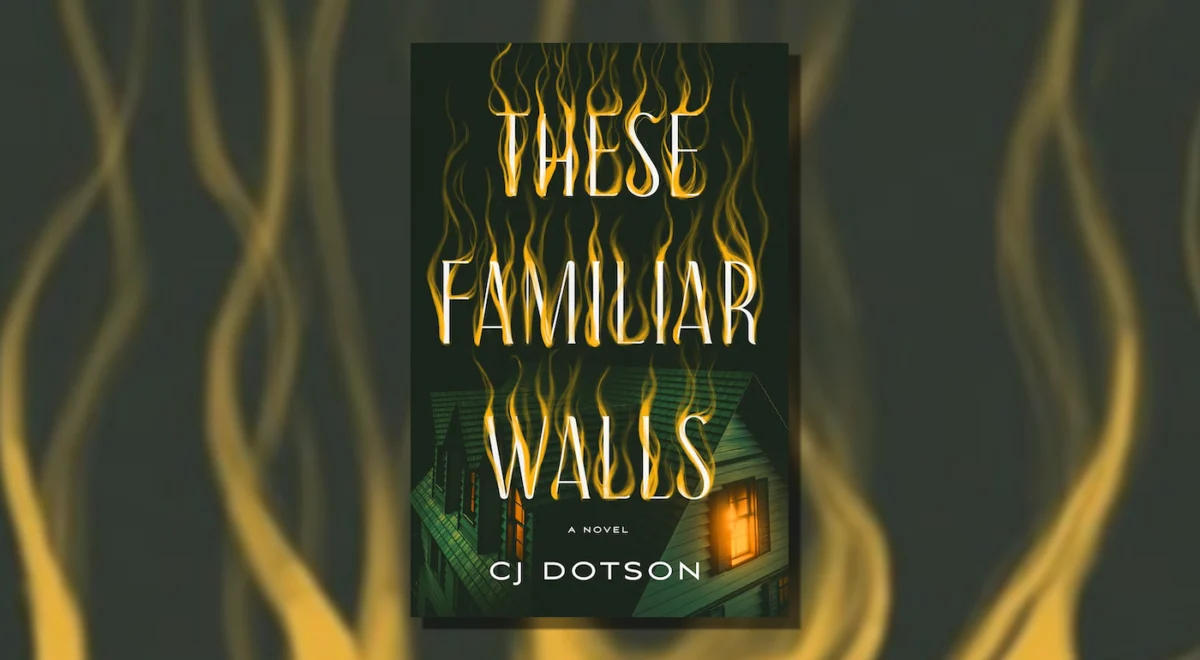
The novel’s premise centers on Amber’s return to her childhood residence following the violent deaths of her parents. The circumstances surrounding their demise are intrinsically linked to a traumatic event from Amber’s preteen years, a period marked by desperation and a formative, unsettling friendship. This past connection, fraught with danger and moral ambiguity, casts a long shadow over Amber’s present, forcing her to confront not only the spectral manifestations within the house but also the buried secrets of her own making.
A Legacy of Trauma and Unsettling Beginnings
The narrative arc of These Familiar Walls is rooted in a pivotal period in 1998, when a lonely preteen Amber forged a connection with a troubled new boy in her neighborhood. Described as possessing "dead eyes, a fascination with fire, and no remorse," this boy represented a dangerous allure, a deviation from the expected innocence of childhood. Amber’s decision to pursue this friendship, despite her family’s misgivings, particularly those of her younger sister, laid the groundwork for a relationship that, though brief, would prove to be irrevocably consequential. This early entanglement serves as the genesis of the horror that infiltrates Amber’s adult life, highlighting how formative experiences, even those seemingly in the distant past, can exert a powerful and destructive influence.
The Echoes of Violence: A Tragic Resurgence
Fast forward twenty-two years to 2020, a year already marked by global uncertainty and domestic confinement, and the past violently intrudes upon Amber’s present. The same boy, now a man, reappears, orchestrating the brutal murders of Amber’s parents. His reign of terror is, however, short-lived; he is ultimately betrayed by an accomplice and meets his own demise within the very walls that hold Amber’s earliest memories. This climactic event of violence sets the stage for Amber’s inheritance of the house, a structure now imbued with the spectral residue of tragedy and familial loss.
Reclaiming Stability Amidst Unseen Forces
In an effort to manage her grief and financial strain, Amber decides to move into her childhood home with her husband and two children. The intention is to create a sanctuary, a place to rebuild a semblance of stability amidst the chaos. However, the "familiar walls" prove to be far from comforting. The house is haunted by more than just the poignant echoes of past joys and recent sorrows. Amber begins to experience unsettling phenomena: shifting in and out of dreamlike trances, her reflection in mirrors refusing to meet her gaze, and a disembodied, menacing voice whispering from the encroaching shadows. Initially, Amber attempts to rationalize these occurrences as stress-induced hallucinations, a coping mechanism for the overwhelming grief and the pervasive anxieties of the global pandemic. Yet, the escalating intensity and palpable malevolence of these experiences soon compel her to confront the terrifying reality: something far more tangible and dangerous is at play within her ancestral home.
The Unraveling of a Perfect Facade: An Excerpt from "A Secret Place"
The novel’s excerpt, titled "A Secret Place," dated May 2020, offers a visceral glimpse into Amber’s psychological state and the initial manifestations of the house’s unsettling influence. Seeking solace and a sense of control, Amber retreats to the former playroom, now designated as her home office. The act of establishing this personal sanctuary, a space for uninterrupted work and solitude, is presented as a balm for her frayed nerves. The description of her carefully arranging her office supplies, envisioning a small sofa and the potential for jigsaw puzzles and books on the built-in shelves, paints a picture of a woman attempting to impose order on her life.
However, this moment of quiet contemplation is subtly disrupted by the contents of a moving box. Among the expected office supplies, Amber discovers an unexpected collection: a surprising number of candles, trinkets, a lighter, and a small decorative mirror with an ornate frame. While she initially plans to arrange these items on the shelves, a flicker of unease accompanies her interaction with the mirror. An impression of delayed movement in her peripheral vision, a sense that her reflection lagged in opening its eyes, introduces a subtle, disquieting anomaly. This unsettling observation leads her to place the mirror face down, an unconscious act of warding off an unwelcome presence.

The subsequent actions of lighting multiple candles, in various scents and colors, become a focal point of the excerpt. As Amber meticulously places and ignites candle after candle, the narrative builds a sense of almost compulsive behavior. The vanilla, artificial pine, and the sweet scent of burning wax fill the room, initially contributing to her relaxation. Yet, the sheer volume of candles lit—nearly twenty—becomes a source of perplexity and growing irritation. The room grows warm, the tall candles singeing the shelf above them, and Amber is left with a profound sense of disorientation. She finds herself questioning why she lit so many, the details of her actions becoming "fuzzy."
This moment of cognitive dissonance is punctuated by the scent of smoke, which triggers a chilling recollection of Nathan Teldegardo, a figure from her past associated with a persistent smell of smoke. This connection amplifies her unease, transforming her sanctuary into a source of anxiety. The carefully constructed moment of peace is shattered, forcing her to retreat from the too-hot room, the lingering hint of smoke and her growing disquiet overriding her desire for solitary work. The excerpt concludes with Amber emerging from her office, her stride hesitant, the promise of a peaceful retreat dissolved by the encroaching presence of the uncanny.
The Psychology of Suburban Horror
These Familiar Walls taps into a potent vein of psychological horror, exploring the ways in which domestic spaces can become sites of both comfort and profound terror. The suburban setting, often idealized as a bastion of safety and normalcy, is subverted to reveal its inherent vulnerability to darker forces. The novel draws upon established tropes within the genre, such as haunted houses and the return of repressed trauma, but imbues them with a contemporary sensibility. The inclusion of the pandemic context in 2020 adds another layer of unease, as the enforced isolation and heightened anxieties mirror the supernatural disturbances within Amber’s home.
The narrative’s focus on Amber’s internal struggle—her attempts to rationalize the irrational, her wrestling with fragmented memories, and her burgeoning awareness of a malevolent presence—positions the reader within her subjective experience of terror. The blurring of lines between hallucination and reality is a key element, making the source of the horror ambiguous and all the more frightening. The idea that the house itself might be sentient, or that it harbors the echoes of past violence, is a common theme in gothic and horror literature, and Dotson appears to be utilizing these elements to create a deeply unsettling atmosphere.
Implications of Lingering Darkness
The implications of These Familiar Walls extend beyond a simple ghost story. The novel probes the cyclical nature of trauma and the enduring impact of childhood experiences on adult lives. Amber’s past encounter with the troubled boy, and her subsequent actions, are presented as having direct and devastating consequences that manifest decades later. This suggests a narrative that explores themes of guilt, responsibility, and the inescapable nature of certain past events.
Furthermore, the novel’s exploration of the "familiar walls" of a childhood home highlights how these spaces can become repositories of both comfort and deep-seated dread. For Amber, the house represents a nexus of formative memories, a place where innocence was challenged and where the seeds of future horror were sown. Her return to this space, therefore, is not merely a geographical relocation but a psychological journey into the heart of her own trauma. The decision to move back into a house tainted by violence and unresolved issues underscores a desperate attempt to confront the past, even at significant personal risk.
The broader impact of such narratives lies in their ability to tap into universal anxieties about the safety of our homes and the stability of our lives. In a world that can often feel unpredictable, the idea that the very places we seek refuge can become sources of terror is a deeply unsettling prospect. These Familiar Walls promises to be a compelling exploration of these themes, offering readers a chilling descent into the darkness that can lurk within the most familiar of settings. The novel’s release on April 14th marks a significant addition to the contemporary horror landscape, poised to leave a lasting impression on its readership.