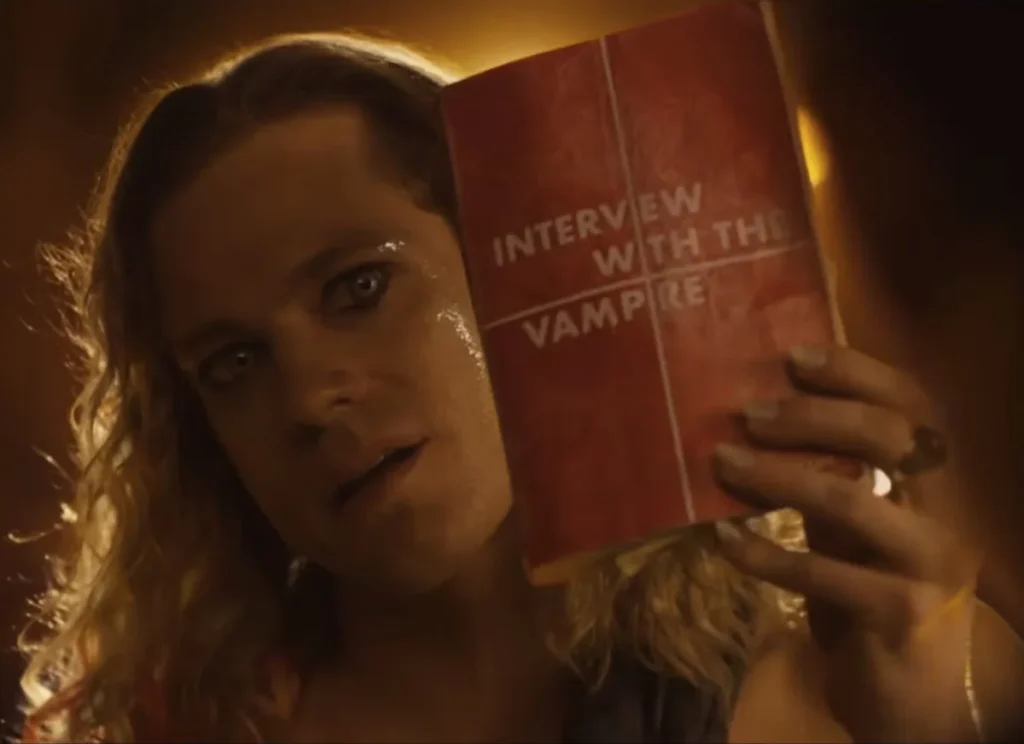
The premiere of VisionQuest on Disney+ marks the latest chapter in the Marvel Cinematic Universe’s ongoing effort to redefine the parameters of superhero television. Since the platform launched its MCU slate with WandaVision in 2021, Disney and Marvel Studios have consistently prioritized formal experimentation over traditional serialized formulas. While entries such as The Falcon & the Winter Soldier, Hawkeye, and Daredevil: Born Again adhered closely to conventional action-adventure templates, projects like She-Hulk: Attorney-at-Law, Werewolf by Night, and Wonder Man embraced genre shifts, ranging from legal comedy to classic horror homage. This strategic diversification has yielded a polarized portfolio of critically acclaimed risks and misfires alike, yet the overarching mandate to push narrative boundaries remains a cornerstone of the studio’s streaming output.
The Evolution of the WandaVision Narrative Tree
WandaVision established a sprawling narrative footprint that has directly seeded three distinct follow-up projects across film and television. The first derivative was the theatrical feature Doctor Strange in the Multiverse of Madness in 2022, which continued Wanda Maximoff’s trajectory following the dissolution of the Westview anomaly. The second outgrowth materialized unexpectedly due to the critical acclaim garnered by Kathryn Hahn’s performance as Agatha Harkness, prompting showrunner Jac Schaeffer to develop Agatha All Along in 2024 to explore the character’s post-Westview existence.
The third and most anticipated continuation arrives with the debut of VisionQuest. The series centers on the rebuilt iteration of the synthetic hero—endowed with the original Vision’s memories but stripped of their preceding emotional weights. Developed under the creative oversight of showrunner Terry Matalas, known for his work on 12 Monkeys and Star Trek: Picard, the series also retains Jac Schaeffer as an executive producer, ensuring thematic continuity with the foundational 2021 series.
A Chronological Foundation and Narrative Status Quo
Set an indeterminate number of years after the events of Westview, VisionQuest finds the synthetic protagonist attempting to assimilate into human society. He relocates to Edinburgh, securing employment at the very pub where he and Wanda Maximoff shared clandestine meetings during the interim between Captain America: Civil War and Avengers: Infinity War. The premiere episode, titled "No Strings"—a direct callback to James Spader’s Ultron monologue in Avengers: Age of Ultron—employs a succinct retrospective of the character’s history across Age of Ultron, Civil War, Infinity War, and WandaVision to orient viewers.
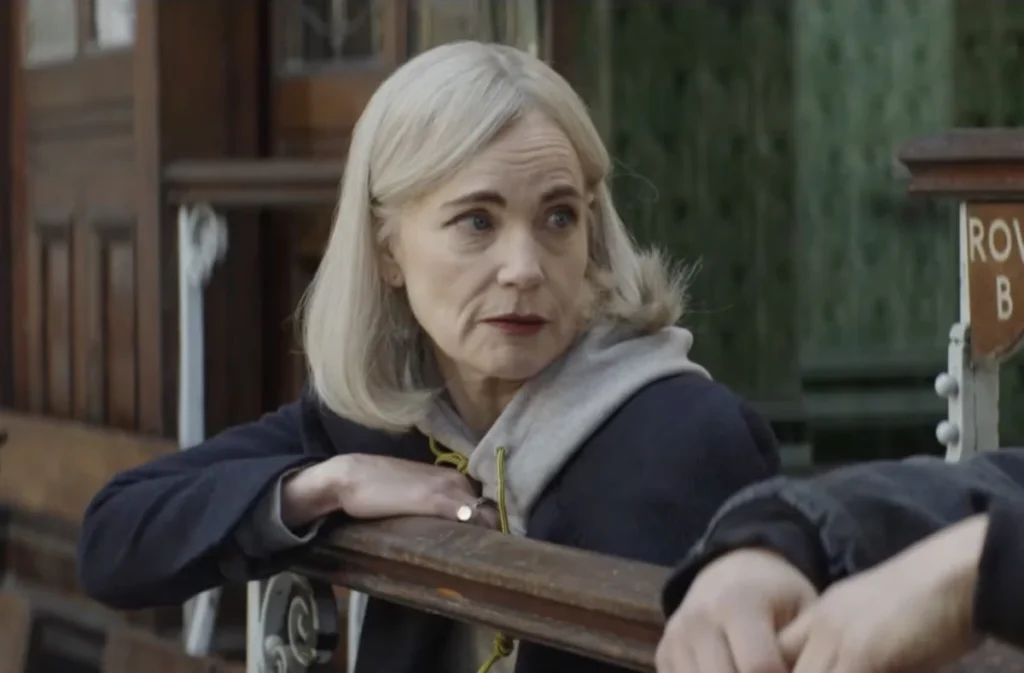
The narrative establishes its current status quo through an exchange between Vision and pub owner Fiona Guthrie, portrayed by Polly Frame. When Fiona inquires about Wanda, Vision offers a literal account of her fate involving a collapsing mountain during the climax of Multiverse of Madness, which Fiona interprets as a metaphor for profound emotional devastation. This exchange serves as the sole explicit acknowledgement of the Doctor Strange sequel within the opening two episodes.

Upon closing the pub, Vision deactivates his physical form by entering a commercial freezer, thereby accessing a sophisticated virtual reality construct hosted within his artificial consciousness. This mindscape manifests as a replication of a British country manor populated by a household staff comprising several artificial intelligence entities developed by Tony Stark throughout the timeline of the Infinity Saga.
The Pantheon of Stark Artificial Intelligence
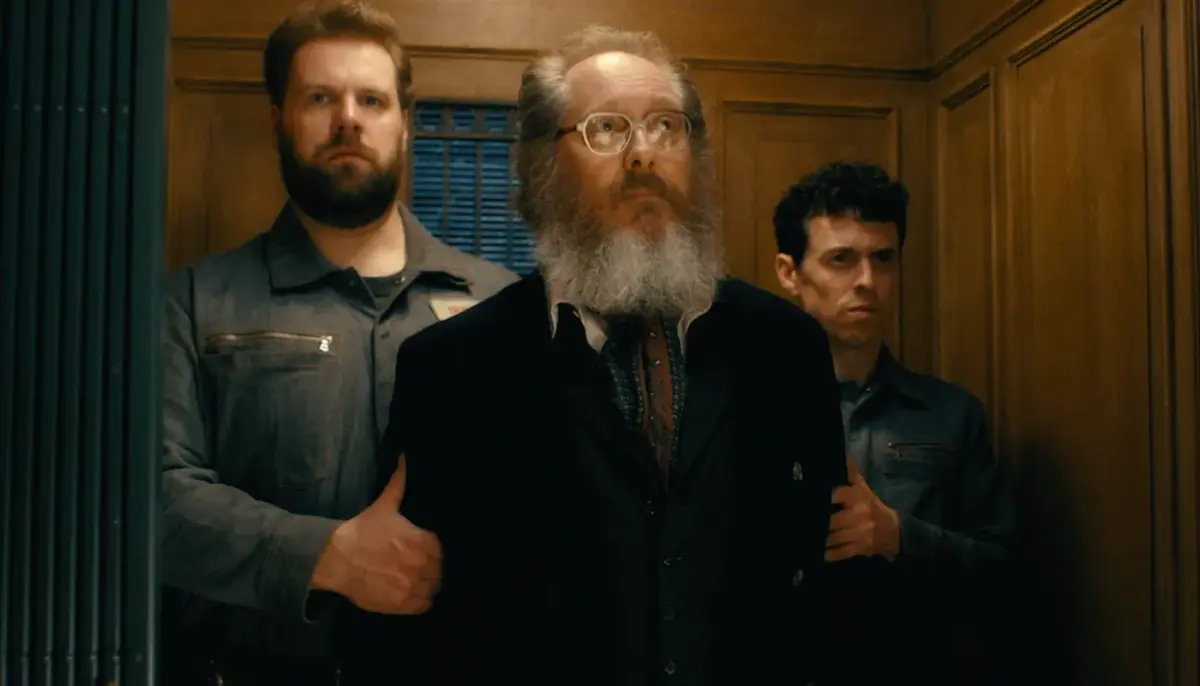
The interior landscape of Vision’s mind introduces a complex ensemble of artificial intelligence avatars, exploring the legacy of Tony Stark’s technological innovations. J.A.R.V.I.S., originally the operating system for Stark’s armor in Iron Man, is represented in Vision’s psyche by James D’Arcy. D’Arcy previously portrayed human valet Edwin Jarvis in the television series Agent Carter and the feature film Avengers: Endgame, establishing the canonical namesake for the AI.
F.R.I.D.A.Y., introduced in Age of Ultron following the transition of J.A.R.V.I.S. into the Vision, and E.D.I.T.H., deployed in Spider-Man: Far from Home, are embodied by Orla Brady and Emily Hampshire, respectively. While the original AI voices were provided by Kerry Condon and Dawn Michelle King, these humanized avatars interact within the manor’s strict social hierarchy. Additionally, mute drone units U and Dum-E are represented physically by Henry Lewis and Jonathan Sayer.
The most notable inclusion within Vision’s internal hierarchy is his creator, Ultron. James Spader emerges from a brief retirement to reprise the role, marking only the second instance of a high-profile actor returning from retirement for a Marvel Studios project following Robert Redford’s appearance as Alexander Pierce in Endgame. Spader’s vocal performance recreates the menacing, philosophical tenor of the primary antagonist introduced by writers Roy Thomas and John Buscema in The Avengers comics in 1968.
Character Dynamics and Philosophical Inquiry
The initial episodes emphasize the dichotomy between Vision’s tentative, emotionally detached demeanor in the physical world and his relaxed, analytical processing within the mindscape. Paul Bettany’s performance highlights the synthetic being’s ongoing struggle to bridge this gap. Despite utilizing a virtual screening room to review past memories, Vision remains unable to generate genuine emotional resonance from historical data.
The supporting AI entities attempt to facilitate this growth based on their original programming parameters: J.A.R.V.I.S. manages security, F.R.I.D.A.Y. addresses emotional development, and E.D.I.T.H. navigates physical experiences. However, because these systems were engineered to assist biological lifeforms rather than autonomous artificial intelligences, their collective interventions yield minimal progress.

Ultron’s intervention introduces a disruptive catalytic element. Frustrated by Vision’s lack of proactive engagement, Ultron leaks the synthetic hero’s location to an external bounty hunter. This disclosure leads to a confrontation involving mercenaries linked to the comic book character Paladin—portrayed by Todd Stashwick alongside Diane Morgan as his administrative handler. During the resulting skirmish, Fiona Guthrie is killed, forcing Vision to confront the limits of his emotional processing capabilities in the wake of human loss.
Broader Implications and Narrative Trajectory
VisionQuest establishes a challenging thematic premise: the newly constructed Vision is not inherently heroic and lacks a foundational reverence for human life. In encounters with hostile operatives, the character operates as a high-efficiency tactical combatant, drawing comparisons to Ultron’s utilitarian ruthlessness. This portrayal departs from the conventional moral alignment established by the original iteration of the character in previous cinematic releases.
The narrative further complicates the wider continuity by introducing lingering threads regarding Wanda Maximoff’s children. Through unauthorized access to SWORD databases and local law enforcement records, Paladin’s handler uncovers files from Westview alongside documentation concerning a London grifter named Thomas Shepherd, played by Ruaridh Mollica. Following a near-death experience, Shepherd manifests memories of a domestic suburban existence involving a robotic father and a witch mother, mirroring the magical transfer of consciousness executed by Billy Maximoff at the conclusion of Agatha All Along.
The culmination of the second episode, "Theseus," incorporates a philosophical discussion concerning the Ship of Theseus paradox, previously debated by the two Visions in the series finale of WandaVision. Ultron dismisses the philosophical exercise as a reductive academic debate, reframing the maintenance of the vessel as a physical commemoration of Theseus’s heroic rescue of Athenian children from the Minotaur.
As the narrative progresses, Vision sustains severe physical damage from adamantium-laced ammunition deployed by Paladin—representing one of the few material vulnerabilities capable of piercing a vibranium physique. With J.A.R.V.I.S. initiating a self-deletion protocol to reallocate processing power to Vision’s failing systems, the series enters its subsequent acts facing critical internal and external threats. The resolution of these plotlines will determine whether VisionQuest succeeds in steering its central character toward traditional heroism or an unprecedented alternative alignment within the broader Marvel Cinematic Universe.