The landscape of modern horror cinema has long relied on the iconography of All Hallows’ Eve to anchor narratives of isolation and terror. In the new 80-minute feature Hallowarrior, directed and written by Ben Sottak, the intersection of apocalyptic desolation and seasonal celebration creates a unique atmospheric backdrop. Starring Milly Shapiro in only her second feature film following her breakout, critically acclaimed role in Ari Aster’s 2018 modern classic Hereditary, the film explores the psychological toll of profound loneliness set against the backdrop of a global agricultural collapse. Alongside Shapiro, the cast features Shannyn Sossamon, A.J. Bowen, and Ajani Russell, delivering a tightly focused narrative that shifts from an atmospheric character study into a tense survival thriller upon the arrival of uninvited guests.
Narrative Premise and Setting the Scene
The events of Hallowarrior unfold four years after a devastating, unnamed infectious blight wipes out the global food supply, decimating crops and livestock and plunging human civilization into systemic collapse. Within this desolate new reality resides a young woman known exclusively as Pumpkin, portrayed by Milly Shapiro. Operating under the assumption that she is the last living human on Earth, Pumpkin occupies her family’s sprawling farmhouse, maintaining a routine built around a persistent, unanswered emergency distress broadcast sent out into the silent ether.
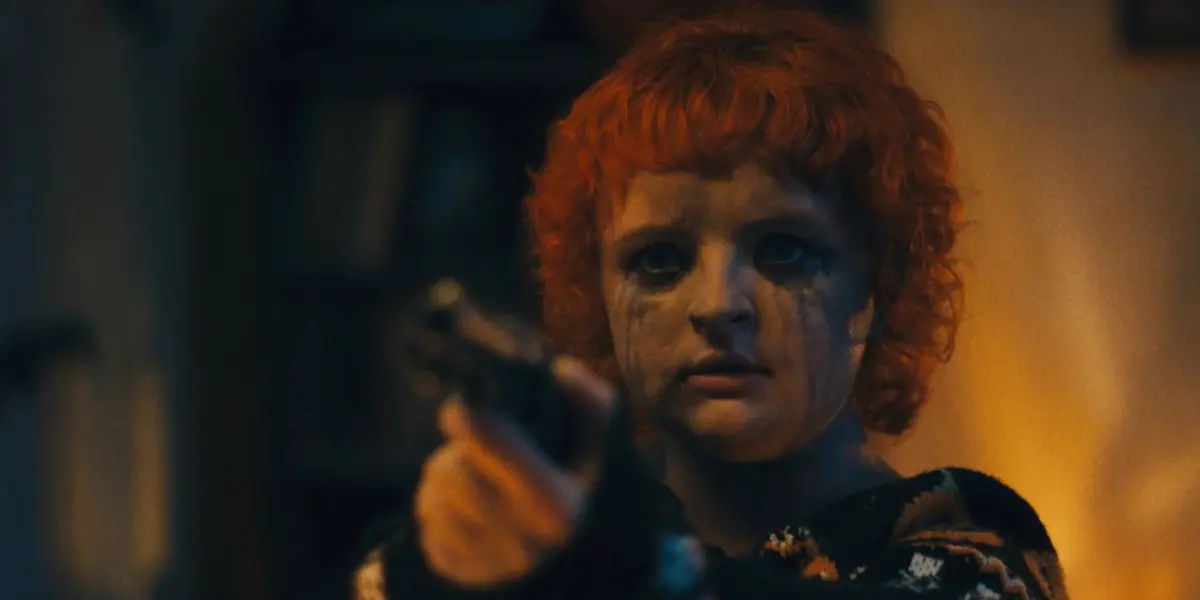
Despite the grim reality of her daily existence, Pumpkin finds solace in the calendar. The film opens on October 31st, marking the arrival of her favorite day of the year: Halloween. Rather than succumbing entirely to the despair of her environment, she dedicates her time to meticulously decorating the farmhouse with vintage-inspired seasonal paraphernalia. Her aesthetic—comprising a cozy autumn sweater paired with a custom-decorated gas mask resembling a jack-o’-lantern—establishes a visually striking protagonist. Sottak uses the first act to establish Pumpkin’s interior monologue, as she navigates the dichotomy of an actual survival nightmare wrapped in the festive, spook-season aesthetic she uses to stave off psychological decay.
Production Design and Cinematic Craft
Director Ben Sottak and the production team utilize the natural environment to heighten the thematic resonance of the film. Captured through vibrant, autumnal cinematography, the post-apocalyptic landscape avoids the drab, monochromatic gray scale typical of modern dystopian cinema. Instead, the film favors rich seasonal tones, utilizing natural magic-hour lighting that bathes the rustic farmhouse and surrounding fields in warm, deceptive hues.
The visual grammar of the film relies heavily on unconventional illumination sources. Rather than broad, daylight-driven sequences, the camera focuses on the flickering, unstable glow of candles inside carved jack-o’-lanterns and the focused beams of handheld flashlights. This deliberate choice creates a claustrophobic atmosphere, effectively placing the audience directly inside Pumpkin’s paranoid, isolated mindset. Critics have noted that the opening forty minutes, which function primarily as a solitary character study, represent the strongest storytelling and aesthetic achievement of the production.
Chronological Shifts and the Arrival of Outsiders
The narrative equilibrium shifts dramatically at the midpoint of the film’s brisk 80-minute runtime. Pumpkin’s carefully curated solitude is shattered by the unexpected arrival of three survivors: married couple Royce (A.J. Bowen) and Thalia (Shannyn Sossamon), accompanied by a cynical, guarded youth named Wendy (Ajani Russell).
Initially, the encounter avoids immediate end-of-the-world hostility. The newcomers approach with cautious openness rather than open aggression, reflecting a surprising weariness rather than immediate predation. However, as the dynamic unfolds, the true nature of the group begins to surface. Bowen and Sossamon portray a contrasting pair; Royce’s deep-seated cynicism counters Thalia’s measured, unexpected patience, creating an unpredictable psychological tension. Meanwhile, Russell’s performance as Wendy anchors the younger character with grounded, acerbic realism, preventing the role from descending into flat archetype.
As the narrative progresses past this midpoint, Hallowarrior pivots away from its atmospheric, slow-burn opening and adopts the conventions of traditional survival horror. The introduction of physical conflict diminishes the cozy, festive energy established early on, and the dialogue occasionally leans into genre tropes. Nonetheless, the audience’s established emotional investment in Pumpkin’s survival successfully drives the stakes of the final act, punctuated by practical special effects—including a memorable and visceral sequence involving ocular trauma—that cater to genre enthusiasts.
Industry Context and Thematic Implications
The release of Hallowarrior highlights the ongoing career trajectory of Milly Shapiro, whose indelible performance as Charlie Graham in Hereditary cemented her status within modern horror fandom. Transitioning from a supporting ensemble member to the central lead of a feature film showcases her capacity to anchor a narrative entirely on her own terms, holding the screen through extended solo sequences before dialogue is introduced.
From a broader industrial perspective, the film fits neatly into the curated streaming landscape championed by platforms like Shudder, which cater to niche genre audiences seeking reliable seasonal viewing material. While its compact runtime and lean narrative structure prevent it from carrying the grand thematic weight of higher-budget apocalyptic epics, Hallowarrior functions as an effective chamber piece. By framing its dystopian world as an oversized, lethal haunted house, the film taps into a comforting familiarity for horror enthusiasts who view October not just as a month on the calendar, but as an aesthetic and emotional refuge.