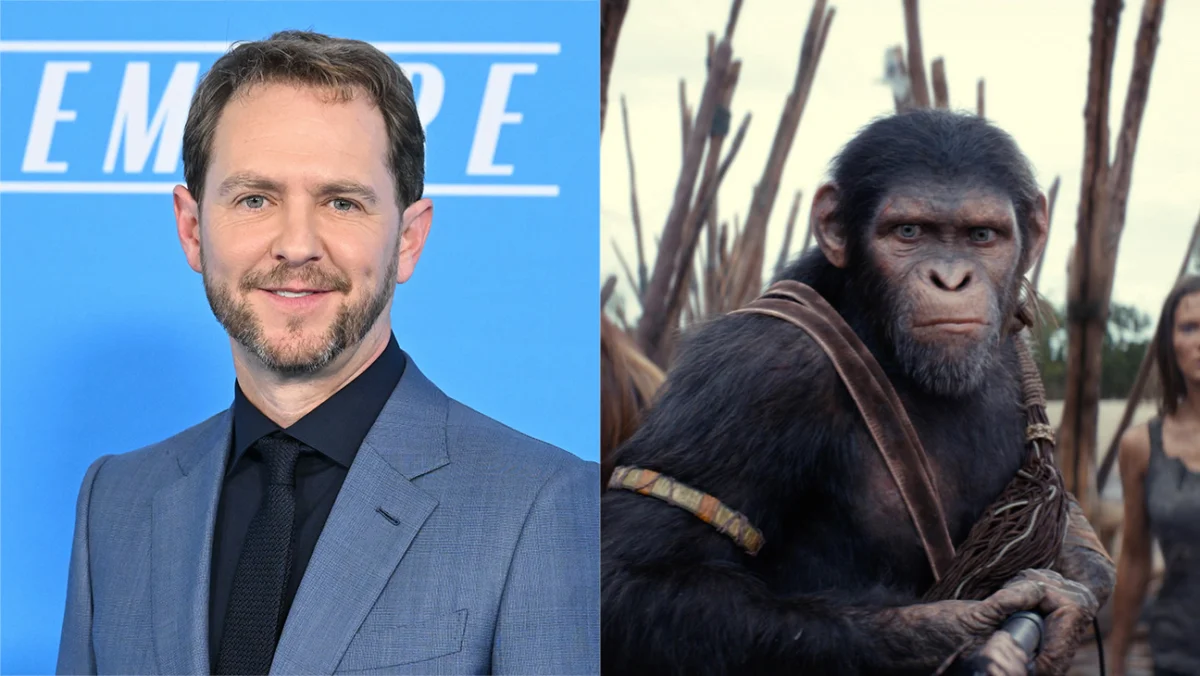
20th Century Studios has officially greenlit a new installment in its venerable Planet of the Apes franchise, tapping acclaimed director Matt Shakman and seasoned screenwriter Josh Friedman to lead the creative charge. The announcement marks a significant new chapter for the long-running science fiction property, confirming the studio’s deep commitment to its future. However, in a strategic move that has already sparked considerable industry discussion, this upcoming feature film will not serve as a direct sequel to the recently released and commercially successful Kingdom of the Planet of the Apes, which garnered $397.3 million worldwide. Instead, it is poised to forge a distinct narrative path within the expansive simian-dominated universe.
The decision to develop a non-sequential entry so soon after Kingdom‘s theatrical run underscores a potentially broader strategy by 20th Century Studios, now under the Disney umbrella, to explore diverse storylines and timelines within the Planet of the Apes canon. This approach could allow for greater creative freedom, enabling filmmakers to delve into unexplored corners of the lore without being strictly bound by the immediate aftermath of Kingdom‘s concluding events. The franchise has historically demonstrated an impressive capacity for reinvention, from its groundbreaking original films to the critically lauded reboot trilogy, and this new project appears set to continue that tradition.
A Legacy Reimagined: The Enduring Appeal of Planet of the Apes
The Planet of the Apes saga holds a unique and revered position in cinematic history, dating back to its iconic 1968 debut. The original film, starring Charlton Heston and directed by Franklin J. Schaffner, transcended mere science fiction to become a profound commentary on humanity, societal decay, and the dangers of unchecked scientific ambition. Its shocking twist ending remains one of cinema’s most memorable moments, cementing the franchise’s place in popular culture. This initial success spawned four sequels between 1970 and 1973, along with a short-lived television series and an animated adaptation, each contributing to a rich, albeit sometimes convoluted, mythology.
After a period of dormancy and a divisive 2001 remake by Tim Burton, the franchise experienced a spectacular resurgence with the critically and commercially successful reboot trilogy: Rise of the Planet of the Apes (2011), Dawn of the Planet of the Apes (2014), and War for the Planet of the Apes (2017). This trilogy, often referred to as the "Caesar Saga," redefined the capabilities of motion-capture technology through the masterful performance of Andy Serkis as the intelligent ape leader, Caesar. These films were praised not only for their breathtaking visual effects and thrilling action sequences but also for their profound emotional depth, exploring themes of empathy, leadership, prejudice, and the complex struggle for survival between evolving ape civilizations and dwindling human remnants. Each film in the Caesar trilogy achieved significant box office success, with Rise earning $481.8 million, Dawn taking $710.6 million, and War securing $490.7 million worldwide, collectively revitalizing the franchise and establishing a high benchmark for intelligent blockbuster filmmaking.
Building upon this foundation, Kingdom of the Planet of the Apes, released in May 2024, extended the narrative centuries after Caesar’s reign. Directed by Wes Ball, the film explored a new epoch where ape societies had flourished, and humans had regressed to a primitive state. Its strong box office performance and generally positive reception indicated continued audience appetite for the franchise’s unique blend of action, drama, and philosophical inquiry. Given Kingdom‘s success, many anticipated a direct follow-up, making the announcement of a distinct new project a notable deviation from the expected trajectory.
A Bold New Chapter: Diverging from the Expected Narrative
The decision by 20th Century Studios to pivot away from an immediate Kingdom sequel for this new film signals a deliberate expansion strategy rather than a simple linear continuation. While Kingdom laid the groundwork for future stories within its specific timeframe, this newly announced project, with its distinct creative team, suggests an exploration of alternative narratives. This could manifest in several forms: a prequel set even earlier than Rise, exploring the initial stirrings of ape intelligence or the nascent stages of humanity’s downfall; a side-story occurring concurrently with events from previous films but from a different perspective; or even a completely new timeline or interpretation of the original premise, albeit one that would likely still acknowledge the core themes and established lore.
Such a move allows the franchise to maintain freshness and appeal to a broader audience base, including those who may not have seen Kingdom or the preceding trilogy. It also grants the new creative team substantial freedom to innovate without the pressure of adhering to pre-established cliffhangers or character arcs from the most recent film. This strategy echoes how other major franchises, like Star Wars, have successfully diversified their storytelling through spin-offs and standalone adventures, expanding their universes beyond the main episodic sagas. Rick Jaffa and Amanda Silver, who were instrumental in crafting the narrative for the 2011 reboot and have served as producers on all subsequent films, are returning for this new venture, joined by Shakman. Their continued involvement provides a crucial link to the franchise’s successful modern iteration, ensuring a degree of thematic and tonal consistency even as the narrative path diverges.
The Creative Minds: Matt Shakman and Josh Friedman
The selection of Matt Shakman to direct this pivotal new Planet of the Apes film is a testament to his rising star in Hollywood, particularly his demonstrated ability to handle complex narratives and large-scale productions. Shakman garnered widespread critical acclaim for his directorial work on Marvel Studios’ WandaVision, a groundbreaking series that pushed the boundaries of superhero storytelling on television. His nuanced direction, blend of genre styles, and keen understanding of character development earned him an Emmy nomination and established him as a director capable of delivering both spectacle and substance. Before his Apes commitment, Shakman was notably attached to direct Marvel’s highly anticipated Fantastic Four reboot, a testament to his high standing within the blockbuster landscape. His transition to Planet of the Apes highlights the perceived significance of this franchise within 20th Century Studios’ portfolio. Furthermore, Shakman directed the pilot for Apple’s Godzilla series, Monarch: Legacy of Monsters, showcasing his experience with expansive, creature-driven sci-fi properties and his skill in establishing the tone and visual language for new universes. His diverse background, from acclaimed television to major cinematic projects, positions him uniquely to bring a fresh yet robust vision to the Apes universe.
Joining Shakman on the creative team is Josh Friedman, a screenwriter celebrated for his contributions to some of the most ambitious and successful science fiction films of recent years. Friedman’s resume boasts credits on blockbusters like James Cameron’s Avatar: The Way of Water and the upcoming Avatar: Fire and Ash, films renowned for their intricate world-building and immersive storytelling. His involvement with the Avatar franchise demonstrates a proven track record in crafting compelling narratives within vast, visually driven sci-fi landscapes. Crucially, Friedman also co-wrote Kingdom of the Planet of the Apes, giving him a deep understanding of the franchise’s current iteration, its lore, and the specific challenges and opportunities it presents. This prior experience ensures that while the new film may not be a direct sequel, it will benefit from a writer intimately familiar with the established universe and its thematic underpinnings. Friedman’s ability to balance grand spectacle with character-focused drama makes him an ideal choice to pen a new chapter in the Apes saga, providing both continuity in thematic strength and innovation in narrative approach. He is represented by UTA, a leading agency in the industry.
Studio Strategy and Broader Implications
The greenlighting of this new Planet of the Apes film, particularly its non-sequential nature, reflects a broader strategic realignment within 20th Century Studios, influenced by its parent company, The Walt Disney Company. Disney’s acquisition of 21st Century Fox assets brought a wealth of established intellectual properties, including Planet of the Apes, under its banner. The company has a well-documented history of meticulously managing and expanding its franchises, often pursuing multi-platform and multi-narrative approaches to maximize their longevity and profitability. This new Apes project could be seen as a deliberate effort to diversify the franchise’s offerings, ensuring it remains dynamic and relevant for various audience segments.
By commissioning a standalone story rather than a direct Kingdom sequel, 20th Century Studios might be testing the waters for a more expansive, interconnected Apes universe, similar to how Marvel Studios or Lucasfilm manage their respective properties. This could potentially allow for parallel narratives, exploring different historical periods or even alternate realities within the Apes framework. Such a strategy would enable the studio to keep the franchise vibrant by continually introducing fresh perspectives and characters, preventing potential audience fatigue that can sometimes accompany long-running, strictly linear film series.
The involvement of Scott Aversano, Executive Vice President of Production for 20th Century Studios, overseeing the project, further emphasizes the studio’s investment and confidence in this new direction. His oversight signals a high-level commitment to ensuring the film aligns with the studio’s strategic goals for one of its most valuable properties. The announcement, initially reported by Deadline, quickly generated buzz across the industry, highlighting the significant anticipation surrounding the future of the Planet of the Apes franchise.
This new film represents not just another entry in a beloved series but a statement of intent from 20th Century Studios. It signifies a desire to push creative boundaries while honoring the rich legacy of a franchise that has consistently challenged audiences with its profound themes and cutting-edge storytelling. As details about the specific plot, casting, and production timeline emerge, the industry and fans alike will eagerly watch to see how Matt Shakman and Josh Friedman will shape this exciting new chapter in the ongoing saga of humans and apes. The enduring question of what it means to be intelligent, to be human, and to survive in a world transformed will undoubtedly continue to resonate, ensuring the Planet of the Apes remains as thought-provoking as ever.