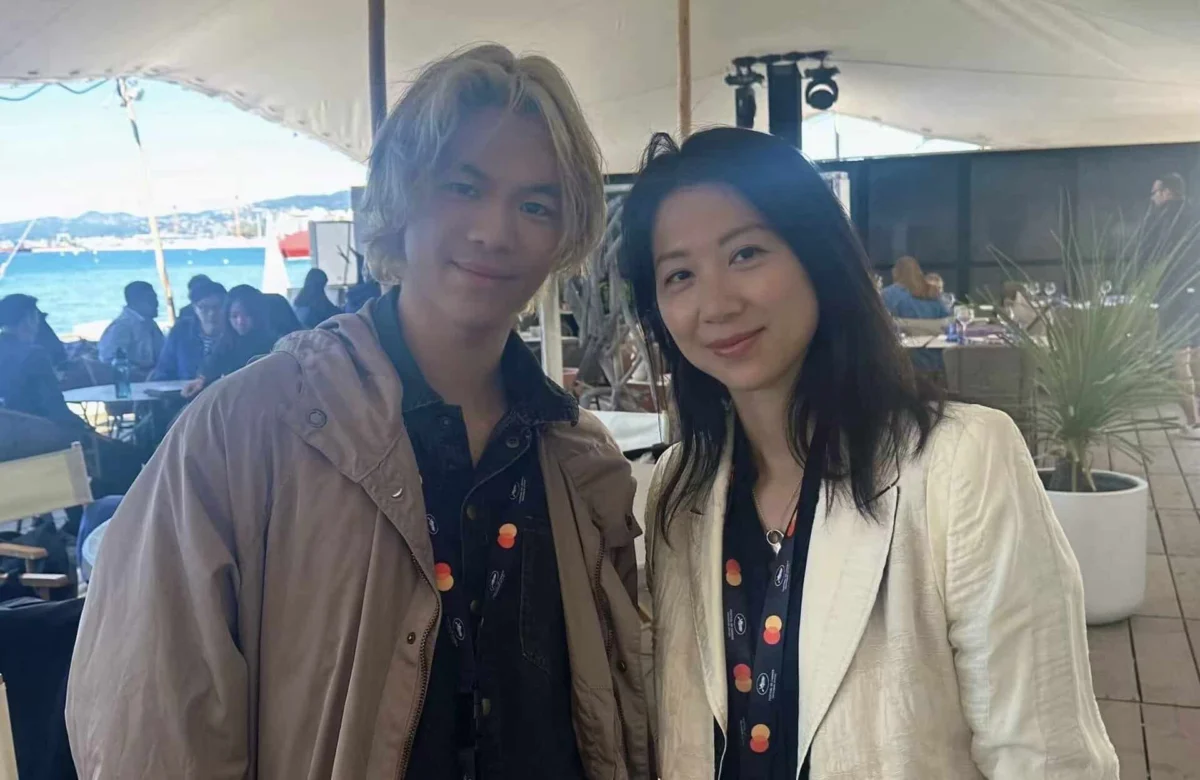
Following the resounding success of her short film "Lili Alone," which captivated critics and audiences alike by securing the prestigious Leitz Cine Discovery Prize at La Semaine de la Critique in 2021, Chinese director Zou Jing ascended to a new echelon of cinematic artistry, presenting her highly anticipated feature debut, "A Girl Unknown," at the illustrious Cannes Film Festival this year. The film’s premiere was met with significant acclaim, culminating in a remarkable collection of three major awards, firmly establishing Zou as a formidable and promising new voice in global cinema.
A Narrative Tapestry of Identity and Change
"A Girl Unknown" weaves a poignant and intricate narrative around the life of a young woman navigating the complexities of identity and belonging in southern China. The film traces her journey as she grows up under three distinct names, each moniker a reflection of the different families that raise her across shifting social and historical landscapes from the 1990s onward. This unique structural device allows the film to intimately explore the profound impact of evolving family dynamics, regional identities, and linguistic experiences on an individual’s sense of self.
The story unfolds with meticulous detail, beginning with the protagonist’s childhood as "Lin Juan," a role brought to life by the talented young actress Cao Ruofan, who imbues the character with an innocent yet lively spirit. As the narrative progresses, Li Gengxi takes on the portrayal of the older versions of the character, embodying "Wang Juan" and later "Wu Lian." Gengxi masterfully navigates the emotional turbulence of adolescence and the fractured family relationships that define these later stages of the girl’s life, lending depth and authenticity to her struggle for self-definition.
Through the protagonist’s movement between three distinct households, "A Girl Unknown" becomes a powerful social commentary, offering a kaleidoscopic view of China’s rapid transformation. It subtly highlights how economic reforms, urbanization, and shifting cultural norms have reshaped the very fabric of family life and individual identity in the country’s southern regions. The film’s ability to connect personal destiny with broader historical and social changes through this intimate family narrative is one of its most compelling attributes.
From Documentaries to Dazzling Debut: Zou Jing’s Path to Cannes
Zou Jing’s journey to becoming one of China’s most exciting new filmmakers is rooted in a diverse professional background. Her early career saw her immerse herself in the world of television documentaries and commercial advertising, experiences that undoubtedly honed her observational skills and storytelling acumen. This foundation provided a unique lens through which she later developed her narrative practice, gradually refining her craft through dedicated screenwriting workshops.
The genesis of "A Girl Unknown" is a testament to Zou Jing’s commitment and perseverance. She dedicated three intensive years to developing the script, a period of meticulous research and creative refinement. This dedication bore early fruit when the project made history as the first Chinese-language film to win the prestigious Cannes Critics’ Week Next Step Award. This accolade, designed to support emerging filmmakers in the development of their feature projects, provided crucial momentum and validation for "A Girl Unknown," underscoring its potential even in its nascent stages. The Next Step Award is a significant recognition within the industry, often signaling future success for its recipients by providing funding, mentorship, and a platform for international co-production opportunities.
A Trio of Triumphs at La Semaine de la Critique
The official screening of "A Girl Unknown" at La Semaine de la Critique (Critics’ Week) at Cannes this year marked a pivotal moment for Zou Jing. La Semaine de la Critique, running concurrently with the main Cannes Film Festival, is renowned for its mission to discover and spotlight new talents in world cinema. Since its inception in 1962, it has served as a launchpad for many of today’s most celebrated directors, including Wong Kar-wai, Ken Loach, and Alejandro G. Iñárritu. For a debut feature to garner attention here is a significant achievement; to win multiple awards is exceptional.
"A Girl Unknown" ultimately received three highly coveted awards: the Fondation GAN Distribution Prize, the FIPRESCI International Critics Prize, and the Audience Award from Le Rail d’Or. These accolades speak volumes about the film’s universal appeal and artistic merit. The Fondation GAN Distribution Prize is particularly vital for emerging filmmakers, as it provides financial support to aid the film’s distribution in France, ensuring it reaches a wider audience. The FIPRESCI Prize, awarded by the International Federation of Film Critics, is a hallmark of critical excellence, signifying the film’s artistic integrity and profound impact on discerning critics globally. The Audience Award from Le Rail d’Or, chosen by cinephiles and film enthusiasts, highlights the film’s ability to deeply resonate with viewers on an emotional level, further cementing its broad appeal. This trifecta of awards – industry support, critical acclaim, and popular recognition – firmly establishes Zou Jing as a leading figure among the new generation of Chinese filmmakers.
Crafting Authenticity: Personal Memory Meets Social Reality
During interviews, Zou Jing shed light on the intricate process behind crafting "A Girl Unknown," revealing a delicate balance between personal memory and extensive social research. She admitted that her initial creative impulse was not driven by a "grand scale" vision of historical transformation, but rather by deeply personal experiences. The evocative village in the film’s opening sequence, a "beautiful and poetic landscape in the south," is a direct echo of her own childhood memories in the mountains of southern China. Many details of the first family, she explained, were projections of these cherished recollections. This approach ensured that the narrative felt grounded in genuine human experience, rather than abstract concepts of urbanization or industrialization.
The development of the second family, too, stemmed from a character-driven approach. Zou Jing expressed a profound admiration for the girl’s second mother, a woman "completely different from the first one." This character, described as well-educated, elegant, refined, and possessing dignity even after profound trauma, became a central inspiration. "In many ways, all three families began with one question: ‘What kind of person do I want to portray?’" Zou Jing noted, emphasizing her curiosity about the world that would shape such a character.
Beyond personal introspection, Zou Jing conducted "extensive social research" to ensure the film’s emotional and social reality felt truthful. She identified that the kind of events depicted in the film occurred more frequently in southern China, guiding the choice of specific locations. This commitment to realism extended to linguistic details, with the protagonist speaking different dialects as she moves between environments. She begins with Hakka and later adapts to a new linguistic and social landscape, a shift that can lead to bullying due to "linguistic disparity." Zou Jing highlighted that in the 1980s and 1990s, dialects were commonplace, unlike today’s Mandarin-dominated schools, making these language shifts deeply impactful psychologically.
The third family’s origins in Hunan, with its geographical proximity to Guangdong, also reflected this commitment to realism. The significant presence of Hunanese people working in Guangdong during that era provided a believable context for the character’s movement. Zou Jing’s meticulous attention to such details, like the factory setting – where many young girls dropped out of school in the 1990s and early 2000s due to immense labor demand – ensured that even if audiences didn’t consciously notice every nuance, the underlying "geographical and social logics had to remain convincing." Ultimately, while history formed the backdrop, Zou Jing’s primary aim was always to foreground "the girl’s personal emotional experience rather than history as an abstract force."
The Weight of a Name: Identity in Flux
The Chinese title of the film, "A Nameless Girl," presents a compelling paradox given that the protagonist, in reality, acquires three different names throughout her life. This dichotomy sparked a crucial discussion during interviews about the significance of "a name" within the film’s narrative. Zou Jing articulated that for her protagonist, names are "extremely important," unlike for individuals who grow up in stable environments where names might function merely as labels. For someone constantly moving between families, uncertain of her origins, "a name becomes identity itself."
Zou Jing drew upon a powerful online discussion she encountered, where an individual described the "immense shock of being renamed after entering a second family" after being abandoned by biological parents. This profound emotional impact, she suggested, is difficult for those without similar experiences to fully grasp. The film visually communicates this psychological weight, with each name representing the protagonist’s relationship to the family that bestows it. "When she becomes ‘Wang Juan,’ she has entered the second family. Later, in the third family, she changes to ‘Wu Lian,’ the name written on her birth certificate." However, the emotional weight of these names varies, contingent on whether she has "truly formed a connection with the family attached to the name."
While the question arose whether this signifies the protagonist "never truly finding a name that belongs to her," Zou Jing offered a more hopeful interpretation. For her, it feels "more like a beginning," suggesting that even if a definitive answer remains elusive, the journey allows the protagonist to "at least found her own position in the world." This perspective underscores the film’s nuanced exploration of identity as an ongoing process rather than a fixed state.
Resilience and the Refusal to Surrender: Zou Jing’s Artistic Signature
A recurring thematic thread in Zou Jing’s work, from "Lili Alone" to "A Girl Unknown," is her consistent attraction to women on the margins of society and their coming-of-age experiences. She clarified that her primary interest lies not exclusively in women, but in "people living within difficult situations." The common denominator across her protagonists is their capacity to make choices and find strength amidst hardship. "It just so happens that I chose female perspectives for both stories," she noted.
What truly fascinates her is the "refusal to surrender in a predicament." She referenced the Korean film "The World of Love," highlighting a resonating question: "why must traumatized women always be positioned as victims?" This ethos permeates "A Girl Unknown," where the protagonist, despite her tribulations, exhibits a "stubborn refusal to give in." Zou Jing specifically pointed to a scene where Li Gengxi dances, expressing her deep affection for it. "The smile on her face represents her entire attitude toward life," she stated, encapsulating the film’s celebration of resilience and agency.
Bridging Cultures: The Power of International Co-production
The production of "A Girl Unknown" involved extensive collaboration with French partners, a common yet complex undertaking in contemporary global cinema. Zou Jing shared a profoundly positive experience, emphasizing the universality of human emotions. "At first, I assumed this was a very specifically Chinese story, but later I realised the French team connected with it deeply as well." This realization underscores the film’s ability to transcend cultural specificities and tap into shared human experiences of family, identity, and resilience.
Much of the post-production work, including color grading, music composition, and sound design, was completed in France. Zou Jing lauded her French collaborators, praising their talent and the "enormous trust and support" they extended. The Cannes premiere further solidified this transnational connection, with French audiences demonstrating "almost no difficulty understanding the emotional core of the story." This successful collaboration exemplifies the growing trend of international co-productions, which not only pool resources and expertise but also foster a richer, more diverse cinematic landscape that resonates with global audiences.
A Powerful Partnership: Zou Jing and Li Gengxi
The collaboration with lead actress Li Gengxi was another highlight for Zou Jing. She described Gengxi as someone who "shines very brightly – not just as an actress, but also as an individual," noting a "natural understanding between us without words." This intuitive connection between director and actor is often the bedrock of powerful performances.
When asked about the quality that most attracted her to Gengxi, Zou Jing revealed a personal resonance: "Gengxi herself also has a complicated personal background. She’s very strong-willed, unyielding, and resilient. She has that same refusal to surrender that I’m appealed to." This shared spirit undoubtedly contributed to the depth and authenticity of Gengxi’s portrayal, allowing her to embody the protagonist’s journey with conviction. The professional collaboration evolved into a close friendship, a testament to the profound bond forged during the filmmaking process.
Broader Implications and a Promising Future
The multiple awards received by "A Girl Unknown" at Cannes carry significant implications for Zou Jing’s career and for Chinese independent cinema as a whole. The Fondation GAN Distribution Prize will facilitate the film’s reach within France, potentially opening doors to wider European distribution. The FIPRESCI Award positions Zou Jing as a director whose artistic vision is recognized by international critics, enhancing her reputation and attracting further critical attention. The Audience Award confirms the film’s ability to engage and move a diverse viewership, an invaluable asset for commercial success and audience building.
This triumvirate of accolades signals that Zou Jing is not merely an emerging talent but a significant new voice with a unique perspective and a compelling storytelling ability. Her success contributes to the ongoing global appreciation for nuanced Chinese narratives, moving beyond conventional portrayals and showcasing the depth of human experience within the country’s rapidly evolving society. It also reinforces the value of international co-productions as a viable model for bringing culturally specific yet universally resonant stories to a worldwide audience. As Zou Jing continues her cinematic journey, "A Girl Unknown" stands as a powerful testament to her vision, resilience, and the universal language of human emotion. The film’s triumph at Cannes undoubtedly marks the beginning of an exciting and impactful career for this remarkable director.