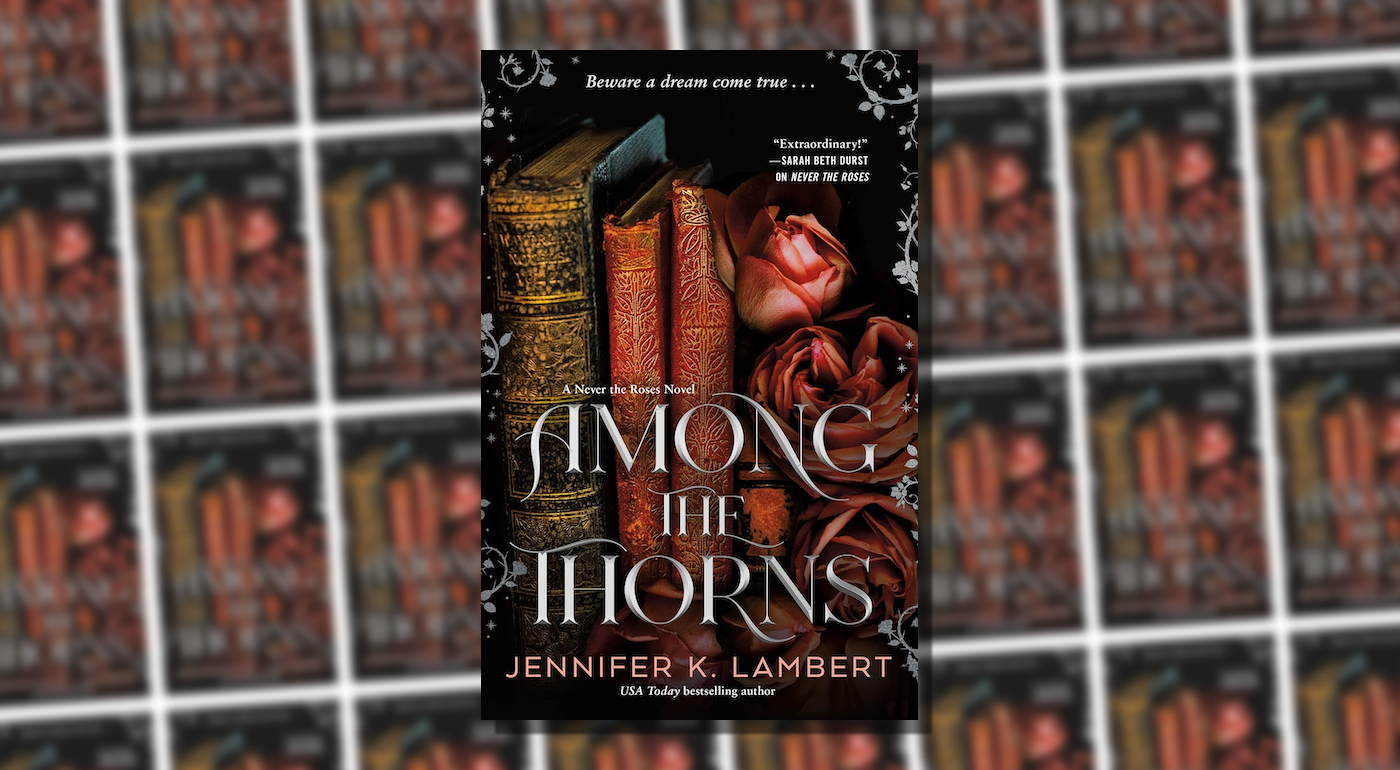
The literary landscape of contemporary fantasy continues to evolve with the official release of Jennifer K. Lambert’s standalone novel, Among the Thorns, published by Bramble. Expanding upon the intricate, politically charged magical framework established in her 2025 release, Never the Roses, Lambert’s latest work shifts its primary narrative focus to the parallel lives of two exceptionally gifted young women: Rose, a celebrated and public-facing sorceress, and Thorn, an isolated practitioner hidden away in a warded cottage. Set against a backdrop of systemic exploitation—where magical children are legally bound by a centuries-old "blood geas"—the novel explores themes of late-stage capitalism, institutional oppression, and the search for autonomy within a rigidly controlled societal hierarchy.
Chronology and Narrative Framework
The events of Among the Thorns unfold across two distinct, initially disconnected spheres of existence that eventually converge, forcing the central characters to confront both their shared history and their individual identities.
In the public sphere, Rose is fêted as the premier sorceress of her generation. As an accomplished oneiromancer, she holds the rare ability to navigate "the Dream"—a collective unconscious that acts as a parallel universe and a physical transit network. Upon her formal entry into this domain, Rose experiences an immediate physiological alignment, noting that her body finally felt correct within an environment that mirrors the vast complexities of human consciousness. However, her unauthorized traversal of the Dream is soon disrupted by an external surge of rogue power, hinting at magical activities occurring completely outside the purview of institutional authorities.
Simultaneously, in a remote and secluded woodland sanctuary, Thorn leads an entirely different existence. Raised under the strict supervision of a guardian named Jada—whose methods mirror classic fairy-tale tropes of isolation and psychological restraint—Thorn spends her days tending to domestic chores, livestock, and waiting for the infrequent visits of her caretaker. During Jada’s absences, Thorn is routinely placed into a prolonged magical sleep designed to halt the aging process. Thorn’s primary innate magical ability is psychometry, the capacity to perceive the emotional residue and historical imprints left behind on physical objects. Through a misplaced belt buckle, Thorn catches a glimpse of Sebastian, a late-life sorcerer-prince, sparking a complex chain of events that ultimately leads her to break free of her enforced slumber and access the Dream independently.
Supporting Data and Thematic Parallels
Lambert’s fictional universe is defined by a rigorous economic framework that governs the lives of its magical populace. Much like the societal structures depicted in N.K. Jemisin’s acclaimed Broken Earth trilogy, the world of Among the Thorns treats innate magical ability not as a divine gift, but as a heavily regulated commodity. Children born with extraordinary talents are subjected to the "blood geas," a binding magical contract that legally links their productivity to the financial institutions and wealthy elite who fund their training.

Statistical and narrative indicators within the text outline a bleak economic reality for practitioners:
- The Debt Trap: Promising sorcerers such as Rose are promised lucrative employment upon graduation, yet the entirety of their anticipated earnings is immediately offset by cumulative educational debts.
- Intergenerational Breeding Programs: Magical lineages are frequently orchestrated by academic and royal academies to maximize the monetary yield of rare, highly sought-after traits.
- Total Compliance: The blood geas ensures absolute subordination, stripping young practitioners of bodily autonomy before they reach the age of consent or decision-making maturity.
This systemic framework closely mirrors modern critiques of late-stage capitalism, wherein specialized labor is systematically commodified, and debt is utilized as a permanent mechanism of social control. Despite these heavy economic and personal burdens, the narrative maintains a brisk pacing, wherein characters navigate profound trauma and systemic manipulation with notable emotional resilience.
Official Responses and Literary Analysis
Literary critics and early reviewers have drawn widespread attention to the stark contrast between the harrowing nature of the characters’ backstories and the relatively swift emotional resolution depicted on the page. While Thorn’s prolonged isolation, neglect, and forced slumber present severe psychological implications, her rapid adaptation to high-level magic and interpersonal dynamics has sparked critical discussion regarding narrative tension and stakes.
Industry analysts note that while the novel’s world-building and critique of institutionalized debt are robust, the absence of protracted conflict among the protagonists suggests that Among the Thorns may serve as a foundational building block for a larger, multi-volume narrative arc. Speculation within publishing circles points toward a potential crossover event that could eventually unite the timelines and characters of both Never the Roses and Among the Thorns into a unified confrontation against the entrenched ruling classes.
Broader Impact and Implications
The release of Among the Thorns marks a significant milestone for Bramble’s fantasy catalog, reinforcing the publisher’s commitment to character-driven speculative fiction that addresses socioeconomic and political themes. By blending traditional fairy-tale archetypes—reminiscent of Snow White, Cinderella, and Rapunzel—with modern institutional critique, Lambert has carved out a distinct niche within contemporary dark fantasy.
The novel’s broader cultural resonance lies in its examination of systemic compliance. Through the passive acceptance of the blood geas by even the most powerful sorcerers in the realm, the narrative raises fundamental questions regarding how institutional power perpetuates itself through generation after generation. As readers continue to explore the complex intersections of magic, commerce, and personal freedom within Lambert’s expanding literary universe, Among the Thorns stands as a compelling testament to the enduring appeal of subversive fantasy storytelling.