The award-winning short documentary titled an open field, directed by filmmaker Teboho Edkins and produced by his father, Don Edkins, arrives on Netflix on December 1, offering an intimate, meditative look at the mourning process following the 2019 Ethiopian Airlines flight 302 disaster. The film, which claimed the Best Short Documentary award at the 2025 International Documentary Film Festival Amsterdam (IDFA), chronicles the aftermath of the tragedy that claimed the life of the director’s brother, Max Thabiso Edkins. By shifting the focus from the technical failure of the aircraft to the emotional landscape of those left behind, the documentary serves as a poignant examination of how communities navigate sudden, violent loss.
The Chronology of the Ethiopian Airlines Flight 302 Tragedy
On March 10, 2019, the aviation industry faced one of its darkest chapters. Ethiopian Airlines Flight 302, a Boeing 737 MAX 8, departed from Addis Ababa Bole International Airport at 8:38 a.m. local time, bound for Jomo Kenyatta International Airport in Nairobi, Kenya. Only six minutes after takeoff, the aircraft crashed into an open field near the town of Bishoftu, roughly 30 miles southeast of Addis Ababa.
The impact was total. All 157 passengers and crew members on board perished. The victims represented 35 different nationalities, turning a local incident into a global tragedy. The crash was the second of its kind involving a Boeing 737 MAX in less than five months, following the October 2018 Lion Air Flight 610 crash in Indonesia. These back-to-back incidents precipitated a worldwide grounding of the 737 MAX fleet, an unprecedented regulatory move that paralyzed the global aviation sector for nearly two years.
Cinematic Synthesis of Personal and Collective Mourning
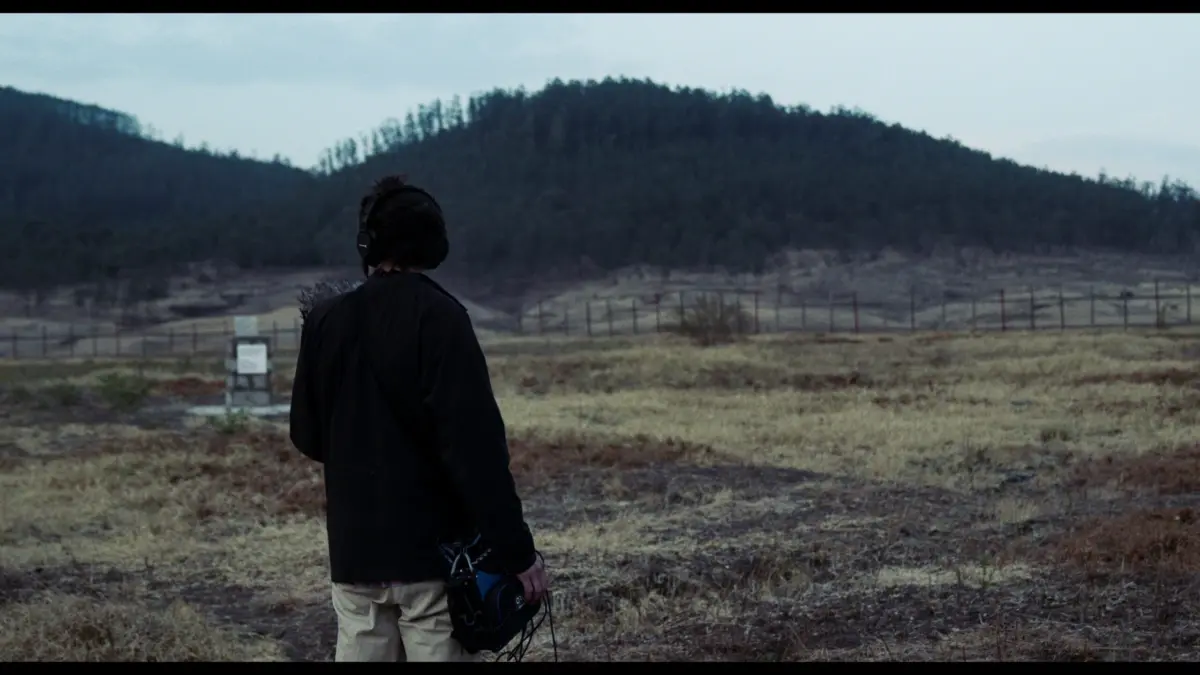
The documentary an open field takes its name from the site of the wreckage, a location that became a central point of gravity for both the bereaved families and the local Ethiopian villagers. Through the lens of Teboho Edkins, the film captures a side of the tragedy rarely seen in mainstream news cycles: the immediate, instinctive, and sustained response of the local community.
In the days following the crash, villagers from the surrounding areas converged on the site, not as bystanders, but as participants in a spontaneous, community-led memorial process. Some villagers stood vigil for an entire month, protecting the sanctity of the crash site as it became a place of pilgrimage for families arriving from across the globe. The film documents how these local residents, despite having no prior connection to the victims, shared in the burden of grief.
By interviewing these villagers alongside family members like Teboho and Don Edkins, the director illustrates that the site remains a living monument. The documentary utilizes a blend of color and black-and-white cinematography to shift between the visceral reality of the landscape and the internal, subjective experience of memory. This visual language, supported by the work of cinematographer Jide Akinleminu and editor Anne Fabini, creates a space where English and Amharic dialogue weave together to bridge the cultural and linguistic divides of the victims’ families.
Contrasting Institutional Responses with Human Compassion
A critical narrative thread in the film involves the juxtaposition of the local community’s warmth and the corporate response from Boeing. The aircraft manufacturer, which faced intense scrutiny and criticism regarding its software systems—specifically the Maneuvering Characteristics Augmentation System (MCAS)—initially struggled to manage the public relations and ethical fallout of the disaster.
The documentary highlights that while the corporate and legal battles regarding the 737 MAX were unfolding in boardrooms and courtrooms, a different, more human process was unfolding in the field. The film suggests that the compassion displayed by the Ethiopian villagers served as a form of restorative justice for the families, offering a level of empathy that was notably absent from the corporate communication provided by the manufacturer. This contrast serves as a central pillar of the documentary’s narrative, positioning the film as a critique of modern corporate accountability versus the resilience of human empathy.

Global Implications and the Anatomy of Loss
Although the film is rooted in a specific geographic and historical event, its scope is intentionally universal. The passengers on Flight 302 were scientists, aid workers, government officials, and civilians, all traveling for diverse purposes. By focusing on the shared experience of mourning, an open field transcends its specific subject matter to address the broader, fundamental human condition of grief.
The production of the film was a collaborative, international effort, involving Day Zero Film and Video Productions (South Africa), Day Zero Films UG (Germany), and Survivance (France). This international backing reflects the global nature of the tragedy itself. The decision to release the film on a platform as expansive as Netflix ensures that the stories of the 157 individuals, and the stories of the villagers who guarded their final resting place, reach a global audience.
Artistic Intent and the Healing Power of the Medium
For Teboho Edkins, the creation of this film was a deeply personal necessity. In his own reflections on the project, the director has noted that the process was "delicate and personal," serving as a cinematic attempt to connect with his late brother’s spirit. The film functions as a family archive, but one that is public in its delivery.
The significance of the film lies in its refusal to sensationalize the crash. There is no focus on the mechanics of the flight failure or the legal minutiae that dominated news headlines for years. Instead, the focus remains on the "moments of warmth, resolve, grief, fear, patience, and simple acts of kindness." By isolating these moments, Edkins creates a quiet, contemplative space for the viewer.
The release of the trailer, which offers a glimpse into the vast, open, and haunting landscape of the crash site, underscores the film’s tone. It suggests a work that is not interested in providing closure—an impossibility in the face of such a loss—but rather in providing a testament to the fact that grief is not a solitary journey.
Legacy of the 737 MAX Disaster
As an open field reaches audiences globally, it invites a reflection on the broader legacy of the Boeing 737 MAX disaster. Beyond the regulatory changes, pilot training mandates, and software updates that followed the 2019 crash, there remains the human toll. The families of the 157 victims have spent the last several years navigating a complex legal and emotional landscape.
The film serves as an important historical document, ensuring that the human faces of the tragedy are not lost beneath the weight of aviation statistics and corporate litigation. It reminds the audience that for every major industrial catastrophe, there is a corresponding ripple effect of loss that spans continents and generations.
By choosing to partner with Netflix, the production team has ensured that this personal essay on loss will be accessible to a demographic far wider than the typical documentary festival circuit. This accessibility is essential, as the film’s themes of collective mourning and the capacity for strangers to provide solace are subjects that resonate with anyone who has grappled with sudden, traumatic loss.
In conclusion, an open field is more than a documentary about an airplane crash; it is a profound study of how we sustain one another in the face of the unthinkable. Through the careful, empathetic direction of Teboho Edkins, the film elevates a story of corporate failure and tragic death into a lasting tribute to the enduring nature of human kindness. It stands as a reminder that even in the most desolate circumstances, there is the potential for connection, memory, and, perhaps, the beginnings of healing.