The conclusion of the Toronto International Film Festival marks the end of the pivotal autumn showcase season—encompassing Venice, Telluride, and Toronto—that traditionally serves as the launchpad for major Academy Award campaigns. As industry executives, critics, and audiences digest the cinematic offerings of the past few weeks, one prominent narrative has dominated the discourse: the surging momentum of Irish actor Andrew Scott, who is rapidly emerging as the frontrunner for the Academy Award for Best Actor.
Should Scott secure the nomination and subsequently take home the statuette next spring, he will achieve a monumental milestone in Hollywood history. In the nearly 100-year existence of the Academy Awards, no openly out gay actor has ever won the prize for a leading performance. As the industry grapples with its historical blind spots regarding representation, Scott’s potential victory represents a significant cultural turning point for a global entertainment institution that has long wrestled with diversity on screen and behind the scenes.
The Cinematic Context: Bringing Ian Charleson’s Untold Story to Life
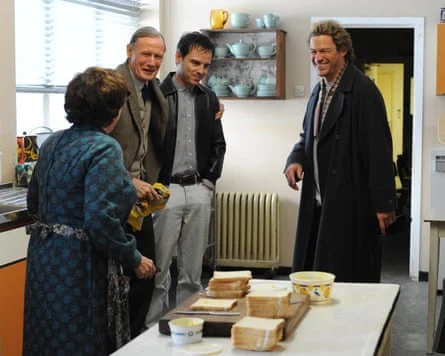
The film propelling Scott to the center of the Oscar conversation is Elsinore, a devastating historical drama directed by Simon Stone and written alongside Stephen Beresford. Set in December 1989, the film features Scott in a career-defining performance as Ian Charleson, the celebrated Scottish actor renowned for his roles in Chariots of Fire and Gandhi.

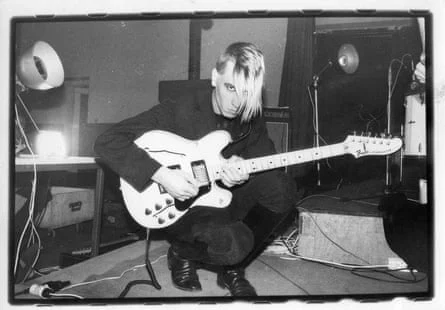
Charleson’s life was defined by both immense talent and the rigid constraints of an era that demanded professional camouflage. Years prior to his international breakthrough in Chariots of Fire, Charleson had secured an early role under the direction of Derek Jarman, a project he later excised from his professional curriculum vitae. This erasure sparked a lifelong rift—a poignant dynamic explored deeply within Elsinore. During the 1980s, industry advisors routinely counseled actors that muting their sexuality was a mandatory prerequisite for achieving mainstream stardom. Despite such careful curation and undeniable screen presence, Charleson struggled to attain the stratospheric level of fame he felt he deserved.
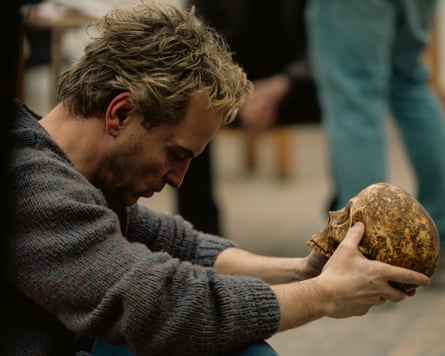
The trajectory of Charleson’s life changed dramatically in the final month of 1989. Despite battling the advanced stages of AIDS in secret, Charleson courageously stepped into the title role of Hamlet at the National Theatre, taking over the production from Daniel Day-Lewis. Contemporary theatre critics hailed his performance as one of the finest interpretations of the role ever witnessed on a British stage. Tragically, Charleson died just six weeks after the production closed, at the age of 40. Following his death, his family bravely made his diagnosis and sexuality public. It marked the first high-profile celebrity death in the United Kingdom explicitly attributed to AIDS, serving as a watershed moment that dramatically boosted public awareness, empathy, and acceptance during a time of intense social panic.
A Personal Passion Project Born from Grief
For Scott, who approaches his 50th birthday next month, Elsinore is much more than a routine acting assignment; it is a profound labor of love. The actor served as a producer on the project, tirelessly collaborating with screenwriter Stephen Beresford—who previously penned Scott’s 2014 cinematic breakthrough, Pride—to secure financing and bring the complex historical narrative to the screen.
The impetus for Scott to finally get Elsinore off the ground was catalyzed by personal tragedy: the death of his mother, Nora, in 2023. Reflecting on the creative drive required to launch the independent production during a period of immense personal loss, Scott noted the unique psychological space of mourning. “When you’re in that grief state,” he reflected following the film’s premiere, “you feel like you’ve got nothing to lose.”
This personal resonance mirrors the broader thematic elements of the film. Much like Charleson, Scott navigated an early career where industry gatekeepers warned him against transparency regarding his private life. Born in Dublin in 1976, Scott shot his first feature film at the age of 17, subsequently studying drama at Trinity College Dublin before relocating to London at 22. Despite consistently taking on nuanced queer roles, he was repeatedly advised to remain silent about his own sexuality to avoid professional pigeonholing.
Recalling the psychological toll of that environment after Elsinore’s Toronto screening, Scott admitted that the prevailing climate induced “a horrible feeling that I perhaps wasn’t going to be able to speak a language I was desperate to speak.” He ultimately chose to come out publicly in 2013 at the age of 37, shortly after his international television breakthrough as Jim Moriarty opposite Benedict Cumberbatch in the BBC series Sherlock.
Redefining Leading Man Norms Through Versatility
In the decade and a half since publicly acknowledging his sexuality, Scott has systematically dismantled outdated industry assumptions regarding the casting of gay actors in heterosexual roles. Alongside towering theatrical achievements—such as his critically acclaimed, one-man reinvention of Anton Chekhov’s Uncle Vanya—Scott has cultivated a remarkably diverse filmography.
His credits encompass a wide array of romantic and dramatic leads: from the cultural phenomenon of the “hot priest” in Fleabag and the title role in Netflix’s psychological thriller Ripley, to Richard Rogers in Blue Moon, Anthony Julius in Denial, and his recent portrayal of Group Captain James Stagg, the meteorological mastermind of the D-Day landings, in the historical drama Pressure. Furthermore, his upcoming performance in Leo Reich’s boundary-pushing sitcom It Gets Worse demonstrates a continuous desire to challenge audience expectations through provocative and complex material.
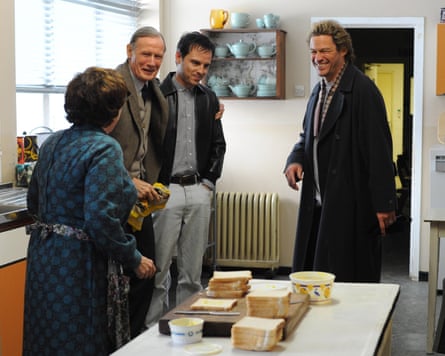
Industry analysts and film critics have taken note of this unprecedented career trajectory. Guy Lodge, chief critic for Variety, observes that Scott is “essentially carving an unprecedented career path for an out gay leading man in the industry. One where he isn’t pigeonholed into queer roles, but where he doesn’t have to avoid them either, in order to prove his mainstream viability.”
Lodge points out that while Scott has portrayed queer men in high-profile projects such as Pride, All of Us Strangers, Ripley, and now Elsinore, the sheer variety among these characters demonstrates a refusal to submit to reductive stereotypes. “In defiance of the restrictions and stereotypes that would, not all that long ago, have limited his options, Scott is showing us that there are many ways to embody queerness on screen,” Lodge adds.
Collaborator Acclaim and the Anatomy of a Masterclass Performance
The universal admiration Scott commands among his peers underscores the rigorous craftsmanship he brings to every production. Johnny Flynn, who stars as director Richard Eyre in Elsinore and previously worked alongside Scott in Ripley, speaks of his colleague with profound reverence.
“I love him,” Flynn says. “He’s a dear friend and I think he deserves everything for Elsinore. He always puts his whole soul into whatever he does, but this was something else. Watching him channel and hold Ian Charleson was such a privilege.” Flynn describes Scott as possessing a rare, multifaceted artistic sensibility: “He’s one of our greatest actors. He’s got such a unique quality—a beauty in the deftness of his thinking; darkness and humour and power with heartbreaking fragility.”
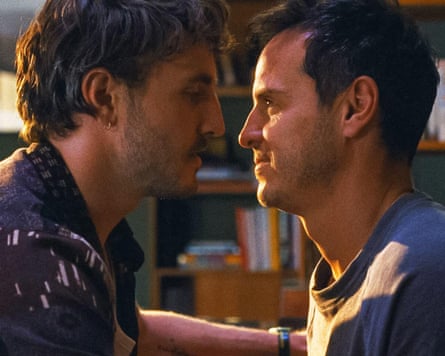
Playwright Simon Stephens, who scripted Scott’s monumental one-man production of Vanya, echoes these sentiments, highlighting the physical and emotional discipline underpinning Scott’s acting style. “He is an actor of incredible emotional insight,” Stephens notes. “His linguistic and physical nuance are balletic. He thinks with relentless curiosity and he works with equal amounts of ferocious energy and care.”
Director Andrew Haigh, who helmed Scott’s devastating, critically lauded performance in 2023’s All of Us Strangers, views the actor’s recent body of work as operating at the absolute peak of modern cinematic performance. “Andrew’s turn is simply astonishing. I struggle to think of a better performance. Andrew embodies the character so completely it feels as if we are watching lived experience. But make noخاب mistake, this is a performance of incredible skill. Andrew is completely fearless in the role.”
Similarly, Elsinore director Simon Stone emphasizes the seamless alchemy between technical precision and emotional truth that defines Scott’s work on set. “Every time I rewatch the film I can’t see Andrew—it’s just Ian,” Stone remarks. “The way he surrenders to the character, to the world, the situation, is beyond compare. Sure, it’s also an effortlessly brilliant performance in terms of technique. But what is most astonishing is how he matches this technique with raw truth. Where other actors may perform an emotion or a state, Andrew presents us with a character surprised by what he is going through. That shock helps the audience be surprised and heartbroken with him, and we can feel empathy in the truest sense.”
Broader Implications for the Academy Awards
As the Hollywood awards season gathers momentum, questions naturally arise regarding how the voting body of the Academy of Motion Picture Arts and Sciences will respond to Elsinore. Historically, actors constitute the largest single branch within the Academy votership, making up nearly 20% of the total eligible voting membership. Performers within the Academy have traditionally responded strongly to narratives that celebrate the deep camaraderie, courage, and resilience inherent to their profession.
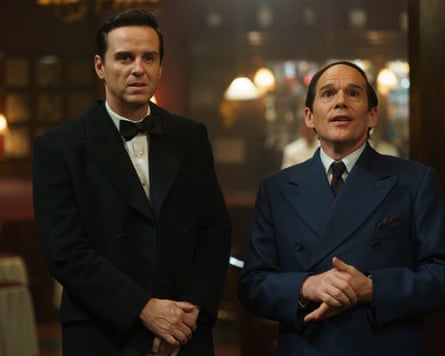
Elsinore captures this ethos directly, positioning Ian Charleson’s historic final theatrical run not merely as a medical tragedy, but as a triumphant assertion of artistic agency against mortality. In a memorable sequence from the film, Charleson attempts to persuade his physician—played by Olivia Colman—to help him summon the physical stamina required to tackle the grueling physical and linguistic demands of Shakespeare’s Danish prince: 1,500 lines of dialogue, a four-hour runtime, and an intense third-act swordfight. “I’d rather die of Hamlet than of Aids,” he declares.
This narrative focus on physical commitment and professional dedication aligns comfortably with the tastes of Academy voters, who have frequently rewarded transformation-heavy, physically demanding biographical performances. Furthermore, Scott’s previous high-profile awards snubs—most notably his omission from the BAFTA nominations for All of Us Strangers despite widespread critical acclaim—have galvanized an ardent grassroots campaign among film enthusiasts and industry insiders alike. Rather than diminishing his prospects, these past slights have only heightened public awareness of his sustained excellence, framing his current Oscar buzz as both long overdue and culturally imperative.
For nearly a century, the Academy has frequently honored performances by actors navigating complex personal realities behind closed doors, alongside straight performers receiving accolades for depicting queer experiences. As the contemporary film landscape shifts toward greater authenticity and inclusivity, a potential victory for Andrew Scott in the spring would represent a historic alignment of artistic brilliance, historical reclamation, and social progress within global cinema.