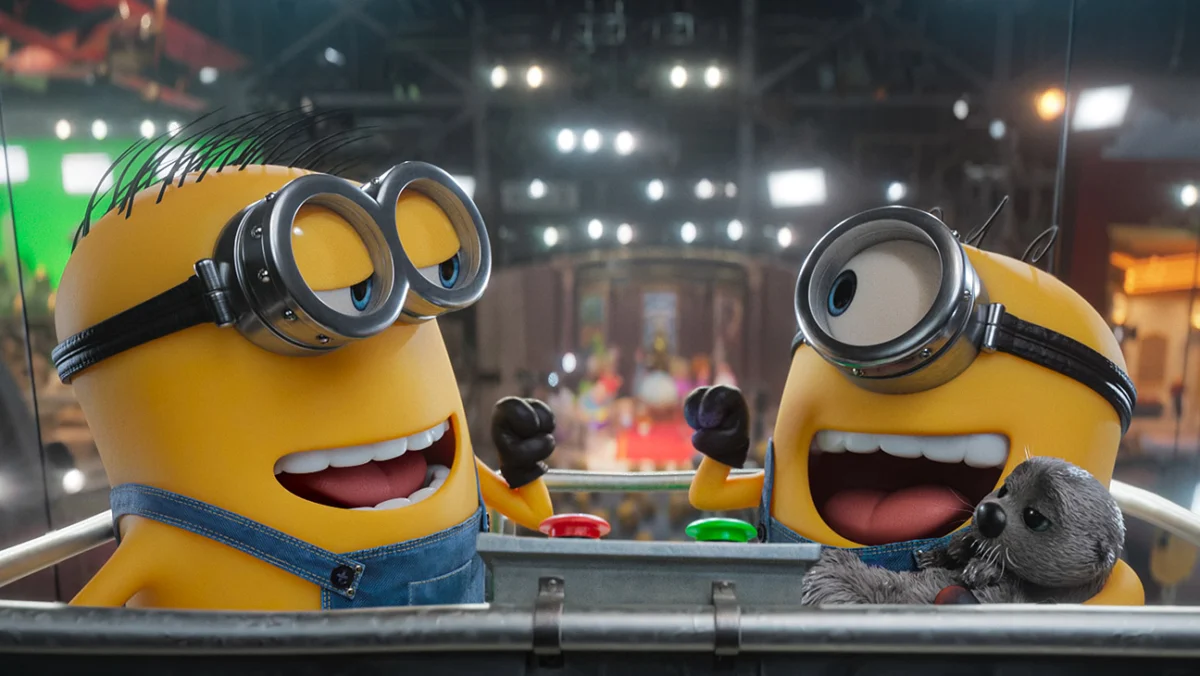
The Fourth of July long weekend at the North American box office saw the vibrant world of animation reclaim its traditional holiday dominance, with Universal and Illumination’s Minions & Monsters securing the top spot. The latest installment in the globally adored Despicable Me universe projected a five-day opening haul of approximately $64.5 million, with a three-day weekend gross of $39.5 million. While these figures were robust enough to comfortably claim number one, they represent a notable deceleration compared to previous franchise entries, sparking industry discussions about the evolving dynamics of even the most reliable animated properties. This shift follows a period earlier in the summer when Gen Z-targeted horror films had surprisingly commanded significant box office attention, signaling a diverse and somewhat unpredictable theatrical landscape.
"Minions & Monsters" Leads, Yet Signals a Shifting Landscape
Universal Pictures and Illumination’s Minions & Monsters, the seventh film in the highest-grossing animated franchise of all time, emerged as the clear victor of the Independence Day holiday frame. Its estimated $64.5 million over the extended five-day period, commencing Wednesday, July 3rd, and concluding Sunday, July 7th, placed it firmly ahead of all competitors. The traditional Friday-to-Sunday three-day weekend estimate stands at $39.5 million. These numbers underscore the enduring appeal of the mischievous yellow characters and their expanding universe.
However, a closer examination reveals a divergence from the explosive openings that have become synonymous with the franchise. For comparison, Minions: The Rise of Gru, which also opened over the Fourth of July weekend in 2022, delivered a staggering $122 million over its five-day debut. This stark contrast, nearly halving the previous Minions-centric film’s opening, suggests a potential inflection point for the beloved series. Industry analysts are now scrutinizing whether this represents a natural tempering of audience enthusiasm, a consequence of increased competition, or broader shifts in moviegoing habits for family-oriented fare.
The Despicable Me franchise began its cinematic journey in 2010 with the original film, quickly establishing itself as a powerhouse. Subsequent releases, including Despicable Me 2 (2013), the first Minions standalone film (2015), Despicable Me 3 (2017), and Minions: The Rise of Gru (2022), consistently delivered monumental global box office returns, frequently exceeding the $900 million mark and often surpassing $1 billion worldwide. This consistent performance cemented its status as a cornerstone of Universal’s theatrical slate and a major player in the global animation market. Minions & Monsters, a direct spinoff further exploring the fantastical elements introduced in the Despicable Me universe, attempts to expand on this legacy.
Overseas, Minions & Monsters continued its global rollout, adding an estimated $87 million to its international coffers this weekend, pushing its cumulative global total into significant territory. The film’s critical reception has been largely positive, earning an "A-" Cinemascore from polled audiences, indicating strong satisfaction among viewers leaving theaters. Critics echoed this sentiment, with the film holding a respectable 90 percent approval rating on Rotten Tomatoes. Frank Schreck, writing for The Hollywood Reporter, acknowledged that while the film might be "a bit overstuffed," he lauded its "surprisingly sophisticated and effective in its satirical humor, with so many visual gags and Easter eggs that you’ll need multiple viewings to catch them all, which is something that clearly won’t be a problem for Universal." This blend of critical appreciation and audience enthusiasm bodes well for its long-term playability, potentially mitigating the impact of a softer opening weekend compared to its predecessors. Co-creator Pierre Coffin, who has been instrumental in shaping the franchise, directed and co-penned the script with Brian Lynch, maintaining creative continuity.
The Enduring Power of Pixar: "Toy Story 3"’s Remarkable Third Weekend
While Minions & Monsters led the charge, the second spot was firmly held by an animated veteran demonstrating remarkable staying power: Disney and Pixar’s Toy Story 3. In its third weekend of release, the film continued to perform strongly, pulling in an estimated $32 million. This represents a decline of approximately 55 percent from its previous weekend, a healthy hold for a blockbuster title. Its consistent performance has propelled its domestic cumulative gross to an impressive $367 million, solidifying its status as one of the year’s top earners. Globally, Toy Story 3 has already crossed the significant $600 million threshold, reaffirming the universal appeal and enduring legacy of the Pixar brand and its flagship franchise.
The Toy Story franchise, which began in 1995 as the first feature-length computer-animated film, has consistently delivered both critical acclaim and commercial success. Each installment has been praised for its emotional depth, innovative animation, and broad appeal across generations. Toy Story 3, originally released in 2010, was a critical darling, winning the Academy Award for Best Animated Feature and earning a Best Picture nomination. Its current impressive run, more than a decade after its initial debut, speaks volumes about the film’s timeless quality and Pixar’s ability to create stories that resonate deeply with audiences. This strong theatrical showing also provides a significant boost for Disney, especially after recent discussions about Pixar films occasionally being routed directly to streaming services. The enduring success of Toy Story 3 in theaters underscores the value of the big-screen experience for premium animated content.
A New Challenger: "Young Washington" and the Angel Studios Phenomenon
A surprising and significant entry into the top three this weekend was Angel Studios and Wonder Project’s Young Washington, which captured the No. 3 spot with an estimated $16.5 million. This performance is particularly noteworthy given the film’s unique distribution model and its thematic focus. Timed to coincide with America’s 250th birthday celebrations, the film stars William Franklyn-Miller and depicts the adventurous formative years of a 20-something George Washington.
Angel Studios has carved out a distinctive niche in the film industry, leveraging a crowdfunding and "pay-it-forward" model that empowers audiences to fund and support projects they believe in. This innovative approach has previously led to significant successes, most notably with Sound of Freedom in 2023, which defied industry expectations to gross over $250 million domestically, and the popular multi-season series The Chosen. Young Washington‘s strong debut further validates Angel Studios’ strategy, demonstrating that there is a substantial audience hungry for content that often falls outside the mainstream Hollywood studio system.
The film’s "A" Cinemascore from audiences indicates exceptional satisfaction, suggesting strong word-of-mouth potential in the coming weeks. This robust audience reception, coupled with its historical subject matter and release during a patriotic holiday, positions Young Washington as a cultural touchstone for a specific demographic. Its success highlights a growing segment of the moviegoing public seeking films that align with their values, historical interests, or spiritual beliefs, providing a valuable counterpoint to the more fantastical or genre-driven blockbusters. The ability of Angel Studios to mobilize this audience through community-driven marketing and distribution presents a fascinating case study in modern film economics and audience engagement.
Superhero Struggles and Veteran Filmmaker Resilience
Below the top three, the box office results presented a mixed bag for other high-profile releases. DC Studios’ Supergirl experienced a steep decline in its second weekend, falling to the No. 4 spot with an estimated $8.5 million. This figure represents a dramatic drop of approximately 80 percent from its opening weekend, a concerning trend for the superhero genre and particularly for the beleaguered DC cinematic universe.
The performance of Supergirl continues a challenging period for DC Studios, which has seen several recent entries struggle to connect with audiences and critics consistently. Under the new leadership of James Gunn and Peter Safran, the studio is undergoing a significant creative overhaul, aiming to reset its cinematic universe. The sharp second-weekend fall for Supergirl underscores the persistent challenges faced by the franchise, including audience fatigue with the superhero genre and a lack of clear narrative cohesion in its current iteration. These results will undoubtedly factor into strategic decisions for future DC projects as the studio attempts to rebuild its brand and regain audience trust.
Rounding out the top five was Steven Spielberg’s Disclosure Day, which continued its steady run in its fourth weekend, bringing in an estimated $5.5 million. While not a front-loaded blockbuster, Spielberg’s latest offering demonstrates the consistent drawing power of a master filmmaker and the enduring appeal of quality adult-oriented drama. Spielberg, a cinematic titan whose career spans over five decades, has consistently delivered critically acclaimed and commercially successful films across a vast array of genres. Disclosure Day‘s sustained presence in the top tier, even with more flashy competition, highlights the importance of strong storytelling and established directorial talent in drawing mature audiences to theaters, particularly in a landscape often dominated by youth-focused spectacles.
Broader Box Office Trends and Industry Implications
The Fourth of July weekend is historically a prime slot for family films and major blockbusters, benefiting from school holidays and patriotic fervor. This year’s results offer several key insights into the current state of the theatrical market.
The performance of Minions & Monsters, while strong enough to lead, indicates that even bulletproof franchises are not immune to the evolving dynamics of audience engagement. Factors such as increased streaming options, higher ticket prices, and a crowded release schedule can contribute to a softening of opening weekend numbers. Studios may need to recalibrate expectations for even their most reliable animated properties, focusing more on long-term legs and global appeal rather than just explosive debuts.
The exceptional longevity of Toy Story 3 underscores the enduring value of genuinely beloved films that transcend generations. Such films become cultural touchstones, drawing in new viewers while retaining the loyalty of original fans, proving that quality content with strong emotional resonance can have an extended life in theaters.
The breakthrough success of Young Washington is perhaps the most intriguing development of the weekend. It reinforces the notion that niche content, particularly that which resonates with specific cultural or ideological demographics, can achieve significant commercial success when effectively marketed and distributed. Angel Studios’ model provides a blueprint for independent filmmakers and studios looking to bypass traditional gatekeepers and connect directly with their target audience. This also signals a growing fragmentation of the audience, where diverse groups seek out content tailored to their interests, moving beyond the traditional tentpole releases.
Conversely, the continued struggles of the superhero genre, exemplified by Supergirl‘s steep drop, point to potential audience fatigue and the urgent need for fresh creative direction within established universes. The consistent flow of superhero content across film and television has raised questions about market saturation and the need for greater differentiation and narrative innovation.
The steady performance of Steven Spielberg’s Disclosure Day serves as a reminder that adult dramas and thrillers, when crafted by acclaimed filmmakers, still hold a vital place in the theatrical ecosystem. These films often rely on critical acclaim and word-of-mouth, demonstrating slower burns at the box office but ultimately contributing to a diverse cinematic offering.
Overall, the summer box office continues its recovery in the post-pandemic era, but not without its complexities. The reliance on fewer, larger tentpole releases remains, yet the success of diverse titles like Young Washington and the enduring appeal of older animated classics suggest a more nuanced and segmented audience. Studios are increasingly challenged to understand these varied demands, balancing the development of new, innovative content with the careful nurturing of established franchises. The Fourth of July weekend of 2024 has certainly provided a rich dataset for these ongoing industry analyses, hinting at a future where success is found not just in scale, but also in strategic targeting and authentic audience connection.