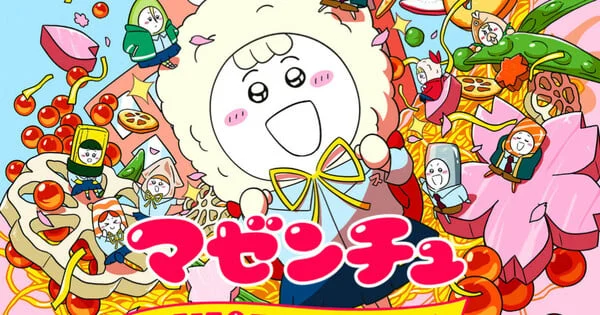
The Japanese animation industry is set to witness an unconventional experiment in cross-platform broadcasting as the original anime series Mazenchu prepares for its premiere on October 7, 2026. Designed as a segment within the long-running Kansai TV morning news and lifestyle program Yoidon!, the series introduces a whimsical premise: a high school populated entirely by anthropomorphic food ingredients. The project, spearheaded by the character brand TORCH and creator Ebi, aims to capture a broad demographic by blending the traditional format of morning television with the growing cultural footprint of bite-sized, episodic animation.
Production and Creative Leadership
The creative vision for Mazenchu is anchored by a team with significant experience in high-end CGI and visual storytelling. Director Yōsuke Takase, whose resume includes influential works such as Berserk: The Golden Age Arc I – The Egg of the King, Halo Legends, and the cult-classic Detroit Metal City, is overseeing the project. His involvement suggests that despite the lighthearted nature of the characters, the production values will adhere to the rigorous standards associated with his previous film and television credits.
The animation is being produced at Studio Nanahoshi, with additional technical contributions from a specialized team. Sound production is being handled by Studio Dugout, while the musical score is curated by Aiin. The offline editing process—a critical component for maintaining the brisk pace required for a morning variety show segment—is being managed by BONJIN. Liberty Animation Studio was responsible for the production of the opening sequence, which was unveiled alongside a narration announcement on September 30, 2026.
Adding a layer of mainstream appeal, the production team announced that actress First Summer Uika will provide the opening narration for the series. Her participation is expected to bridge the gap between niche anime fandom and the general audience of Yoidon!, a program known for its wide-reaching influence in the Kansai region.
The Narrative Premise and Character Concept
Mazenchu posits a world where the hierarchy of the refrigerator and the pantry is inverted. By anthropomorphizing food items as students in a school setting, the series explores themes of identity, social dynamics, and personal growth through the lens of culinary metaphor. The narrative focuses on the interpersonal relationships formed between these characters—described by the production team as a mix of friendships, professional rivalries, and "bittersweet romances."
By placing these stories within a school environment, the creators leverage the "slice-of-life" anime trope, which has historically been a reliable genre for domestic Japanese broadcasting. The challenge for the creative team lies in distilling these complex social interactions into the short time slots permitted by a live morning variety program. This format forces a focus on brevity and immediate character impact, likely relying on the iconic nature of the character designs provided by Ebi to convey personality traits without the need for extensive exposition.
Chronology of Development
The path to the October 7 debut has been a methodical rollout of information designed to sustain public interest. The initial announcement regarding the anime adaptation occurred on September 16, 2026, when TORCH confirmed that the Mazenchu character brand would transition from static media to television animation.
Following the initial reveal, the production team maintained a steady cadence of updates, culminating in the September 30 reveal of the opening video and the involvement of First Summer Uika. This strategy of staggered announcements is standard for contemporary Japanese media, serving to build anticipation in the two weeks leading up to the premiere. By integrating the show into the established ecosystem of Yoidon!, the creators are avoiding the risks associated with launching an original intellectual property in a standalone time slot, instead relying on the built-in viewership of a morning news staple.

Strategic Integration: Anime and Morning Television
The decision to air Mazenchu within Yoidon! represents a growing trend in Japanese broadcasting: the integration of "micro-anime" into non-anime programs. This approach mirrors the success of programs like Fuji TV’s Mezamashi TV, which has long utilized short, character-driven segments to retain viewers during morning transitions.
For Kansai TV, the inclusion of Mazenchu is a strategic move to freshen the demographic appeal of their morning programming. By offering a high-quality, narrative-driven segment, they provide a point of differentiation from competing networks that rely solely on news, weather, and variety talk. Furthermore, this distribution model creates a unique synergy: the anime provides the content, while the network provides the necessary exposure to reach a multi-generational audience, ranging from children preparing for school to adults catching up on current events.
Industry Implications and Market Analysis
The success of Mazenchu will likely be viewed as a barometer for the viability of short-form, brand-originated animation in mainstream media. If the series achieves high engagement, it could signal a shift in how character brands interact with television networks. Rather than waiting for a successful manga or light novel adaptation, companies like TORCH are increasingly looking to create "media-native" content that can be consumed in short, digestible bursts.
The project also reflects the evolving nature of the animation workforce. With the rise of boutique studios like Studio Nanahoshi and the involvement of established directors in smaller-scale projects, the quality floor for television animation has risen significantly. The use of specialized sound and music production companies like Studio Dugout and Aiin indicates that the industry is treating these micro-segments with the same professional rigor as traditional 30-minute series.
Public and Institutional Response
While the anime is currently in its pre-broadcast phase, the reaction from the broader anime community has been one of curiosity regarding the tone and execution of the "food school" concept. The involvement of established industry veterans has mitigated early skepticism, as audiences typically associate names like Takase with a certain level of technical competency.
From an institutional perspective, Kansai TV’s commitment to the project underscores a broader corporate strategy of leveraging local partnerships to produce original content. By acting as the primary broadcaster, the network retains control over the viewing experience, allowing them to time the broadcast to maximize the flow of their morning schedule.
Future Outlook
As of the current report, the Mazenchu committee has not disclosed the total number of episodes, though industry analysts anticipate a seasonal structure aligned with the standard Japanese television quarters. The focus for the immediate future is the successful execution of the October 7 premiere.
The implications for the intellectual property are significant. Should Mazenchu prove popular, the franchise is well-positioned for expansion into merchandise, digital media, and potentially longer-form storytelling. The core strength of the brand—its relatable, anthropomorphic characters—provides a foundation that is highly adaptable to various media formats.
In conclusion, the debut of Mazenchu is not merely the launch of a new series, but a testament to the flexibility of the anime industry in the digital age. By finding a home in the traditional, reliable environment of morning news, the creators have ensured that their work will reach a diverse audience, setting the stage for a unique television experiment that blends the art of animation with the rhythm of daily life. The industry will be watching closely to see if the "school for food" can find a permanent place at the breakfast table of Japanese viewers, potentially defining a new standard for how original animation is introduced to the general public.