The late-summer literary landscape for August was defined by an extensive transatlantic journey stretching from the historic streets of Florence, Italy, through a brief excursion to Britain via France, and back to the Tuscan capital, where critical engagement with 19th-century English literature dominated a reading log totaling fourteen distinct works. This literary output coincided with academic responsibilities supporting scholar Ada Palmer’s Florence Abroad intensive course, providing a fitting backdrop of historical immersion. The reading list for the month showcased a remarkable diversity of form and genre, ranging from obscure Victorian reprints and speculative fiction sequels to rigorous academic examinations of Cold War cultural policy and modern psychological memoirs.
Chronological Survey of August Readings
The month’s reading regimen offered a study in contrasts, balancing comforting mid-century domestic fiction with avant-garde speculative anthologies and rigorous historical analyses.
The literary month opened with D.E. Stevenson’s 1966 novel, The House on the Cliff. The narrative follows a young woman who inherits a Devonshire home from estranged grandparents without financial provisions, yet resolves to inhabit it regardless. While critics note the inherent implausibility of devoted domestic staff remaining unpaid in a rural setting, Stevenson’s mastery of cozy domestic detail and character solidity anchors the narrative within the British tradition of rural escapism.
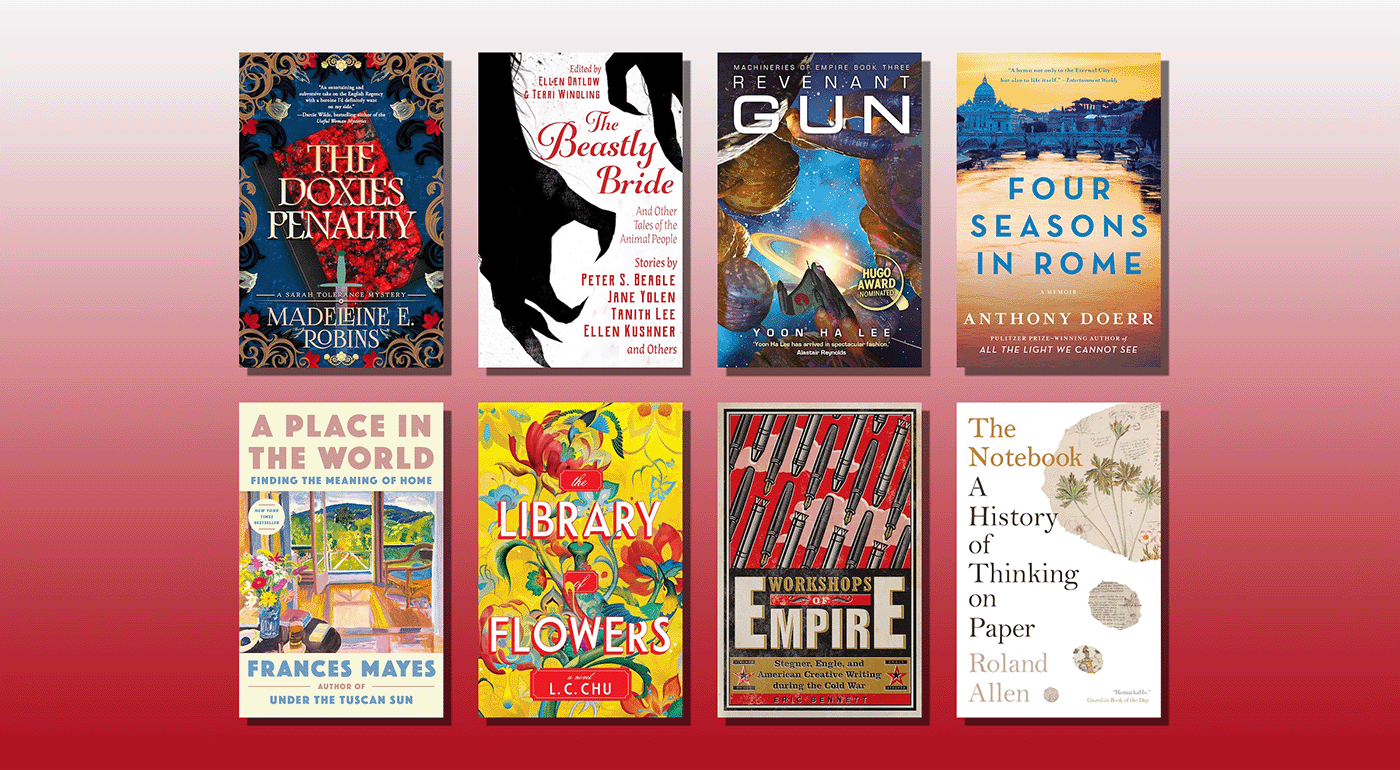
Shifting from domestic realism to speculative hybridity, Ellen Datlow and Terri Windling’s 2010 anthology, The Beastly Bride and Other Tales of the Animal People, presented an exploration of human-animal metamorphosis. Featuring standout contributions from speculative fiction luminaries such as Tanith Lee and Peter Beagle, the collection leans heavily into folkloric interpretations of hybridity, successfully demonstrating the editorial strengths of Datlow and Windling when consumed in measured doses.
Non-fiction contributions included Roland Allen’s The Notebook: A History of Thinking on Paper (2023), which traces the evolution of portable paper media from antiquity to the modern era. Allen’s historical analysis posits that Renaissance polymath Giotto belonged to the first generation to benefit from cheap, readily available paper notebooks for preliminary sketching and ideation. This was complemented by Frances Mayes’s A Place in the World (2022), a reflection on architectural displacement and domesticity following the author’s relocation from her long-established American home in the wake of the global pandemic.
Speculative and Historical Fictions
Genre fiction featured prominently in the August lineup, highlighting both established series continuations and innovative cross-genre experiments.
Madeleine E. Robins returned with The Doxies Penalty (2025), the latest installment in her Sarah Tolerance mystery series set within an alternate Regency London. The narrative investigates the systematic exploitation and murder of retired sex workers, expanding the socio-political scope of the series to foreground the plight of the marginalized in a quasi-historical speculative framework.
In parallel, Lily Chu—writing under a slight pseudonym—released The Library of Flowers (2026), a fantasy-infused exploration of familial legacy and Chinese diaspora culture. The novel follows Lucy, a descendant of a lineage of master perfumers whose fourth-generation magical inheritance fails to manifest. Balancing magical realism with domestic drama, the work examines the psychological weight of generational expectation, drawing favorable comparisons to contemporary speculative works exploring similar domestic and cultural themes.
Scholarship on cross-cultural narrative structures was further represented by Henry Lien’s Spring, Summer, Asteroid, Bird (2025), a concise critical volume evaluating Eastern storytelling frameworks against traditional Western dramatic expectations.
Archival Recoveries and Poetry
Historical and poetic texts retrieved from archival repositories and public domain initiatives such as Project Gutenberg provided a bridge to older literary traditions.
Charles Godfrey Leland’s Legends of Florence (1895), recommended by fellow author James Cambias, offered an eccentric entry into Tuscan folklore. Unlike conventional anthropological collections, Leland’s text blurs the line between historical transcription and creative fabrication, featuring an internal narrator who converses directly with an alleged local witch. Despite questions regarding its authenticity, the text provided source material for contemporary verse creation.
Poetic collections included Willa Cather’s April Twilights and Other Poems (1903). While acknowledging Cather’s mastery in her later prose works, the early verse collection reveals a degree of artistic hesitation and thematic fragmentation, though maintaining moments of distinct lyrical clarity.
Literary History and Cold War Cultural Engineering
Among the most analytically significant non-fiction titles evaluated during the period was Eric Bennett’s Workshops of Empire: Stegner, Engle, and American Creative Writing During the Cold War (2015). Bennett’s scholarly work presents a thesis regarding the institutional funding of prominent creative writing programs, such as those at the University of Iowa and Stanford University. According to Bennett’s historical research, the Rockefeller Foundation and the Central Intelligence Agency covertly financed these workshops during the McCarthy era to cultivate an apolitical, formally restrictive aesthetic—epitomized by Ernest Hemingway’s The Old Man and the Sea—which subsequently became the unexamined standard for serious American fiction.
Complementing this archival investigation were The Letters of Elizabeth Barrett Browning Volume 1 (2011), covering correspondence up to 1850. These letters provide a domestic and social counterweight to her famous romantic correspondence with Robert Browning, documenting her elopement and subsequent relocation to Florence through the lens of contemporary social correspondence.
Memoir and Victorian Standouts
Memoirists offered acute observations of urban life and familial responsibility. Anthony Doerr’s Four Seasons in Rome (2007) chronicled the American author’s year-long residency in the Italian capital with his wife and newborn twins, blending domestic trials with civic observations during a period of historic public mourning.
The most prominent discovery of the month, however, was Mrs. Oliphant’s 1865 Victorian novel, Miss Marjoribanks. Following the protagonist Lucilla Marjoribanks as she returns from a European tour to manage her father’s household and systematically reform the social architecture of her provincial town, the novel subverts conventional Victorian tropes through sharp irony and psychological precision. Long out of standard print rotation, the text demonstrates the enduring viability of serialized 19th-century fiction when rediscovered through contemporary digital archiving initiatives.