Production Background and Distribution Transition
The journey of Avatar Aang: The Last Airbender to the screen was one of significant industry speculation. Originally announced as a tentpole theatrical release, the project was showcased during several CinemaCon presentations as a cornerstone of Paramount Pictures’ upcoming animation slate. The decision to position the film as a theatrical event was supported by the recent global success of high-profile animated features, such as "Spider-Man: Across the Spider-Verse" and various high-grossing anime films like "Demon Slayer: Mugen Train."
However, in a strategic pivot that surprised industry analysts, Paramount Global opted to shift the film’s debut to its proprietary streaming service, Paramount+. This decision was reportedly driven by a desire to bolster the platform’s library with "must-watch" exclusive content for its subscriber base, particularly targeting the demographic that grew up with the original series. The production faced further complications earlier this year when the film was leaked in its entirety across several online platforms. Despite these setbacks, the final product retains the visual fidelity and scope originally intended for an IMAX-scale presentation, utilizing advanced animation techniques that blend traditional hand-drawn aesthetics with modern digital rendering.
Narrative Setting: The Post-War Era
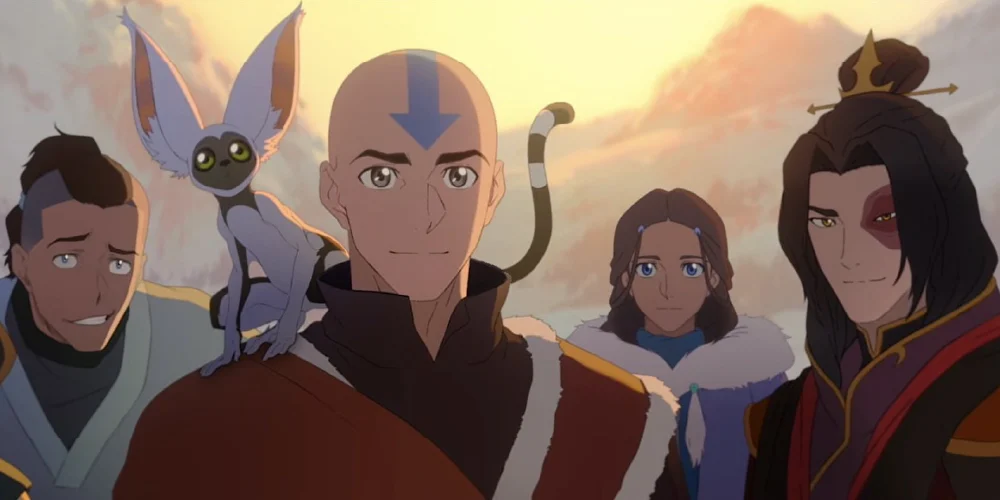
The film is set approximately 13 years after the conclusion of the Hundred Year War. This specific chronological placement allows the narrative to explore a previously undocumented period in the life of Aang (voiced by Eric Nam) as he transitions from a teenage savior to a young adult leader. At the age of 25, Aang is grappling with the complexities of geopolitical reconstruction and the founding of Republic City alongside Fire Lord Zuko (Steven Yeun) and Water Tribe leader Katara (Jessica Matten).
The plot is catalyzed by the emergence of a radicalized faction known as "The Denied." This group is comprised of non-benders who feel marginalized in a world where elemental manipulation dictates social and political hierarchy. Seeking to level the playing field, The Denied pursue an ancient map leading to the Staff of Sonam. Sonam, a legendary Air Nomad Avatar from a previous cycle, was rumored to have possessed spiritual artifacts capable of bestowing immense power upon those without innate bending abilities. This conflict serves as a thematic precursor to the Equalist movement seen later in "The Legend of Korra," providing deeper context for the systemic tensions within the Avatar world.
A New Vocal Ensemble for Mature Characters
One of the most notable changes in this production is the complete overhaul of the voice cast, reflecting the aging of the primary characters. The selection of established actors underscores the film’s aim to present a more mature iteration of the "Gaang."
- Eric Nam (Aang): The musician and actor brings a sense of grounded optimism to Aang, portraying a man who is no longer a child but still carries the lightness of the Air Nomads.
- Steven Yeun (Zuko): Yeun, known for his roles in "Minari" and "Invincible," takes over the role of Fire Lord Zuko. His performance emphasizes the character’s ongoing journey of redemption and the heavy burden of leadership.
- Jessica Matten (Katara): Matten portrays a version of Katara who is a master bender and a stabilizing force in the group.
- Dave Bautista (Togah): Bautista provides the voice for Togah, an ancient Air Nomad discovered frozen in ice—a direct mirror to Aang’s own origin. Togah serves as a cultural mentor, offering Aang a connection to his heritage that was previously thought lost.
- Freida Pinto (Sonam): Pinto voices the mysterious Avatar Sonam, appearing in visions and flashbacks to guide Aang through the spiritual dangers of her legacy.
The cast also includes Taika Waititi, Geraldine Viswanathan, Ronny Chieng, Ken Jeong, and Ke Huy Quan in various supporting roles, further elevating the film’s profile through high-caliber talent.
Visual Innovation and Animation Techniques
Under the direction of Lauren Montgomery, who previously served as a storyboard artist and director on "The Legend of Korra" and "Voltron: Legendary Defender," the film pushes the boundaries of the franchise’s visual language. The animation style is a sophisticated hybrid of 2D character designs and 3D environment rendering, a technique popularized by films like Netflix’s "Klaus."
This approach allows for volumetric lighting and a sense of cinematic depth that was previously unattainable in the television format. The film’s art direction emphasizes the "Golden Hour" aesthetic, with intricate lighting effects that simulate natural sunshine filtering through environments. The landscapes—ranging from the high-altitude temples of the Air Nomads to the burgeoning industrial architecture of Republic City—are rendered with a level of detail that justifies the film’s initial theatrical intentions. The fluidity of the "bending" sequences remains a priority, with martial arts choreography once again serving as the foundation for the elemental combat.
Socio-Political Themes and Global Resonance
Avatar Aang: The Last Airbender continues the franchise’s tradition of exploring complex social issues through the lens of fantasy. The film addresses themes of institutionalized power and the resentment that can brew when certain segments of society feel left behind by progress.
The struggle of "The Denied" reflects real-world discussions regarding authoritarianism and the responsibilities of the "powerful" toward the "powerless." Aang’s struggle is not merely physical but philosophical: how does a pacifist maintain peace in a world where his very existence as the Avatar creates a power imbalance? The film’s focus on the founding of Republic City highlights the challenges of creating a multi-cultural society and the inevitable friction that arises during such transitions. These themes resonate with contemporary global political climates, where debates over equality, governance, and the ethics of power remain at the forefront of public discourse.
Chronology of the Avatar Franchise
To understand the placement of this film, it is helpful to look at the timeline of the franchise’s development:
- 2005–2008: "Avatar: The Last Airbender" (Original Series) – Follows 12-year-old Aang’s journey to defeat the Fire Nation.
- 2010: "The Last Airbender" (Live-Action Film) – A critical and commercial disappointment directed by M. Night Shyamalan.
- 2012–2014: "The Legend of Korra" (Follow-up Series) – Set 70 years after the original, following Aang’s successor.
- 2021: Formation of Avatar Studios – Paramount and Nickelodeon announce a dedicated studio for the franchise.
- 2024: "Avatar Aang: The Last Airbender" (Animated Film) – A mid-quel set 13 years after the original finale.
- Future: Upcoming projects include a series focused on the Earth Kingdom Avatar following Korra and additional standalone films.
Industry Implications and Critical Analysis
The release of Avatar Aang: The Last Airbender is a litmus test for the viability of the "Avatar Studios" model. By focusing on high-quality animation and mature storytelling, Paramount is attempting to replicate the "cinematic universe" success seen in franchises like Marvel or Star Wars, but within the realm of serialized animation.
From a business perspective, the decision to move the film to Paramount+ suggests a shift in how studios value intellectual property. Rather than relying on a one-time box office window, Paramount is using Aang’s return to drive long-term engagement on its streaming platform. The film’s 99-minute runtime is lean by modern standards, suggesting a focus on tight, character-driven storytelling rather than the sprawling epic nature of the original seasons.
For longtime fans, the film serves as an essential piece of lore that fills a significant gap in the timeline. While it may not be the ideal entry point for newcomers due to its reliance on established character dynamics and world-building, it succeeds as a "labor of love" for the existing audience. The inclusion of new historical figures like Avatar Sonam and the Air Nomad Togah enriches the mythos, ensuring that the story feels like an expansion rather than a mere retread of past successes.
In conclusion, Avatar Aang: The Last Airbender represents a sophisticated evolution of a beloved property. Through its blend of technical innovation, a prestigious new voice cast, and timely thematic explorations, it reaffirms the franchise’s position as a pillar of modern animated storytelling. As the first of many planned projects from Avatar Studios, it sets a high bar for the future of the Four Nations.