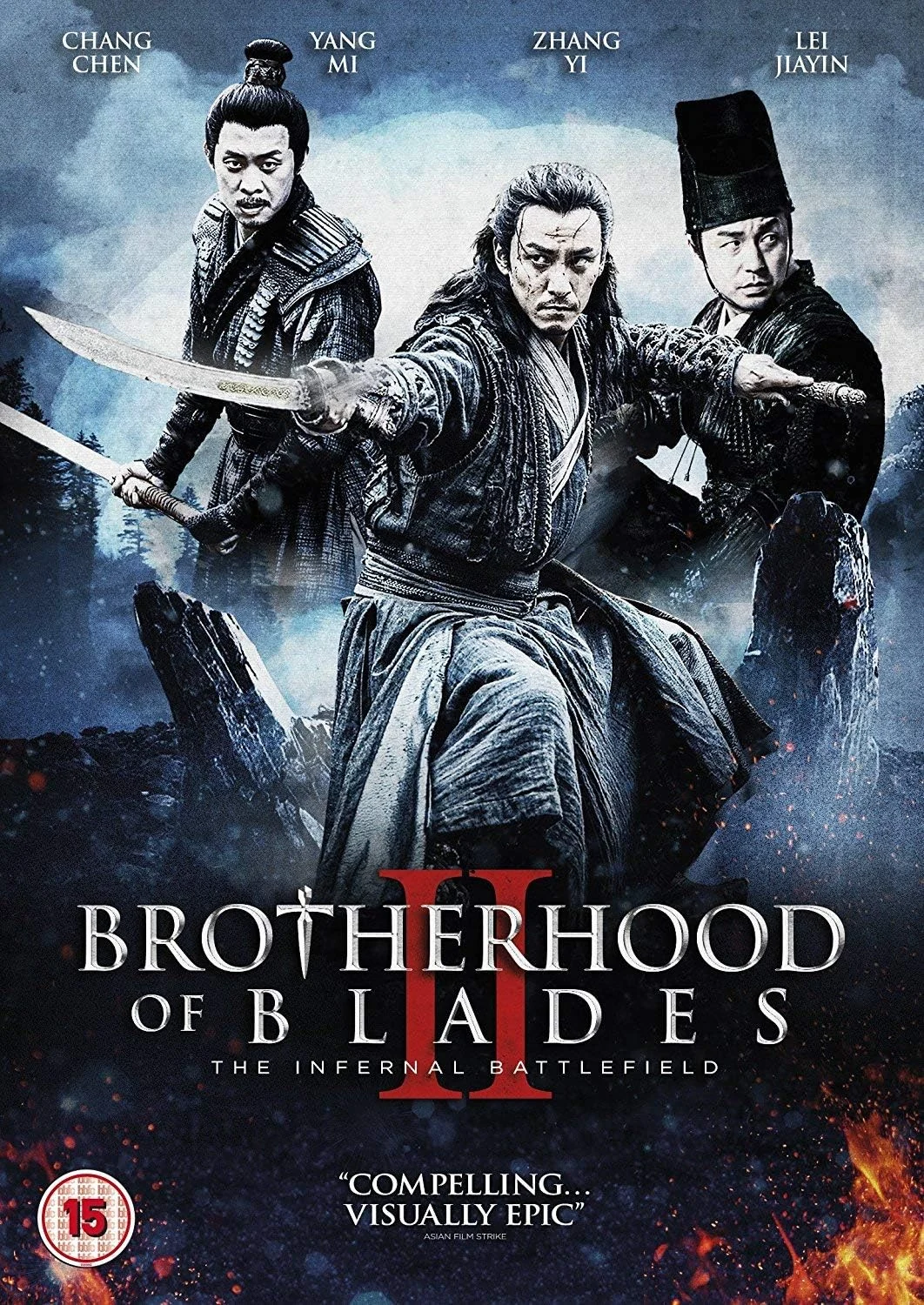
Chinese director Lu Yang’s cinematic universe, "Brotherhood of Blades," expanded in 2017 with the release of Brotherhood of Blades II: The Infernal Battlefield. While chronologically a prequel to the critically acclaimed 2014 original, this installment solidified the franchise’s reputation for its intricate historical setting, compelling characters, and meticulously choreographed action. Starring Taiwanese actor Chang Chen reprising his role as the stoic Jinyiwei officer Shen Lian, the film delves deeper into the treacherous political landscape of the late Ming Dynasty, exploring themes of loyalty, corruption, and the relentless pursuit of justice in a morally ambiguous world. Its release was met with significant critical praise and commercial success, outperforming its predecessor at the box office and garnering multiple nominations and awards, particularly for its technical brilliance and compelling performances.
Historical Canvas: The Late Ming Dynasty and the Jinyiwei
To fully appreciate the narrative intricacies of Brotherhood of Blades II, an understanding of its historical backdrop is paramount. The film is set during the twilight years of the Ming Dynasty (1368-1644), a period marked by profound political instability, rampant corruption, and the escalating power struggle between the imperial court’s eunuch faction and the traditional scholar-official class. At the heart of this conflict were the Jinyiwei, or Embroidered Uniform Guards of the Imperial Court. Established in 1368 by the Hongwu Emperor, the Jinyiwei served as the emperor’s secret police and elite military force, possessing vast powers, including the right to arrest, interrogate, and punish anyone, regardless of their social status, often operating outside the traditional legal framework. Their iconic embroidered uniforms and sabers became symbols of both imperial authority and ruthless oppression.
By the late Ming period, the Jinyiwei, like many imperial institutions, had become deeply entangled in factional politics. Their power was often wielded by influential figures, most notably the court eunuchs, who had gained unprecedented sway over state affairs. The film specifically places its events during the ascendancy of Wei Zhongxian, arguably the most notorious eunuch in Chinese history. Wei Zhongxian (1568-1627) effectively controlled the imperial government during the reign of Emperor Tianqi (1620-1627), operating a vast network of spies and informants, and ruthlessly suppressing any opposition. His regime was characterized by widespread corruption, arbitrary arrests, torture, and executions, leading to a climate of fear and paranoia throughout the empire. He established his own faction, often referred to as the "Eunuch Party," which directly challenged the authority of the traditional scholar-officials.
Opposing Wei Zhongxian and his faction was the Donglin Movement, a group of Confucian scholar-officials who advocated for moral integrity, good governance, and a return to classical Confucian principles. They were critical of the eunuchs’ growing power and the widespread corruption that plagued the government. The Donglin scholars, though intellectually formidable, often lacked the military and political leverage to directly counter Wei Zhongxian’s ruthlessness. Their struggle represents a key ideological conflict of the era, one that deeply informs the motivations and dilemmas faced by the characters in Brotherhood of Blades II. The film skillfully uses this historical tension as a backdrop, weaving a fictional narrative that feels deeply rooted in the political realities of the time, highlighting the impossible choices faced by individuals caught between warring factions and a collapsing imperial system.
Narrative Unveiled: A Prequel’s Intricate Plot
Brotherhood of Blades II: The Infernal Battlefield ingeniously functions as a prequel, setting its events several months prior to the original 2014 film. This allows director Lu Yang and his screenwriters Chen Shu and Yu Yang to explore the origins and formative experiences of Shen Lian, the taciturn Jinyiwei officer, without being constrained by the established ending of the first movie. The story opens with Shen Lian, a senior Jinyiwei officer from the Northern Bureau, and his team investigating a gruesome massacre. The victims include a eunuch from the Eastern Bureau, a faction known for its loyalty to Wei Zhongxian, hinting at deeper political machinations. Shen Lian’s attempt to prevent the ambitious junior officer Ling Yunkai from taking over this sensitive case immediately establishes the internal rivalries and power plays within the Jinyiwei.
A pivotal incident occurs when Shen Lian’s subordinate, Yin Cheng, drunkenly insults the Emperor, leading to his arrest by Ling Yunkai. Rather than face imprisonment and likely torture by the Court, Yin Cheng chooses to die by Shen Lian’s hand, a poignant moment that underscores the brutal loyalty and grim realities of their profession. This event not only deepens Shen Lian’s character but also sets him on a path of moral compromise and difficult decisions.
Believing a plot to overthrow the Emperor is brewing, orchestrated by rebels associated with the Donglin Movement, high-ranking Northern Bureau officer Lu Wenzhao dispatches Ling Yunkai and Shen Lian to apprehend a suspected rebel: the enigmatic painter Beizhai, accused of sedition. This assignment thrusts Shen Lian into a complex personal dilemma. He discovers that Beizhai is the same mysterious woman he had previously encountered and developed an unspoken attraction to. The situation escalates when the opportunistic Ling Yunkai attempts to rape Beizhai while she is a prisoner. Left with no other recourse, Shen Lian is forced to kill Ling Yunkai to protect her, a desperate act that plunges him into a spiraling conspiracy.
To cover his tracks, Shen Lian falsely claims that rebels ambushed them. This leads Lu Wenzhao, who shares a strong bond with Shen Lian after Shen saved his life years ago on the battlefield, to assign another officer, Pei Lun, to investigate Ling Yunkai’s death. Pei Lun, a keen and persistent investigator, quickly develops suspicions about Shen Lian’s involvement. Concurrently, the Donglin rebels, now aware of Shen Lian’s predicament, blackmail him into burning down the Jinyiwei Bureau’s records library in exchange for Beizhai’s safety. As Pei Lun closes in, Shen Lian finds himself ensnared in a widening web of intrigue, uncovering further conspiracies involving Wei Zhongxian, the Donglin rebels, and a plot to assassinate the Emperor himself. The narrative expertly juggles these interconnected threads, transforming what initially appears to be a detective story into a high-stakes political thriller.
Crafting the Vision: Directorial Approach and Screenwriting Excellence
Director Lu Yang, alongside screenwriters Chen Shu and Yu Yang, crafted a screenplay that is both gripping and remarkably well-structured, a feat particularly noteworthy given the film is not an adaptation of a pre-existing wuxia novel. Their original narrative successfully blends historical political intrigue with personal drama and thrilling action. The writing team’s meticulous attention to detail is evident in the depiction of the late Ming Dynasty’s political landscape. The screenplay effectively highlights the pervasive corruption, the absurdities of court politics, and the unchecked influence of the eunuch faction under Wei Zhongxian. This historical fidelity, while taking creative liberties for dramatic effect, lends a palpable sense of authenticity and weight to the unfolding events.
Lu Yang’s directorial vision for Brotherhood of Blades II is characterized by its gritty realism and atmospheric tension. Unlike traditional wuxia films that often emphasize fantastical elements and gravity-defying stunts, Lu Yang grounds his action in a more practical, brutal reality, enhancing the sense of danger and consequence for the characters. His direction is precise, maintaining a taut pace that keeps the audience invested in Shen Lian’s escalating predicament. He masterfully balances the intricate plot twists with moments of quiet character development, allowing the audience to empathize with Shen Lian’s moral struggles. The visual storytelling, supported by stunning cinematography, effectively conveys the oppressive atmosphere of the imperial court and the bleakness of the period.
The thematic depth of the film is a testament to the strong collaboration between director and writers. Brotherhood of Blades II explores complex themes such as the nature of loyalty in a corrupt system, the personal cost of upholding one’s principles, and the blurred lines between good and evil when survival is at stake. Shen Lian, despite being an agent of a ruthless regime, is presented as a man grappling with his conscience, trying to navigate a world where true justice seems unattainable. This nuanced portrayal elevates the film beyond a simple action-adventure, imbuing it with significant dramatic resonance.
Performances of Distinction: The Ensemble Cast
The success of Brotherhood of Blades II is significantly bolstered by its exceptional ensemble cast, led by the charismatic and understated performance of Chang Chen as Imperial Guard Shen Lian. Known for his dedicated method acting, Chang Chen immersed himself in the role, studying swordsmanship to bring authenticity and agility to his fight scenes. His portrayal of Shen Lian is a masterclass in subtlety; a man of few words, his internal struggles and unwavering resolve are conveyed through his intense gaze and nuanced physical performance. This dedication to his craft, a hallmark of Chang Chen’s career, makes Shen Lian a profoundly compelling protagonist, a figure of quiet integrity trapped in a world of moral decay.
The supporting cast is equally vital in driving the intricate plot forward. Zhang Yi delivers a standout performance as Lu Wenzhao, the high-ranking Jinyiwei commander. Lu Wenzhao is a complex character, at times comedic, at others fiercely loyal, and Zhang Yi absolutely nails the role, providing some of the film’s most memorable lines and contributing significant emotional depth to the narrative, particularly in his bond with Shen Lian.
Lei Jiayin earned a nomination for Best Supporting Actor at the Golden Horse Awards for his portrayal of the persistent investigating officer Pei Lun. His character serves as a crucial antagonist, constantly challenging Shen Lian and pushing the plot’s investigative elements. Pei Lun’s intelligence and unwavering dedication to his duty create a formidable obstacle for Shen Lian, and Lei Jiayin imbues the character with a compelling mix of shrewdness and integrity.
Despite limited screen time, Chin Shih-chieh returns as the chillingly effective Wei Zhongxian. His presence, though brief, is immensely powerful, establishing the character as the epitome of evil and corruption, a pervasive force casting a long shadow over the entire court. Liu Fengchao, as the Imperial Guard Zheng, also delivers a memorable performance, particularly highlighted in his dynamic fight sequence with Shen Lian, showcasing his unique use of the meteor hammer, which stands out as one of the film’s most exciting action moments. Xin Zhilei is equally impressive as Ding Baiying, a formidable rebel swordswoman associated with the Donglin faction, wielding a massive sword with striking power and grace.
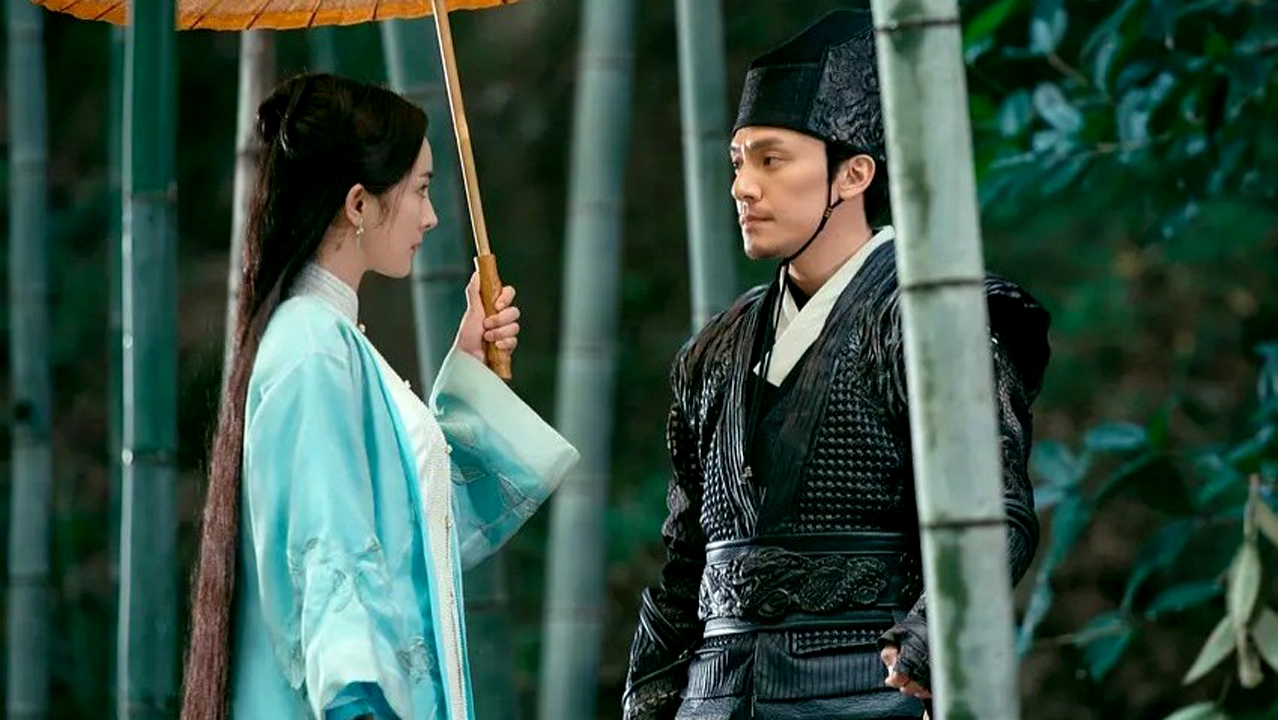
While the majority of the cast delivers stellar performances, Yang Mi’s portrayal of the mysterious painter Beizhai, who also serves as Shen Lian’s love interest, received mixed reviews. Her character, intended to be naive yet crucial to the plot, was seen by some as less impactful compared to the strong performances of her co-stars. Nonetheless, the overall strength of the ensemble ensures that Brotherhood of Blades II remains a character-rich and emotionally engaging cinematic experience.
Visual Splendor and Action Choreography
Beyond its compelling narrative and performances, Brotherhood of Blades II: The Infernal Battlefield is a feast for the eyes, boasting arresting visuals and meticulously crafted production design. The film’s aesthetic is a key component of its immersive quality. The costumes worn by the Jinyiwei and their commanders are particularly noteworthy. Designed by Liang Tingting and her team, they are vibrant, richly detailed, and historically inspired, effectively conveying the hierarchy and menacing aura of the imperial guards. Liang Tingting’s exceptional work earned her a nomination for Best Makeup and Costume Design at the 54th Golden Horse Awards, underscoring the film’s commitment to visual authenticity and grandeur.
The action choreography, helmed by Sang Lin, is another significant highlight, earning him the award for Best Action Choreography. Unlike many contemporary wuxia films that rely heavily on wirework and fantastical elements, the action in Brotherhood of Blades II is grounded, brutal, and intensely realistic. The fight sequences are designed to emphasize the characters’ skills, the weight of their weapons, and the desperate stakes of their encounters. The aforementioned fight between Shen Lian and Zheng, with the latter’s formidable meteor hammer, is a prime example of the innovative and thrilling choreography. Each clash of blades feels visceral and impactful, contributing to the film’s overall tension and excitement.
The cinematography also plays a crucial role in establishing the film’s dark and atmospheric tone, effectively capturing the shadowy corridors of the imperial court and the bleakness of the historical period. Combined with the evocative musical score by acclaimed composer Kenji Kawai, who received a nomination for Best Original Film Score, the film achieves a cohesive and immersive sensory experience. Kawai’s music perfectly complements the on-screen drama, elevating moments of tension, despair, and fleeting hope. The overall visual and auditory craftsmanship transforms Brotherhood of Blades II into not just an action film, but a work of cinematic art.
Commercial and Critical Acclaim
Upon its release, Brotherhood of Blades II: The Infernal Battlefield was met with considerable critical acclaim, with reviewers praising its intricate plot, strong performances, and exceptional technical execution. The film’s ability to weave a compelling historical narrative with thrilling action sequences resonated strongly with both critics and audiences. Notably, the prequel surpassed the box office performance of its predecessor, indicating a growing appreciation for the franchise’s unique blend of historical drama and martial arts.
The film’s recognition at prestigious awards ceremonies further solidified its standing. Beyond Liang Tingting’s nomination for Best Makeup and Costume Design and Kenji Kawai’s nomination for Best Original Film Score at the 54th Golden Horse Awards, Sang Lin’s win for Best Action Choreography was a significant testament to the film’s innovative and impactful fight sequences. Lei Jiayin’s nomination for Best Supporting Actor also highlighted the strength of the ensemble cast. These accolades collectively underscored the film’s achievement in various aspects of filmmaking, from its detailed historical recreation to its dynamic action.
Audience reception was also overwhelmingly positive, with many commending its ability to deliver a complex narrative without sacrificing the excitement of the action. The film’s success demonstrated a strong appetite for historical action dramas that offer more than just spectacle, providing intellectual depth and emotional resonance. The strong box office performance was a clear indicator of its widespread appeal, both domestically and internationally.
Thematic Resonance and Modern Relevance
On its surface, Brotherhood of Blades II: The Infernal Battlefield functions as a sophisticated detective story, as Shen Lian investigates a series of murders and conspiracies. However, the narrative quickly evolves into a profound exploration of power struggles, shifting allegiances, and betrayal within a deeply corrupt Imperial Court. The film’s thematic core lies in its examination of individual morality against the backdrop of systemic corruption. Shen Lian, an agent of an oppressive regime, is repeatedly forced to make impossible choices, highlighting the moral compromises inherent in serving a flawed system. His struggle to maintain a semblance of integrity and justice in a world devoid of it is a central, poignant theme.
The film meticulously portrays the suffocating nature of factionalism and the ruthlessness of political power. The conflict between the eunuch faction, led by Wei Zhongxian, and the Donglin Movement, representing a quest for moral governance, serves as a microcosm of larger historical struggles. This exploration of political intrigue, where loyalty is a fragile commodity and betrayal lurks at every corner, resonates beyond its historical setting, offering timeless insights into the dynamics of power and corruption that remain relevant in contemporary society.
Furthermore, Brotherhood of Blades II delves into the personal cost of duty and survival. Characters are not simply heroes or villains; they are complex individuals driven by a mix of ambition, fear, loyalty, and desperation. Shen Lian’s quiet heroism stems not from a desire for glory, but from a deeply ingrained sense of duty and a reluctant commitment to protect the innocent, even at immense personal risk. This nuanced characterization and thematic depth elevate the film from a mere action spectacle to a compelling drama that encourages reflection on justice, conscience, and human resilience in the face of overwhelming odds.
Legacy and Future of the Brotherhood of Blades Franchise
Brotherhood of Blades II: The Infernal Battlefield has cemented its place as a significant entry in modern Chinese historical action cinema. Its critical and commercial success not only validated director Lu Yang’s vision but also signaled a potential new direction for the wuxia genre, moving towards more grounded, historically informed narratives. The film demonstrated that audiences were eager for stories that combined high-stakes action with intricate political intrigue and complex character development, departing from the more fantastical elements that sometimes dominate the genre.
The success of the prequel strengthened the "Brotherhood of Blades" as a viable franchise. While a third installment has been discussed and is highly anticipated by fans, the existing two films stand as complete and compelling works. They showcase a commitment to high production values, detailed storytelling, and exceptional performances, setting a high bar for future historical action dramas emerging from China. The franchise has contributed to a renewed interest in exploring the rich tapestry of Chinese history through a cinematic lens, particularly focusing on periods of political turmoil and the moral dilemmas faced by individuals caught within them.
The impact of Brotherhood of Blades II extends to its influence on filmmaking techniques within the genre. Its emphasis on realistic action choreography, stunning costume design, and atmospheric cinematography has likely inspired other productions to pursue similar levels of authenticity and visual artistry. The film’s ability to resonate with both domestic and international audiences further demonstrates the universal appeal of its themes and its high production quality. As a benchmark for sophisticated historical action, Brotherhood of Blades II ensures that the legacy of Shen Lian and the treacherous world of the Ming Dynasty Jinyiwei will continue to captivate audiences for years to come.
In conclusion, Brotherhood of Blades II: The Infernal Battlefield stands as a monumental achievement in Chinese cinema. Its masterful blend of historical context, intricate plot, compelling performances, and breathtaking action creates an engaging and visually impressive experience. The film is not merely a prequel but a vital piece of a larger narrative, enriching the world of the Jinyiwei and solidifying its place as a benchmark for sophisticated historical action filmmaking.