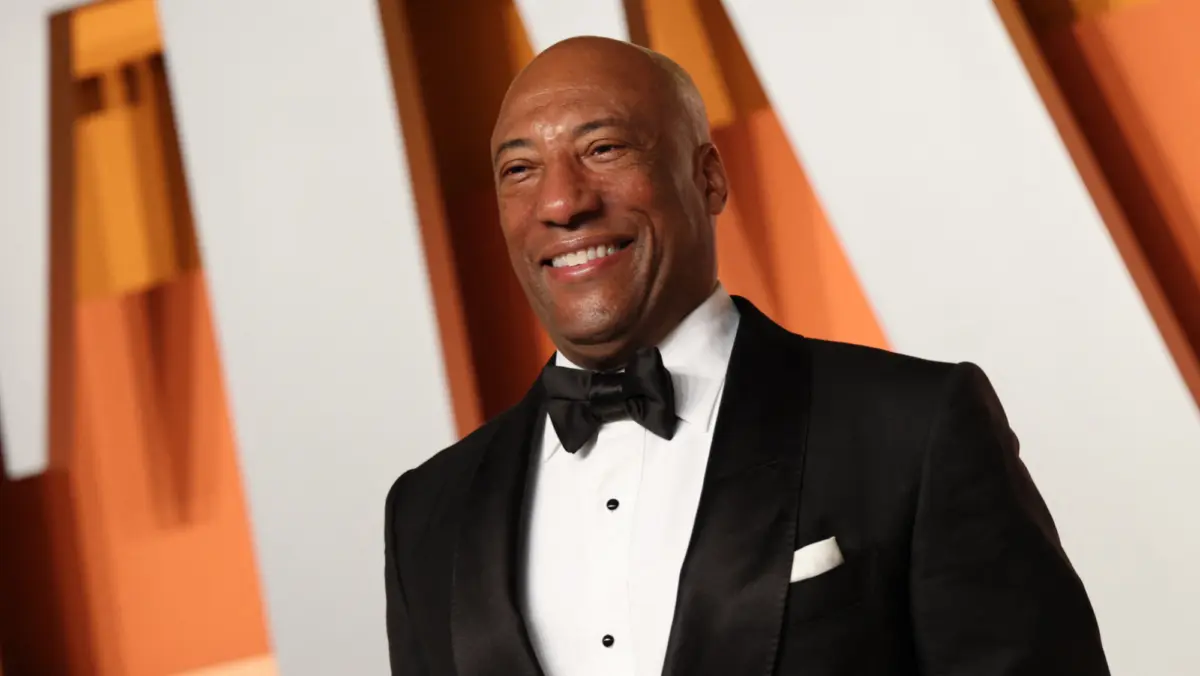
Media mogul Byron Allen has officially exited his position in Starz, signaling a swift and definitive end to what was once framed as an ambitious play to consolidate his influence in the premium cable and streaming landscape. According to regulatory filings submitted to the Securities and Exchange Commission (SEC) this past Thursday, Allen has offloaded his entire 10.7 percent interest in the company. The move represents a notable reversal for the Allen Media Group founder, who had only recently acquired the stake from former U.S. Treasury Secretary Steve Mnuchin’s Liberty 77 investment fund for $25 million earlier this year.
The liquidation of these shares, which occurred in a series of transactions throughout August and September, resulted in proceeds of just under $45 million. This represents a significant short-term return on his initial capital outlay, effectively netting Allen a profit of approximately $20 million in a matter of months. While the financial windfall is clear, the strategic pivot leaves industry observers questioning the future of his broader digital and streaming aspirations.
A Chronology of the Starz Acquisition and Exit
The trajectory of Allen’s involvement with Starz was marked by rapid escalation and immediate institutional resistance. In early 2024, Allen moved to acquire a substantial minority stake from the Mnuchin-led Liberty 77 fund, positioning himself as a major shareholder following the company’s formal separation from Lionsgate.
The market reaction was swift. Upon disclosure of the stake, the Starz board of directors—evidently wary of a potential hostile takeover—promptly implemented a “poison pill” shareholder rights plan. This defensive measure was designed to dilute the value of shares held by any entity that attempted to acquire a controlling interest without board approval. Despite this significant hurdle, Allen remained publicly bullish. In subsequent interviews, he maintained that the poison pill would not deter his long-term objectives.
“When I decide to buy the whole company—I will buy the whole company—I do plan on controlling Starz,” Allen stated earlier this year. He articulated a vision in which Starz would serve as the premium subscription video-on-demand (SVOD) anchor for a larger media ecosystem, specifically noting how the platform could complement the digital scale and audience engagement of BuzzFeed, in which he also acquired a controlling stake earlier this year. However, the latest SEC filings confirm that his appetite for this particular acquisition has vanished, marking the end of his attempt to steer the direction of the premium cable network.
Starz in Transition: A Financial Overview
The departure of Allen comes at a pivotal moment for Starz. The company is currently navigating a complex transition period following its spin-off from Lionsgate, an effort intended to streamline operations and allow the business to focus on its core competencies in prestige television.
In its most recent Q3 2026 earnings report, released concurrently with the news of Allen’s exit, Starz presented a cautiously optimistic outlook. The company reported a meaningful increase in revenue, bolstered by the sustained popularity of its flagship franchises. Power, the gritty urban drama series, and Outlander, the long-running historical fantasy epic, continue to serve as the primary pillars of the network’s subscriber retention strategy. Furthermore, Starz reported a narrowing of its net losses, suggesting that the company’s recent cost-cutting measures and strategic restructuring are beginning to yield tangible results.
For shareholders, the stability of these core franchises is vital. Starz has faced increased pressure to prove its viability as a standalone entity in a crowded streaming market dominated by deep-pocketed tech giants and legacy conglomerates. By shedding the uncertainty associated with a potential activist investor like Allen, the Starz leadership team may now find themselves with more room to focus on their long-term operational roadmap without the looming threat of a forced ownership change.
The Broader Strategy of Allen Media Group
To understand why Byron Allen would walk away from a deal he once championed, one must look at the shifting priorities within Allen Media Group (AMG). Allen has built an expansive media portfolio, encompassing The Weather Channel, HBCU Go, and an array of syndicated broadcast television programs such as Comics Unleashed. His acquisition of a controlling stake in BuzzFeed was intended to be the linchpin of his digital transformation, allowing AMG to integrate high-volume digital content with traditional television distribution.
Industry analysts suggest that Allen’s decision to exit Starz may be rooted in a strategic reallocation of capital. Scaling a digital media operation like BuzzFeed requires significant investment in technology, advertising infrastructure, and content production. By cashing out of Starz at a near-double return, Allen has secured a liquidity event that provides him with the dry powder necessary to pursue other opportunities or to reinvest in the growth of his existing digital properties.
Furthermore, the complexities of operating a premium cable network in an era of “cord-cutting” cannot be overstated. While Starz has shown resilience, the traditional cable bundle continues to contract. For an entrepreneur like Allen, who has historically focused on broadcast-friendly, high-margin content, the capital-intensive nature of competing in the premium SVOD space—where massive spending on original content is the baseline for survival—may have presented a less attractive risk-reward profile than initially anticipated.
Market Implications and Future Outlook
The exit of a major stakeholder like Allen typically triggers a period of stock volatility, but the market appears to have largely absorbed the news of his divestment. Because Allen’s stake was relatively concentrated and his intentions were clearly signaled as aggressive, his departure removes a layer of speculative pressure from the stock price.
From the perspective of Starz, the exit provides a clean slate. Management can now continue to execute its current business plan, which emphasizes a lean approach to content production while leveraging its established library of intellectual property. The company’s success will likely depend on its ability to negotiate distribution agreements in a fragmented market and maintain the loyalty of its subscriber base as it navigates the post-Lionsgate landscape.
For Allen, the move reinforces his reputation as an opportunistic investor who is not afraid to pivot when the market or his internal strategy changes. While he may have walked away from Starz, his broader ambitions in the media space remain evident. The acquisition of BuzzFeed and his continued commitment to properties like The Weather Channel demonstrate a clear focus on owning the platforms that control content distribution, whether through traditional linear television or digital engagement.
Ultimately, this transaction serves as a case study in modern media economics. It highlights the friction between legacy media assets and the aggressive, agile strategies of modern media moguls. As Starz continues its efforts to stabilize and grow, and as Byron Allen continues to build out his digital-first media conglomerate, both parties now move forward on separate paths, with the chapter of their brief, high-stakes partnership officially closed.
Whether Allen will return to the hunt for a premium streaming asset remains a subject of debate among analysts. However, given his history of high-profile acquisitions and divestitures, it is likely that he is already scouting the next target that aligns with his vision of a vertically integrated media empire. For now, the Starz board and its investors have regained full control over the company’s destiny, leaving behind the threat of a hostile takeover and entering a new phase of their independent operations. The $20 million profit realized by Allen stands as a reminder of the value inherent in these assets, even as the broader industry continues to struggle with the seismic shifts of the digital age.