As the global film industry grapples with a transformative shift in production technologies, Camerimage, the world’s premier festival dedicated to the art of cinematography, prepares for its 34th edition. Scheduled to take place in Toruń, Poland, from November 7 to 14, 2026, the event arrives at a critical juncture for the craft. Founded in 1993 by Marek Żydowicz, the festival has long served as a bastion for "below-the-line" artists, elevating the cinematographer from a mere technician to a primary visual author. This year, however, the festival finds itself balancing its historical mission with the disruptive realities of generative artificial intelligence, budget contractions, and the changing landscape of theatrical distribution.
The Evolution and Historical Context of Camerimage
Since its inception, Camerimage has functioned as more than a standard film festival; it has operated as a "spiritual spa" for filmmakers, providing a dedicated space for discourse on the technical and aesthetic language of moving images. The festival’s origins were rooted in a desire to correct a systemic oversight in the film industry—the marginalization of the cinematographer.
By prioritizing the visual narrative, the festival created a platform where the dialogue between the director and the cinematographer could be scrutinized with the same rigor as the screenplay or acting. Over the past three decades, the festival has grown from a modest gathering in Poland into a global hub, currently boasting an average attendance of 70,000 visitors, including 1,000 film students and 800 working cinematographers from over 80 countries. This year’s edition is marked by the continued development of the European Film Center Camerimage, a $200 million infrastructure project designed to cement Toruń as a permanent, year-round epicenter for cinematic education, exhibition, and technological advocacy.

The AI Dilemma: Balancing Tradition and Innovation
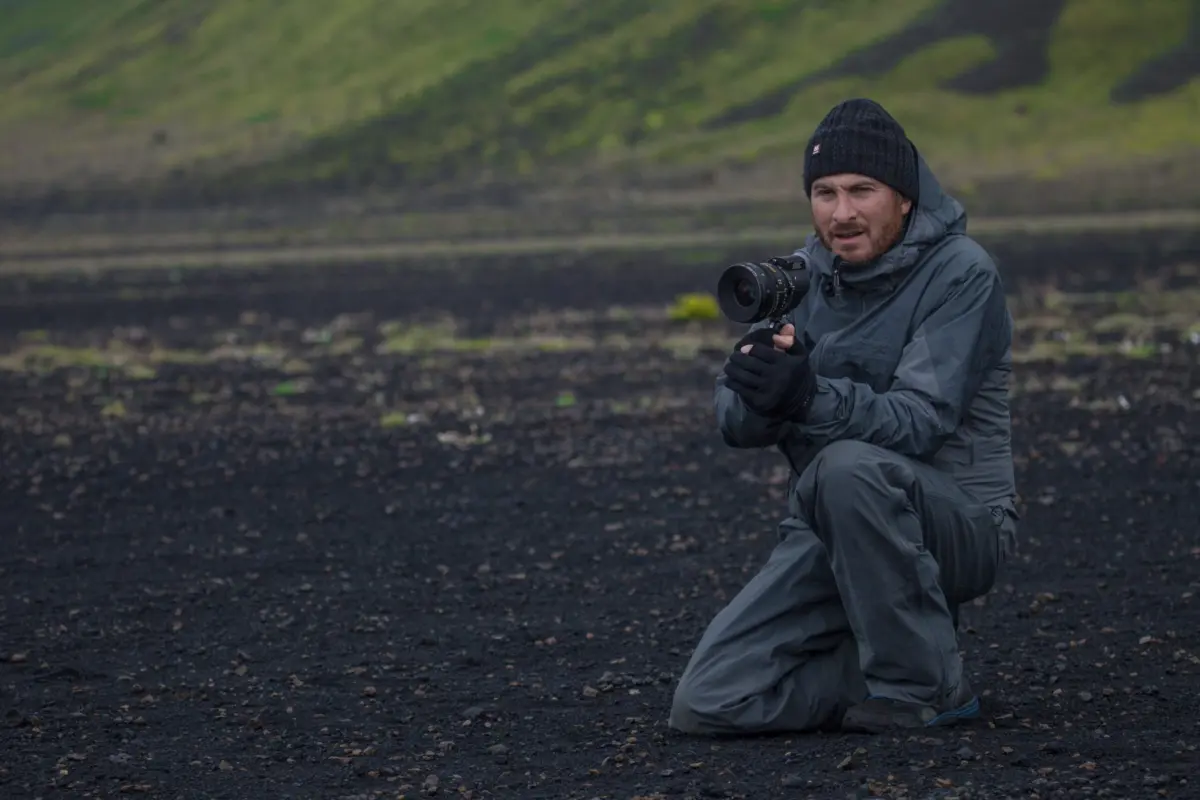
The decision to honor director Darren Aronofsky with the festival’s prestigious Director Award has catalyzed industry-wide debate. Aronofsky, known for his visually daring and psychologically dense filmography—including Requiem for a Dream and Black Swan—has become a vocal proponent of exploring artificial intelligence as a creative tool.
Critics within the industry argue that honoring an "AI adopter" sends a conflicting message to a festival that champions human-led craftsmanship. Addressing this, Marek Żydowicz maintains that the honor recognizes three decades of artistic achievement rather than a specific stance on emerging tech. "His body of work provokes, unsettles and asks us to confront aspects of human nature," Żydowicz noted, emphasizing that the festival remains committed to the principle that while AI is an inevitable evolution, it cannot replace the "human perspective" that provides film with its essential spiritual dimension.
The festival’s official policy remains firm: while Camerimage will host workshops and debates to analyze the impact of AI, it will not accept fully AI-generated content into its competitive selection. The focus remains on the "cinematographer’s creative contribution." Żydowicz suggests that the industry must move toward legislative frameworks, potentially at the European Union level, to ensure that the integration of AI respects the rights of artists and the individuals whose likenesses and voices are utilized in digital creation.
Honoring the Craft: Joe Walker and Janusz Kamiński
Beyond the controversy surrounding technology, the 2026 festival places a significant emphasis on the symbiotic relationship between editing and cinematography. Joe Walker, the esteemed editor behind Dune and 12 Years a Slave, will be honored for his mastery of rhythm and duration. Walker’s role as the chair of the Main Competition jury is particularly significant; his ability to manipulate time and space—most notably in Arrival—underscores the collaborative nature of visual storytelling.

Simultaneously, the festival celebrates the legendary Polish cinematographer Janusz Kamiński, who will receive the THR Visionary Award. Kamiński’s career, defined by his long-standing collaboration with Steven Spielberg, represents the pinnacle of the "Polish School" of cinematography—a tradition characterized by deep historical awareness and a painterly approach to light and shadow. His latest work, Disclosure Day, serves as a focal point for the competition, demonstrating his ongoing commitment to utilizing unconventional techniques, such as specific halation effects, to evoke visceral, emotional truths.
The "Polish Secret" and the Legacy of the Lodz Film School
The recurring question of why Poland produces a disproportionate number of the world’s elite cinematographers finds its answer in the nation’s tumultuous history. The pedagogy at the Lodz Film School was forged under the shadow of 123 years of partition and decades of communist censorship. During these eras, Polish filmmakers learned to communicate through subtext, using composition to convey what could not be spoken.
This tradition of visual storytelling, which emphasizes the "dialogue between images," has been passed down through generations. Today, that legacy is visible in the work of cinematographers like Jolanta Dylewska, who continues to break gender barriers in a historically male-dominated field. The festival’s commitment to these diverse voices highlights the importance of institutional memory in an era where digital tools threaten to standardize visual aesthetics.
Financial Pressures and the Future of the Industry
The 2026 edition of Camerimage takes place against a backdrop of severe fiscal contraction in the global film industry. Cinematographers are increasingly tasked with achieving high-fidelity visual results with diminishing resources. This financial pressure, combined with the existential anxiety surrounding AI, has created a climate of uncertainty for many in the industry.

However, Żydowicz remains optimistic about the resilience of the human artist. He argues that the cinematographer’s value lies in their "lifetime of observations, relationships, emotions, and experiences," which inform split-second decisions on set that no algorithm can replicate. "Technology will change working methods," Żydowicz observed, "but I am certain that the human perspective which gives films a spiritual dimension remains indispensable."
Implications for the Future of Film Festivals
As Camerimage looks toward the future, its expansion into a massive, multi-faceted cultural center signifies a move toward institutional permanence. With the upcoming inclusion of the "David Lynch’s World of Imagination" exhibition and dedicated trade fair spaces for new technologies, the festival is positioning itself as a vital interface between the past and the future of cinema.
For the attendee, the message for 2026 is one of intentional participation. The festival encourages spontaneity—advising visitors to balance their pre-planned schedules with the unplanned, serendipitous encounters that define the Camerimage experience. In a time when the industry is fractured by the rapid onset of digital automation and the pressure of global market shifts, the festival stands as a reminder of the foundational importance of the human eye.
The 34th Camerimage will serve as a bellwether for the coming decade of filmmaking. By hosting both the critics of AI and its early adopters, and by celebrating the masters of the craft alongside the next generation of students, the festival is attempting to foster a necessary synthesis. Whether the industry can successfully navigate the "AI frontier" while preserving the artistic integrity of the cinematographer remains the central question for the 2026 season. As the lights dim in Toruń this November, the global film community will be watching to see how the next chapter of visual storytelling is written.